

Blog
Informasi khusus untuk kesehatan kulit
Informasi khusus untuk kesehatan kulit

Even with the same collagen booster, results can split. The same GOURI or the same Rejuran can leave people with different levels of satisfaction, and since the product is identical, the difference has to come from somewhere else.
When I look back at what actually went differently, it's usually something the price sheet never shows. Which area, how deep in the dermis, how many sessions it was split into. That design decides the outcome, but the price column only leaves you a product name and a number.
So today I want to lay out what to look at, beyond price, when you're deciding where to get a collagen booster. I pay the most attention to the first two - who designs the plan and on what basis, and whether that plan is fitted to your own face. Let me walk through why, from experience.
Key takeaways
- Even with the same collagen booster, results split. The reason isn't printed on the price sheet.
- When picking a clinic I look at four things - who designs the plan and why (clinical rationale), whether it's fitted to you (design), whether the product is genuine (authenticity), and whether the full dose is used (dosage).
- Clinical rationale and design move the result the most. "Where, and how deep" gets decided here.
- I (Dr. Chanjong Lee) was a co-author on a preclinical study looking at how liquid PCL builds dermal thickness and type I collagen (UVB photoaging model; significant rise in dermal thickness and Col1a1, p<0.001, J Cosmetic Dermatol 2026). Forever Clinic in Myeongdong bases its design on that research and on clinical experience.
- Authenticity and dosage are things you can ask to see with your own eyes in the room, and I've written up how in a separate post.
- How much you respond, and how long it lasts, varies a lot from person to person.
Four things, more than the price - who designs the plan and on what basis (clinical rationale), whether the plan is fitted to your face (design), whether the product going in is genuine (authenticity), and whether the full dose you paid for is actually used (dosage). With the same product, these four are where results split.
The first two, clinical rationale and design, move the outcome the most. Authenticity and dosage are the safety baseline. Here it is at a glance.
| Criterion | What to look at | Why it splits the result |
|---|---|---|
| Clinical rationale | Who designs the plan, and on what basis | "Where, and how deep" drives the outcome |
| Design | Is the plan fitted to your face/skin | The same product suits different areas/depths for different people |
| Authenticity | Is what goes into your body the real product | Genuineness/sterility/storage are the premise for safety and effect |
| Dosage | Is the full amount actually used | The planned dose has to go in for the plan to hold |
Because even under the same treatment name, what goes in, where, and how much differs from clinic to clinic. The price sheet lists a product and a number; the design inside it isn't written down.
A collagen booster is a product that settles into the dermis and prompts collagen production. Rejuran, Juvelook, GOURI and Sculptra all belong to this family, though the ingredients and how long they last differ a little. The key point is this: even with the same Rejuran, which layer it goes into, how many sessions, and at what intervals differ by clinic. That's the part a number can't show you.
So "the cheapest place" and "the best place" don't mean the same thing. If it goes in too shallow and a nodule forms, or the direction is off and it has to be redone, I've seen that cost more than what was saved up front. The value is in what goes into which layer, and how precisely.
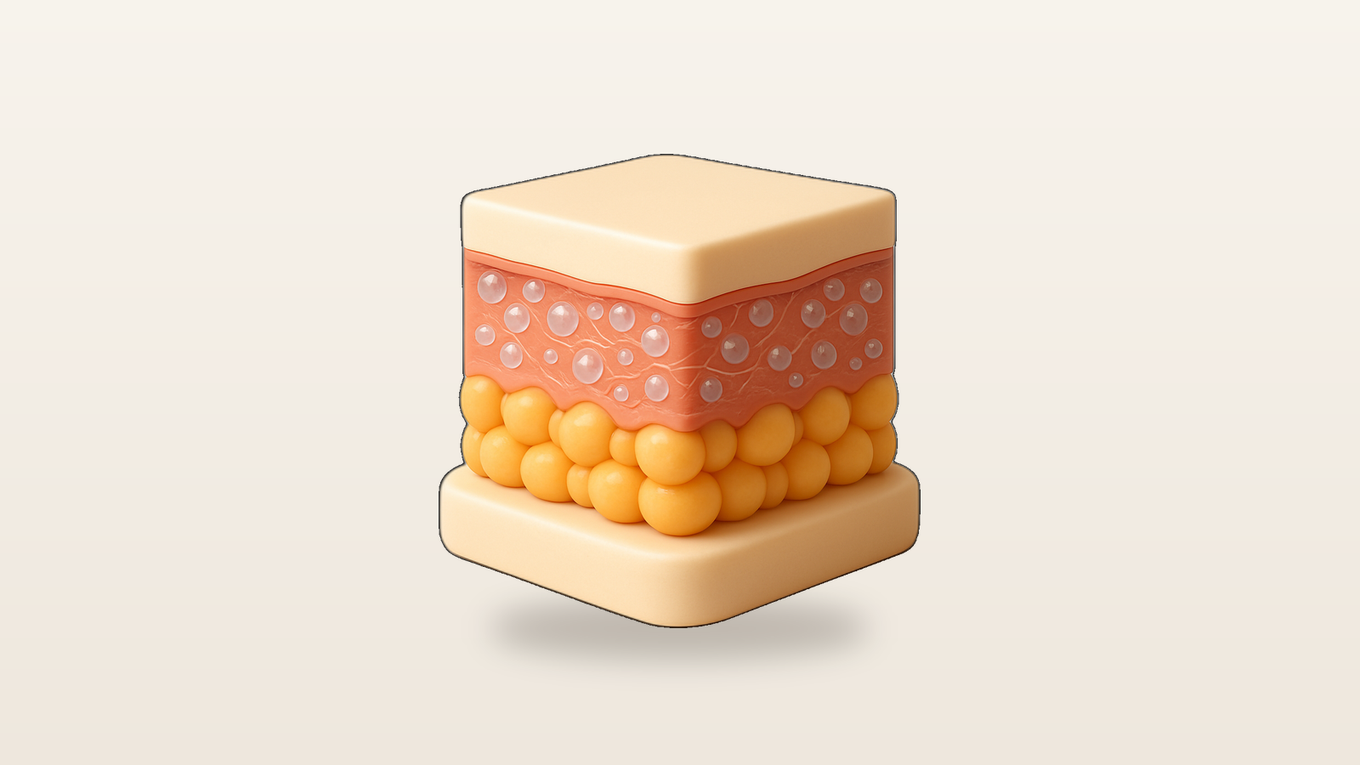
With the same product, "where, how deep, how many sessions" can swing the result a lot - and the clinical and research basis behind that judgment is what I mean by clinical rationale. It's the first thing I look at when choosing a clinic.
A booster has to land in the right spot in the dermis to prompt collagen properly. Too shallow and it can leave a mark on the surface or form a nodule, and because dermal thickness differs by area, the approach under the eyes, on the cheek and on the forehead is all different. Under the eyes the skin is thin, so I stay conservative on layer and amount; on the cheek I also weigh support. I try to make these calls from evidence, not by feel.
One part of that evidence is a study I took part in directly. I was a co-author on preclinical research looking at how liquid PCL (the GOURI family) thickens the dermis and how much collagen it builds. In a UVB photoaging model (preclinical), liquid PCL significantly increased dermal thickness and type I collagen (Col1a1) (p<0.001, preclinical model, J Cosmetic Dermatol 2026). It's a mechanism study, not a human clinical result, so it doesn't on its own guarantee a treatment outcome. But having looked closely at where in the dermis a booster wakes up collagen gives me one more basis for judging layer and amount by area. Actual improvement and how long it holds vary a lot from person to person.
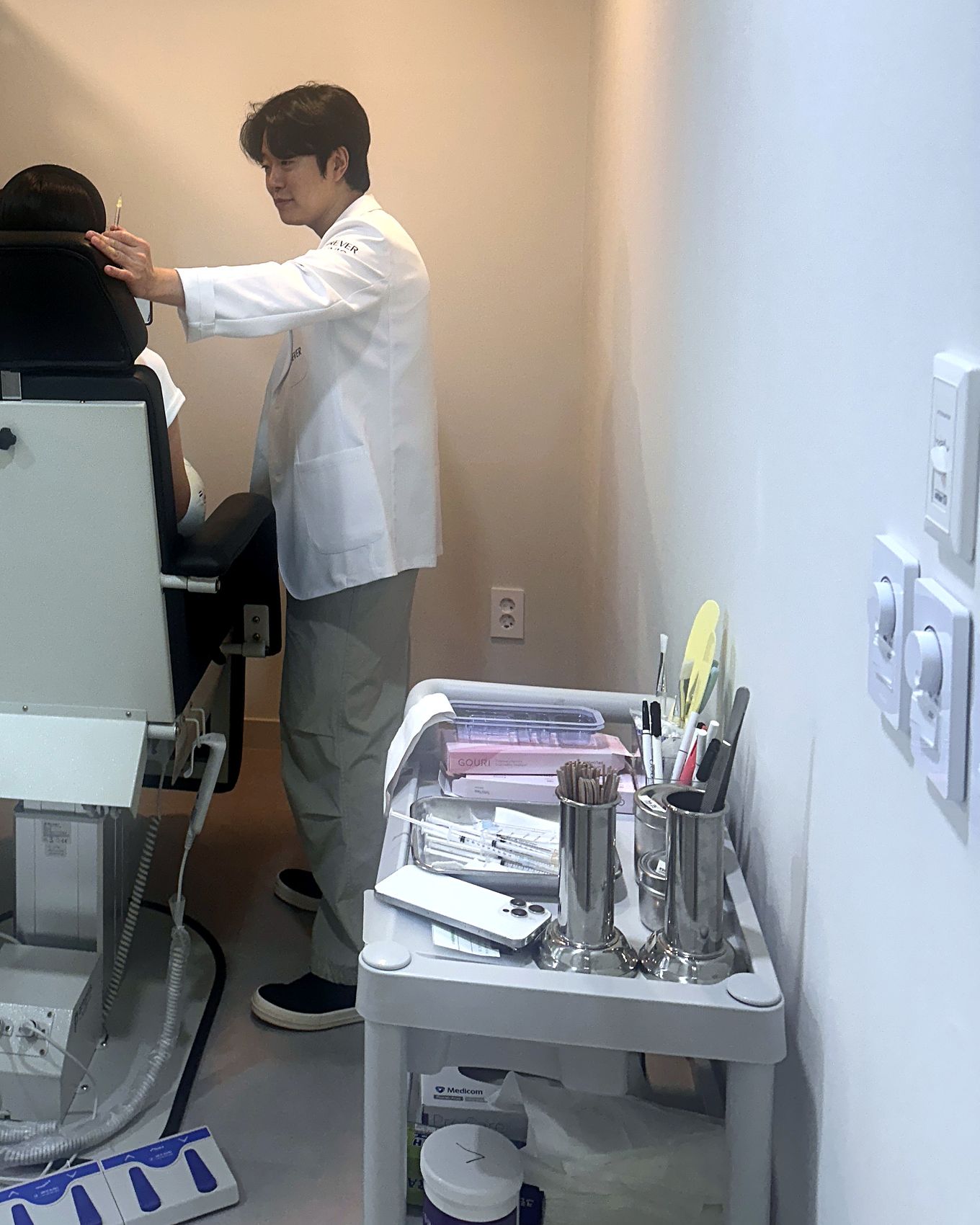
Checking for clinical rationale is simpler than it sounds. Ask "why this product for me, and why this area at this depth" and see whether a real reasoned answer comes back. The doctor's clinical view, published or presented work, a different standard for each area - when that's there in the explanation, the plan has a clinical rationale behind it.
A good design consultation is one where "why this product, why this area, why this depth" gets answered from your own face and skin. Whether that answer is there is how you gauge if the plan is fitted to you.
The right collagen booster differs by person too. If fine surface lines and a lack of moisture are the concern, Rejuran or Juvelook often come up; if volume and contour support are the goal, the direction shifts toward GOURI or Sculptra. In the end the point is choosing what fits your skin and your goal. So an answer grounded in your own face is a better sign than "this one's popular right now."
One more thing worth watching. Do they push a package before they've even looked at your skin, or do they say "this one isn't urgent right now" and take out what you don't need? A place that plans only as much as you need is a place with design. I see it in the clinic all the time - the result turns on the small details more than the big picture. In the consultation, these three are fine to bring up plainly.
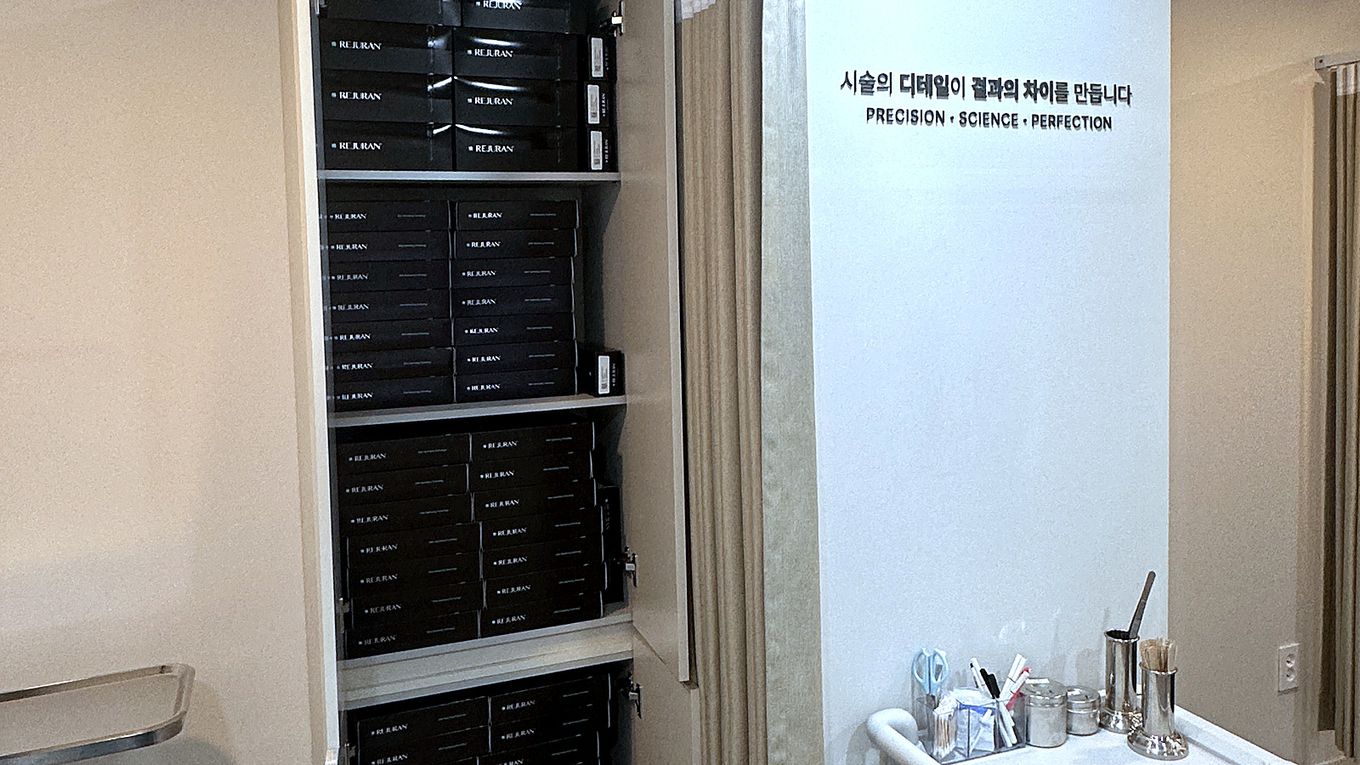
You shouldn't - they're the baseline for safety and effect. But these are things you can ask to check with your own eyes in the room, and asking is not rude. It isn't hard to do either, so I've laid out how to check genuine product and dose in the room one by one in a separate post. If you want to know how to read the box and the volume before it's opened, that's the one to look at.
There's a reason I put more weight on the front end here. Even with a genuine product, if where and how deep it goes is off, the result changes. If authenticity and dosage are "is the material real," clinical rationale and design are "is the material used well." Look at both - but at the choosing stage, the one you end up reading first is the latter.
During the consultation, watch for the signals below. Each one shows whether the four criteria above are actually being kept.
| If you ask | A good sign |
|---|---|
| "Why this product for me?" | An answer grounded in your skin/goal |
| "Why this area at this depth?" | The design reasoning, from the clinician's judgment |
| "How many sessions, at what intervals?" | A plan for count and spacing up front |
| "Anything I don't need to do right now?" | They honestly take out what isn't needed |
| "Can we look at the genuine product and dose together?" | They show the certification/opening/markings naturally |
If a lot of the answers are vague, it's worth a second thought even when the price is low. A place that opens up its reasons easily is that much easier to trust - the reasoning coming back is itself the trust.
Ask what the design criteria are actually based on - the doctor's clinical view, published or presented work, a standard that differs by area. If "why this area at this depth" comes back with a reasoned answer, the plan has a clinical rationale behind it. For what it's worth, I was a co-author on preclinical research into the dermal collagen mechanism of liquid PCL (J Cosmetic Dermatol 2026), and Forever Clinic in Myeongdong bases its design on that study and on clinical experience.
A design consultation is one where the plan - which product, in which area, at what depth, over how many sessions - comes out together with the reasons, grounded in your own face and skin. If you only got a product name and a price, you haven't quite had the design part yet. Look for whether the reasoning for how it was set comes with it.
Price and result don't always move together. A high price doesn't automatically buy clinical rationale or design, and a low one isn't automatically a problem. What matters is what's inside that price and how it's designed, and that shows up in the consultation, not on the price sheet.
They overlap a lot. Collagen boosters (Rejuran, Juvelook, GOURI, Sculptra) sit in the regenerative family in that they prompt collagen production in the dermis. They connect to regenerative treatments like stem cells (Metacell), but the ingredient and the way it works differ by product. So even inside the broad "regeneration" bucket, it pays to work out which product fits your own goal.
Count and interval shift with the product, your skin, and your goal. There's no fixed formula - it's the part you set in a design consultation. It's worth asking "how many sessions, at what intervals" and getting the plan up front, and keep in mind how much you respond and how long it holds differ from person to person.
If you're weighing where to get a collagen booster, set the price sheet aside for a moment and look at four things. Who designs the plan and on what basis (clinical rationale), whether it's fitted to your face (design), whether the product is genuine (authenticity), whether the full dose is used (dosage). With the same product, this is where results split - the first two especially.
Most of this shows up in a single consultation. Feel free to ask plainly: "why this product for me," "why this area at this depth," "how many sessions are you planning." If the answers come back with real reasoning, it's reassuring to hand it over even at a slightly higher price. In the room I always try to have that reasoning ready first, because a good result starts with the design.
#CollagenBooster #RegenerativeTreatment #ChoosingAClinic #TreatmentDesign #ConsultationInKorea #GOURI #Rejuran #Juvelook #Sculptra #LiquidPCL #GenuineBooster #DosageCheck #MyeongdongDermatology #ForeverClinic