

Blog
Informasi khusus untuk kesehatan kulit
Informasi khusus untuk kesehatan kulit
Lately, at our clinic in Myeongdong, Seoul, I've been getting more questions about these claims that stem cells can rejuvenate your skin from the ground up. People are asking, "Can I trust these ads?"
As interest in regenerative treatments grows, so do the ads. Words like 'stem cells', 'regeneration', and 'fundamental improvement' flash across the screen, making you curious yet cautious. Is this just hype?
That hesitation is actually a healthy reaction. This field is filled with exaggerated claims. Instead of judging specific ads or clinics today, I'm here to equip you with three key criteria to evaluate any ad you encounter. With these, you can make informed decisions without getting swept up by fancy words.
Key Takeaways
- 'Stem cell' is a term that legally covers different categories.
- Check first: Is it a medication (approved drug) / procedure (new medical technology evaluation) / cosmetic (culture-medium based)?
- Check second: Be wary of absolute statements like "complete cure / fundamental regeneration / no side effects."
- Check third: Can you ask for and see the evidence and authenticity?
- Regenerative treatments send signals, not fillers, so they work gradually and results vary by individual.
Simply put, different things are lumped together under the 'stem cell' umbrella.
From using the cells themselves to using culture media or just the signaling molecules (exosomes), the materials and mechanisms differ, but in ads, they all appear as 'stem cells'. If you're curious about the details, check out our guide on the three types of stem cell treatments.

Here's another tricky part: these categories fall under different legal classifications. While they all share the name 'stem cell', their regulatory status varies, often leading consumers to mistakenly believe they're all equally verified. That's where the confusion begins.
So, when you see an ad, prioritize verifying its category over emotional appeal. Here's how to do that, broken down into three steps.
This is the first and most decisive criterion. Even with the same 'stem cell' label, the legal category decides how rigorously it's regulated and verified.
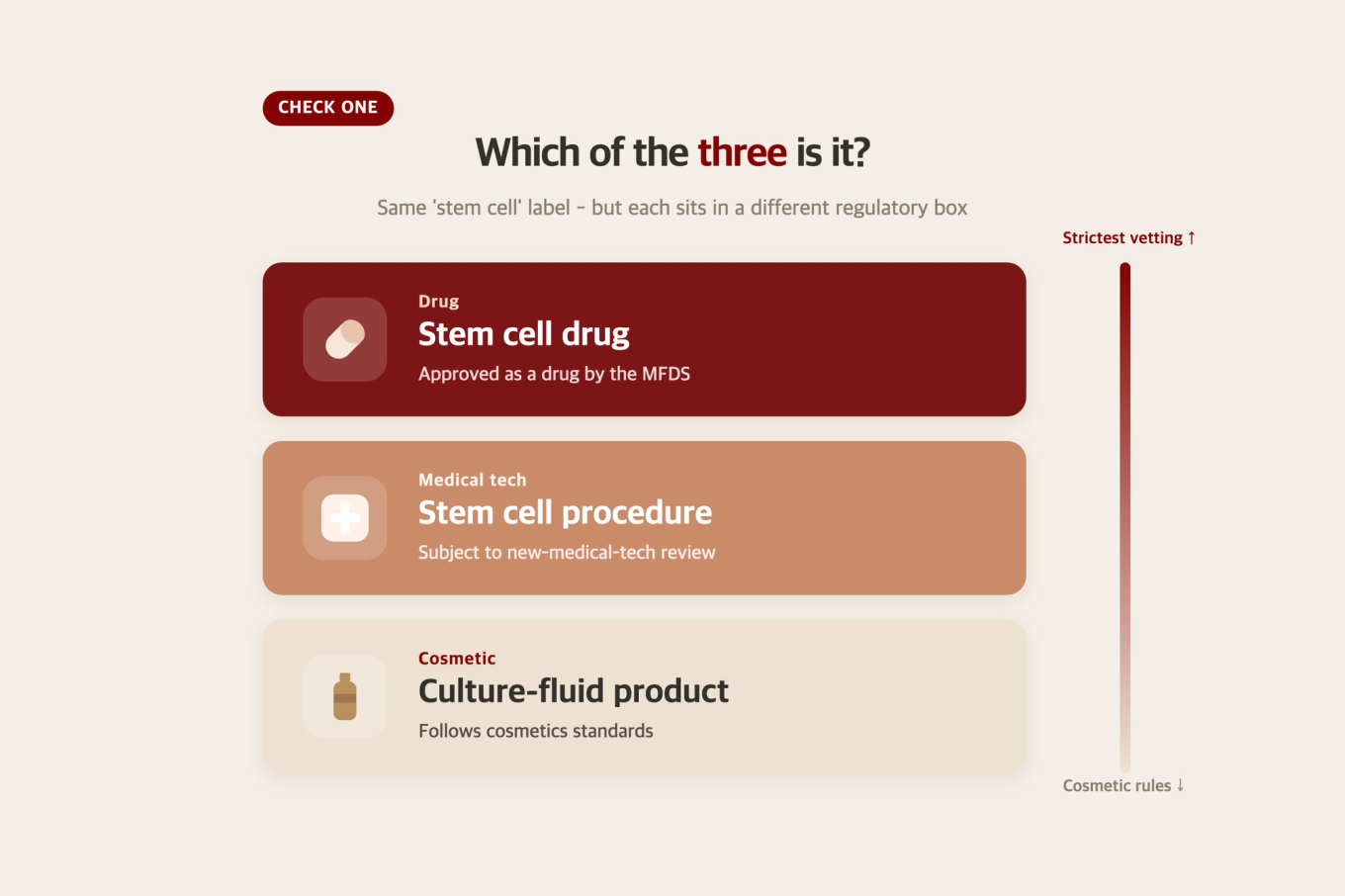
Think of these as three separate categories:
⚠️ The common misconception is - not all products labeled 'stem cell' have undergone the same scrutiny. If a cosmetic is presented as offering 'fundamental regeneration' like a drug, that's a red flag. So, every time you encounter an ad, ask yourself, "Which of the three categories does this fall under?" This alone will clarify many things.
Even without detailed knowledge, you can spot red-flag phrases based on the nature of regenerative treatments.
These treatments work by signaling your skin to react on its own, unlike fillers that provide immediate volume. The response is gradual, and results vary per individual. So, ads promising 'instant', 'complete cure', or 'universal results' contradict the science. When you see such claims, take a step back.
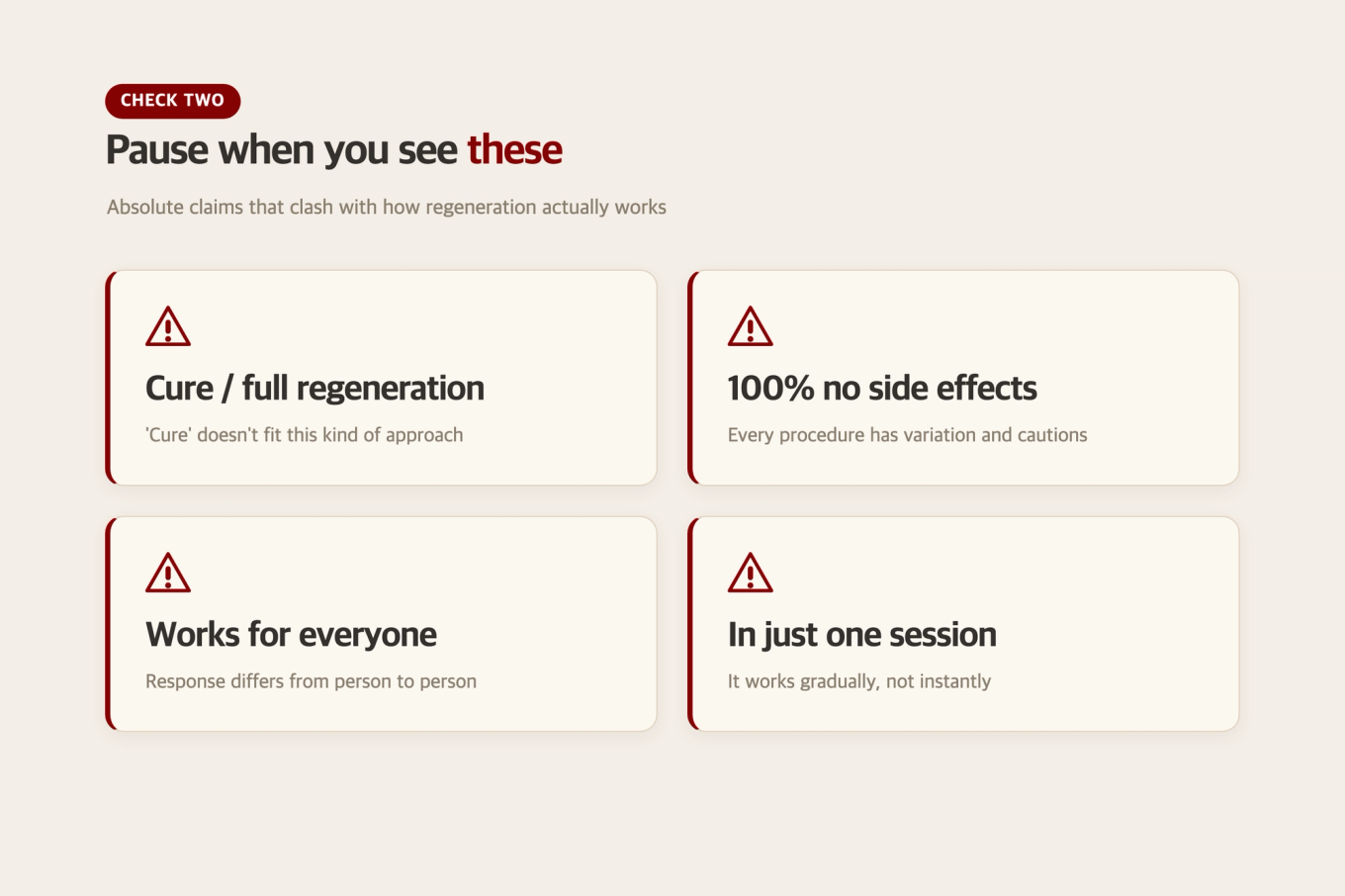
Here are the red-flag phrases:
💡 On the flip side - honesty about individual differences and limitations is actually a good sign. Saying, "This is how it works, but results vary" is more credible than "It works for everyone."
If you've filtered through the language, the last step is direct verification. Trustworthy clinics will openly share information when asked. If a clinic avoids or gives vague answers, that's a clue in itself.
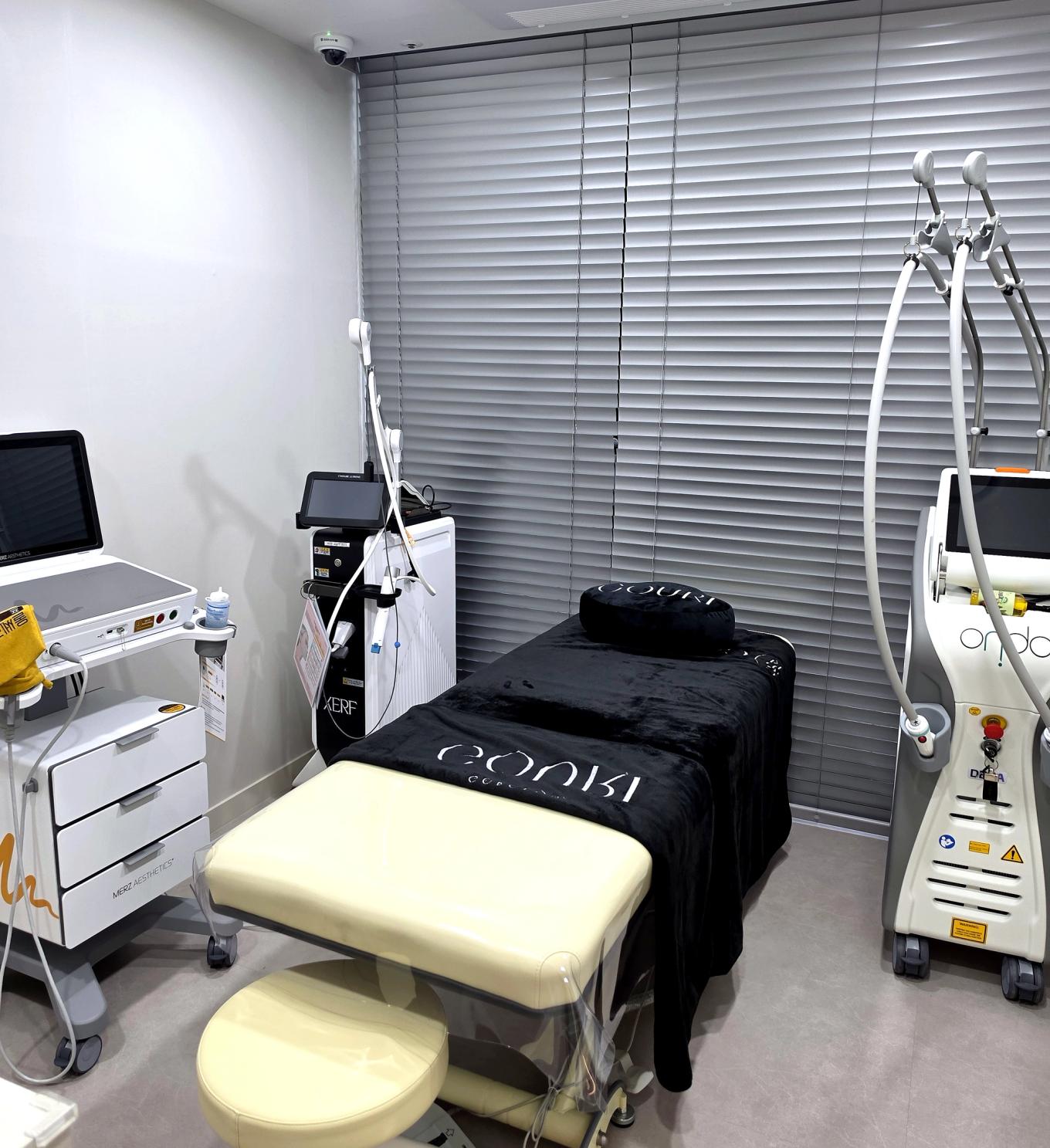
Before the treatment, consider asking these questions. They're straightforward inquiries you can make during a consultation:
| Verification Question | Why Ask It |
|---|---|
| Is this a medication, procedure, or cosmetic? | The verification category differs |
| What materials are used, and where do they come from? | Autologous or allogeneic (your own body vs. a donor) - origin ties directly to safety |
| Can I see the evidence or authentic products? | Openness indicates trustworthiness |
| What are the side effects and precautions? | Discussing limitations is a good sign |
| How many sessions and what duration are suggested? | Instant results don't align with the method |
⚠️ Keep in mind - If you only get vague answers like "It just works" or "Everyone's happy", it could mean there's a lack of information or something's being hidden. Regenerative treatments inherently involve 'gradual response and individual variability', so clinics that communicate this are often more reliable.
We hold ourselves to these standards too. At our Myeongdong clinic, we offer regenerative treatments like Metacell (Stem Cell). The key point is that it's autologous-derived - it uses material from your own body, not someone else's cells (growth factors and signaling substances drawn from your own blood, for instance).
Autologous-derived simply means using your body's own components rather than someone else's cells. It's not about being 'better', but about being a 'different approach'. When clients want to reinforce the collagen network, we may combine it with collagen boosters (like liquid PCL types such as GOURI) but always with a gradual perspective.
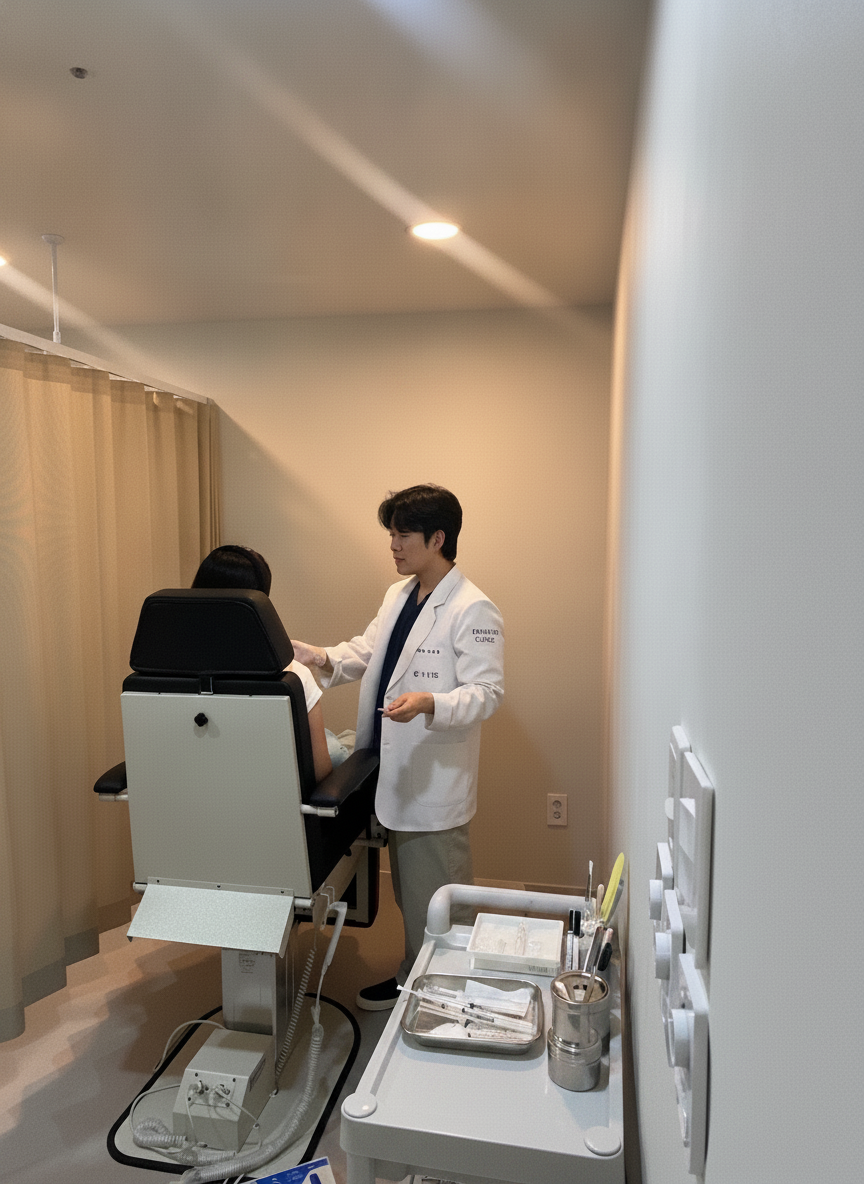
So, when explaining Metacell, I don't say it transforms in one go. Instead, I describe it as "utilizing your body's own components to signal your skin to react, with responses varying individually." Feel free to apply today's three criteria to us as well.
With the rise in regeneration/stem cell treatments, ads are also increasing. The more dazzling the claims, the more I recommend keeping these criteria in hand.

Remember these three points. First, where does it fall - medication/procedure/cosmetic? Second, pause at definitive phrases like 'cure/fundamental/100%/one-time'. Third, ask for and verify the evidence and authenticity.
And try reframing the question. Instead of "Is this the best?", ask "Does this fit my situation and goals?" Regenerative approaches respond gradually and vary greatly between individuals, so it's more practical to consider if it suits your needs rather than chasing the 'best'. With this perspective, you can evaluate any ad objectively.
No, they're not. Using cells directly, employing culture media, or refining just the exosomes involve different principles. Moreover, medication (approved drug) / procedure (new medical technology evaluation) / cosmetic (culture-medium based) occupy different legal statuses. Just because they share a name doesn't mean they share the same verification process. Start by checking "Which of the three categories does this belong to?" when viewing an ad.
Definitive expressions like "cure / fundamental regeneration / 100% safe with no side effects / works for everyone / just one session." Regenerative treatments signal the skin to react, so results appear gradually and vary by individual. If an ad promises instant or universal effects, it contradicts the method's principles. Honest communication about variability and limitations is actually more trustworthy.
Ask whether the treatment is a medication, procedure, or cosmetic, what materials are used and their origin, if you can view evidence or genuine products, what side effects and precautions exist, and how many sessions/what duration is expected. Clinics that are transparent and discuss limitations tend to be more reliable.
At our Myeongdong clinic, we guide clients on Metacell (Stem Cell) treatments, which are autologous-derived. This means utilizing components from your own body (growth factors/signals from your own blood, for example). The approach differs from using someone else's cells, and outcomes vary greatly. We explain it as a gradual process rather than a one-time transformation.
#StemCellTreatment #ExaggeratedAds #RegenerativeTreatment #StemCellDrug #CultureMediaCosmetics #Metacell #MedicalAdvertising #MyeongdongDermatology #KoreaSkinClinic #ForeverClinic