
Blog
Expert tips for healthy skin
Expert tips for healthy skin
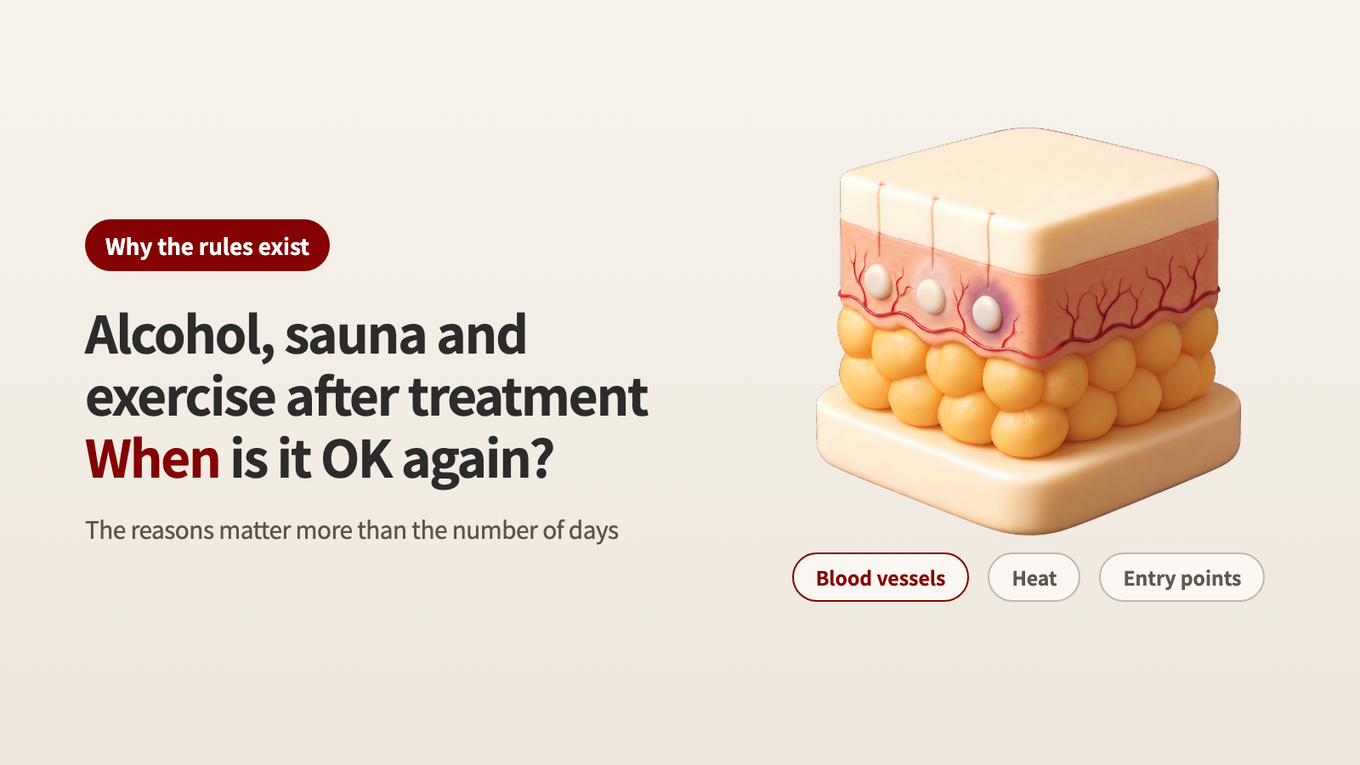
As you leave the clinic after Rejuran or Juvelook, your plans for the week probably start coming to mind. Thursday's work dinner, the Pilates class you already booked, the weekend jjimjilbang (Korean bathhouse) visit.
So the question that usually follows is how many days you need to hold off.
Bottom line: there's no single number of days that fits every skin booster. There is a rule to go by, though. Alcohol, saunas and hard workouts all widen blood vessels and make the skin flush, which feeds swelling, bruising and redness. Saunas and sweat also bring water and friction to needle marks that haven't fully closed. So once the needle marks have closed and you can see the swelling and bruising going down, you can start bringing things back one at a time, lightest first.
Once you know the reasons, you can read your own face and adjust. Let me go through them one by one.
Key Takeaways
- I sort post-treatment restrictions into three groups: blood vessels (swelling/bruising), heat (redness/pigment) and entry points (irritation or infection at needle marks that haven't closed).
- Alcohol widens blood vessels, and in a test-tube study it also weakened the platelets' ability to clump. That's a setup for bruises to spread.
- In a hot sauna, blood flow to the skin rises from 5-10% of cardiac output to 50-70%.
- Hard exercise raises body temperature and blood flow together, and sweat and towel friction reach the needle marks.
- "24 hours" and "24-48 hours" are figures from filler labels and professional-society guidance. For boosters, treat them as a starting point and let recovery signs decide the rest.
- Restart in order, beginning with whatever puts the least heat and blood-flow load on the skin. If swelling and redness don't come back the next day, move up one step.
At our clinic in Myeongdong, Seoul, I sort the restrictions after skin boosters and other regenerative treatments into three groups: blood vessels, heat and entry points. All three either push more blood and tissue fluid into the healing dermis or add irritation to needle marks that haven't closed, so they can drag out swelling, bruising and redness.
Downtime restrictions are the things that slow healing or amplify the reaction while the tiny wounds from treatment close. That also means when you can lift them depends on how far those wounds have healed.
I roughly split boosters into two groups by injection depth: those placed in the dermis (Rejuran, Juvelook) and those placed deeper (Sculptra). Either way, the needle leaves a tiny channel behind. Underneath it, while the product settles in, blood vessels briefly widen and tissue fluid collects. That's swelling. If the needle nicks a capillary on the way through, a little blood leaks out, and that's a bruise.
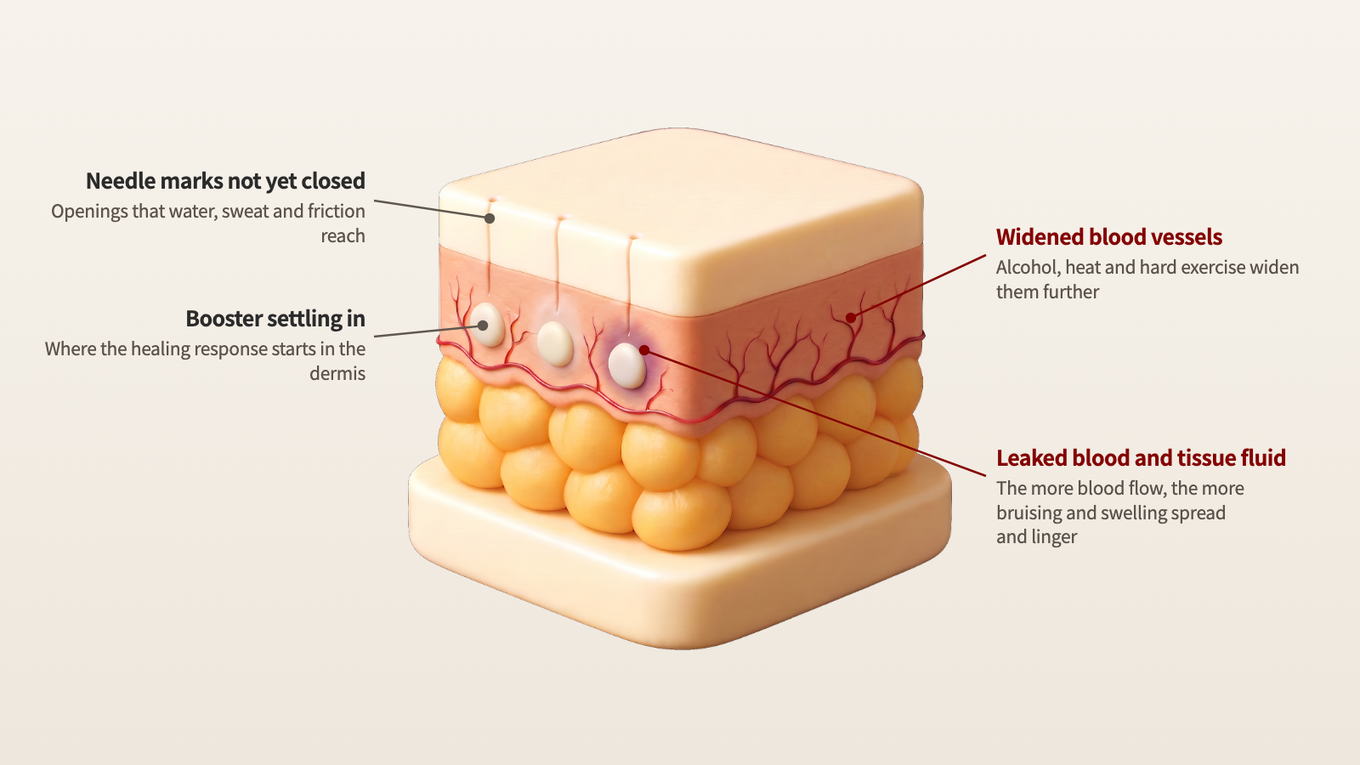
Until the needle marks close and the widened vessels settle down, anything that raises blood flow and heat makes swelling and bruising worse.
Here's where alcohol, saunas and exercise hit.
Alcohol strains recovery through blood vessels and clotting, saunas through heat and water, and hard exercise through heat and sweat. Because each one hits a different point, the sign to look for before restarting is a little different too.
| Activity | What happens in the skin | Where it gets in the way of recovery | What to check before restarting |
|---|---|---|---|
| Alcohol | Blood vessels widen; in a test-tube study, platelet clumping was suppressed | Bruising and swelling spread and last longer | Are bruising and swelling going down? |
| Sauna / jjimjilbang / hot tub | Skin temperature and skin blood flow rise sharply; wet skin sits in shared water for a long time | Swelling and redness come back; irritation at open needle marks | Have the needle marks closed and the redness settled? |
| Hard exercise / hot yoga | Body temperature and skin blood flow rise; sweat and friction | Swelling and redness come back; sweat pools in the needle marks | After light exercise, did it stay calm the next day? |
When you drink, your body breaks alcohol down into acetaldehyde, which widens the blood vessels in your skin and makes your face flush. DermNet notes that up to 40% of East Asians carry a variant in ALDH2, the enzyme that clears acetaldehyde, so even a small amount turns their face red. If one or two drinks make you go red quickly, it's safer to assume redness at the treated area may also react more readily to alcohol.
There's a second reason alcohol ties into bruising. In a test-tube study using platelets from healthy people, ethanol suppressed platelet clumping, and the effect grew with the concentration (BMJ, 1983). Platelets are what plug the tiny vessels the needle passed through. With that weakened and the vessels wider, bruises spread more easily.
That's why the American Society of Plastic Surgeons (ASPS), in its filler guidance, advises avoiding aspirin and anti-inflammatory painkillers from 5-7 days before treatment to 24-48 hours after to lower the risk of bruising, and avoiding alcohol during that window where possible. Notice that it covers before treatment, not just after. Bruising starts the moment the needle touches a blood vessel. It's also why it's better not to book your treatment for the day after a work dinner.
Alcohol also works against healing speed. A review of factors in wound healing reports that in mice, a single exposure at a fairly intoxicating level (blood alcohol of 100 mg/dL) cut new blood vessel formation by up to 61% and disrupted collagen production and wound closure (Guo & DiPietro, J Dent Res 2010). It's an animal study, so it can't be applied directly to human skin. The most it lets us say is that alcohol doesn't help healing.
Honestly, how big this reaction is varies a lot from person to person. How much you drank, whether you bruise easily and what medications you take all change what the same drink does.
In a hot sauna, skin temperature climbs close to 40°C within minutes, and blood flow to the skin rises sharply. A review of the benefits and risks of sauna bathing puts skin blood flow at 5-10% of cardiac output rising to 50-70%, or from about 0.5 L to 7 L per minute (Hannuksela & Ellahham, Am J Med 2001). For an area that's still healing, that means a rush of blood into vessels that are already wide. Jjimjilbang rooms and hot baths vary in temperature and time, so these exact figures don't carry over, but the direction is the same.
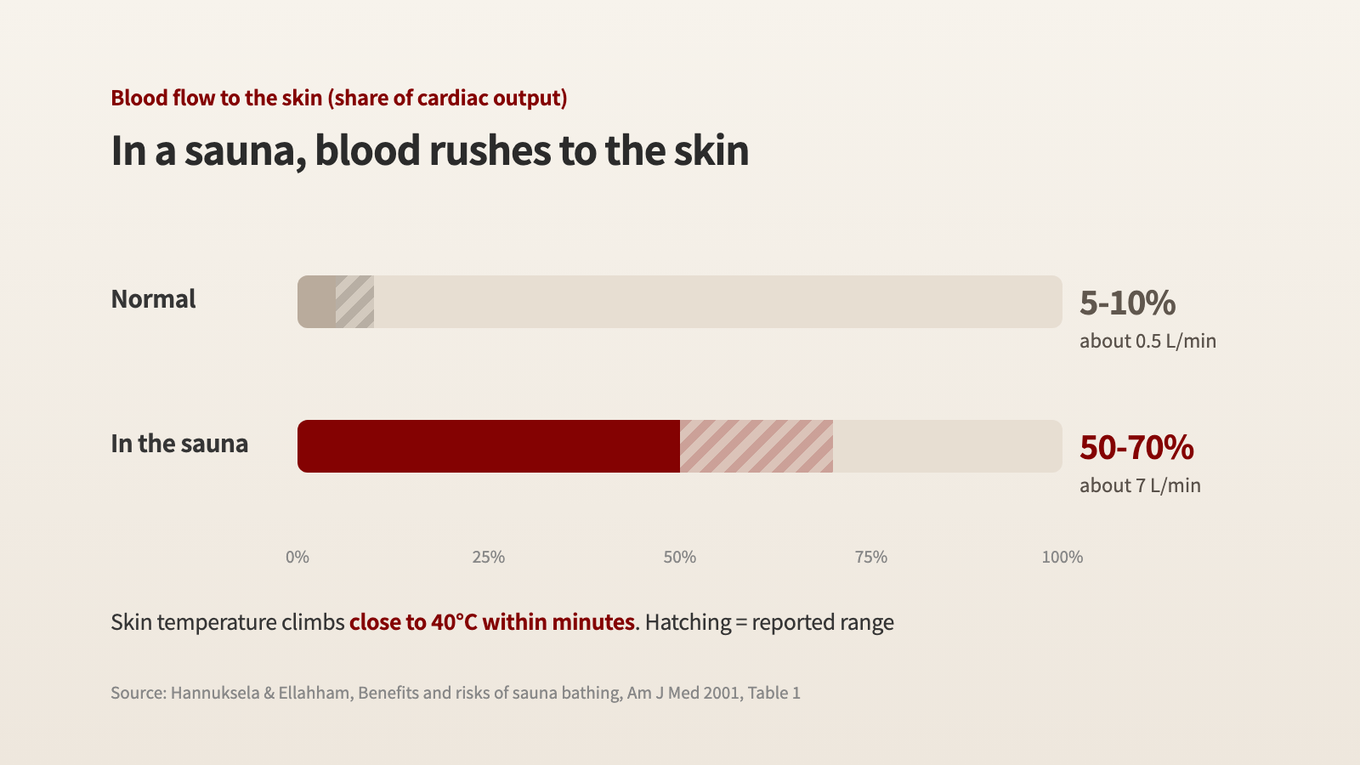
In a sauna, the body sends blood to the skin to cool down. In healing dermis, that blood flow comes back as swelling and redness.
Heat also matters for pigment. In an experiment where cultured human melanocytes were heated to 42°C for one hour, the heat triggered a melanin-producing response similar to UV (J Invest Dermatol 1998). It's a lab result, so we can't conclude that one sauna session causes melasma. Still, if your skin tends to hold on to pigment, I think it makes sense to be more cautious with heat while redness is still there.
Jjimjilbang have a water issue on top of the heat. Depending on how they're maintained, shared baths and hot tubs can grow Pseudomonas, and the US CDC notes that an itchy, red folliculitis can appear a few days after using a poorly maintained hot tub (CDC). If the needle marks are still open, the first thing to avoid is keeping those openings wet for a long time.
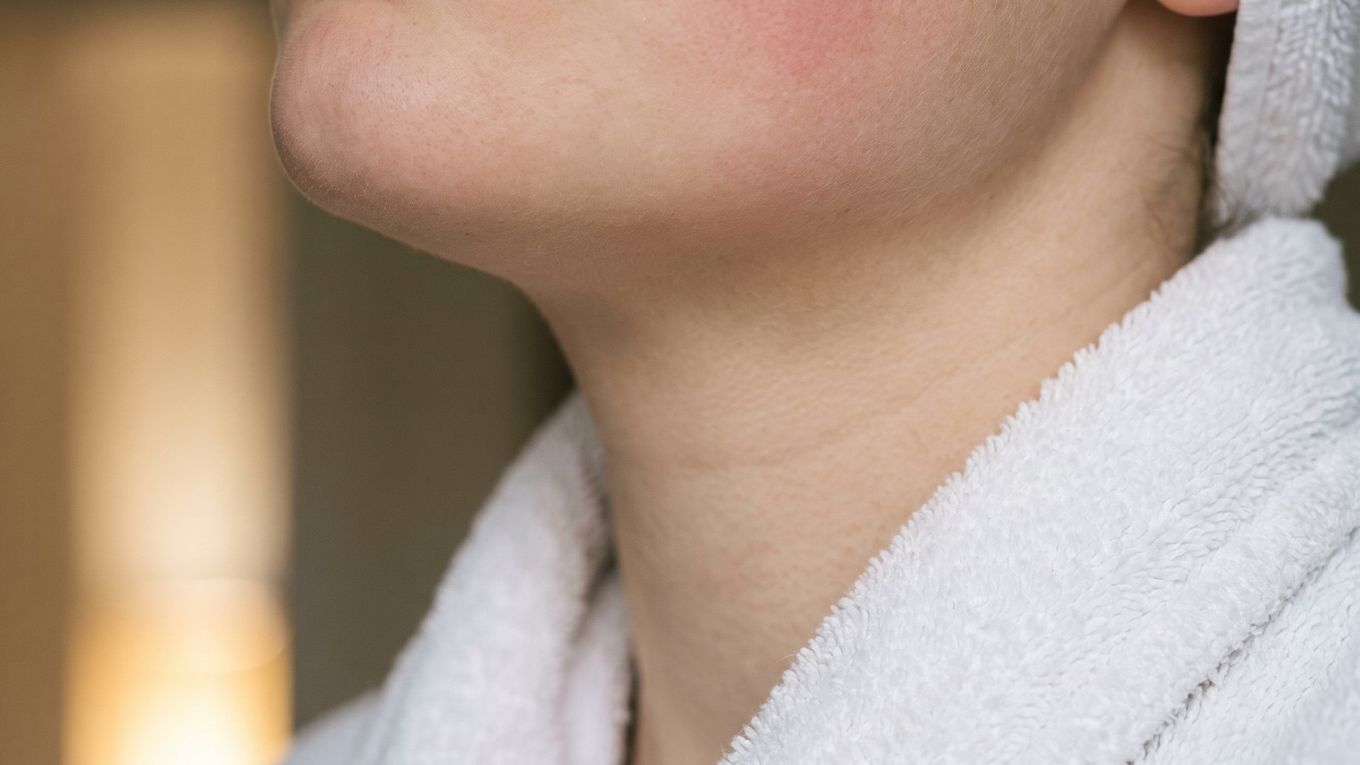
When heat builds up, the skin widens its vessels to cool off. On an area that's healing, that response lingers longer as swelling and redness.
Drinking and then going into a sauna is something to avoid even when you're not recovering from treatment. The same review says alcohol should be avoided during sauna use because of the risk of low blood pressure, arrhythmia and sudden death.
When you exercise, your body widens the blood vessels in your skin to release heat. The harder you go, the more your body temperature and blood pressure rise together, and the more blood goes to your face. It's the same direction as a sauna. On top of that, sweat pools in the needle marks, and the towel or headband you use to wipe it off rubs the treated area.
That doesn't mean all exercise has to stop. Walking or light stretching, where you don't get out of breath and barely sweat, puts little load on blood flow. The ones to watch are high-intensity intervals, heavy weights and hot yoga, the kind where your face flushes and the sweat runs.
💡 An easy way to tell - If you look in the mirror after a workout and your face is bright red, that workout is doing something similar to a sauna to your healing skin.
The "24 hours" and "24-48 hours" you often hear come from filler labels and professional-society guidance. They cover different treatments and rest on different levels of evidence, so for boosters it makes sense to use them as a starting point and let your own recovery signs decide what comes after.
The US label for Juvederm Voluma XC, a hyaluronic acid filler, says to avoid strenuous exercise and excessive sun or heat for the first 24 hours, citing temporary redness, swelling and itching. ASPS's filler guidance says to avoid exercise for 24 hours and heat such as saunas for 24-48 hours. In my post on swelling, bruising and bumps after booster injections, I wrote that avoiding these for 2-3 days is the baseline, and that comes from the same starting point. This post covers the signs that tell you when to lift them after that.
Botulinum toxin is a different story. An international expert consensus on cosmetic botulinum toxin (Global Aesthetics Consensus, 2016) said it found no evidence supporting the usual advice to avoid strenuous exercise, pressure or flying after treatment. In a retrospective study that sent patients back to normal life with no restrictions after upper-face toxin treatment (Toxins, 2025), 5,014 people were treated, and among the 4,000 checked two weeks later, side effects occurred in 6.0% and bruising in 3.0%. That said, toxin and boosters don't share the same reasons for restrictions, so I don't apply these results directly to boosters.
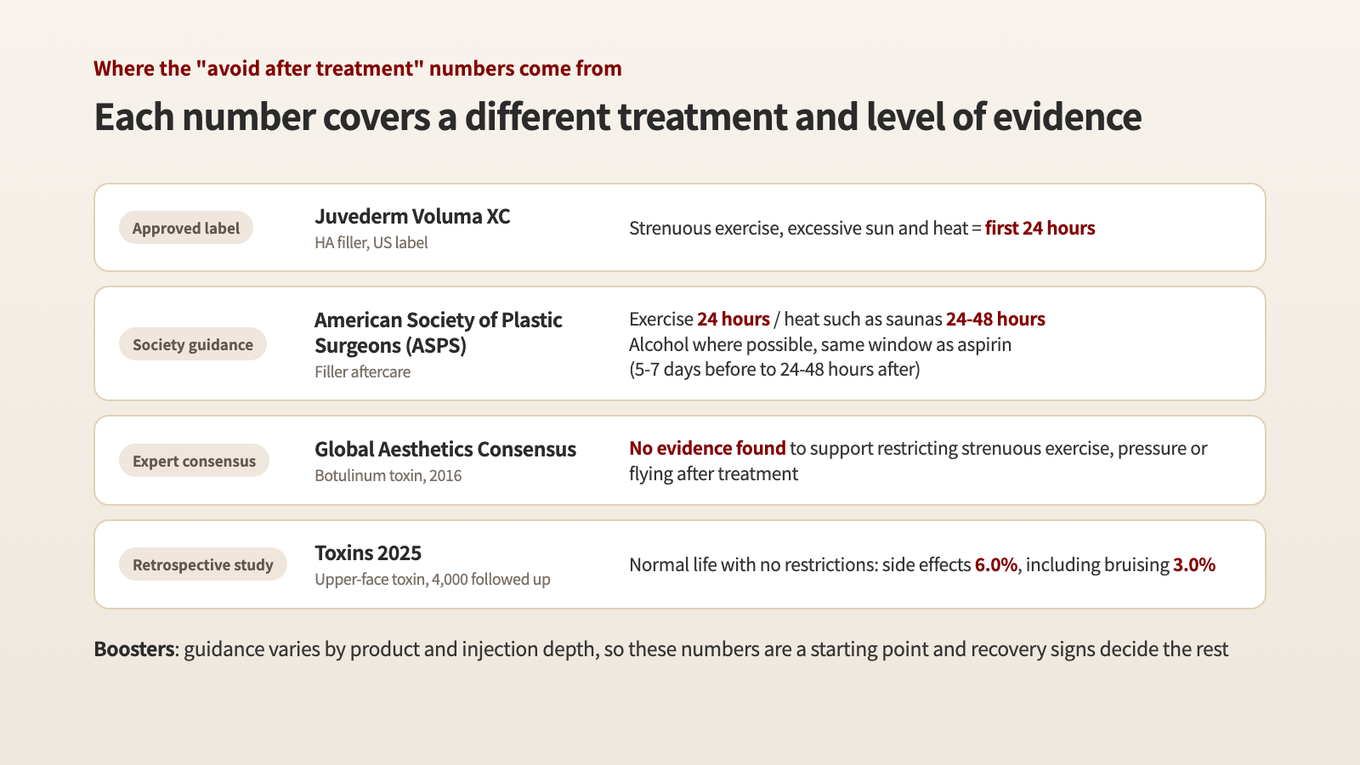
The same "avoid after treatment" can come from different treatments and different levels of evidence.
Even with the same booster, a lot depends on the person. Some people already have conditions that slow recovery. If any of these apply to you, lean one step more cautious, even for the same treatment.
Recovery points for other treatments such as lasers and lifting are covered treatment by treatment in why aftercare became a routine.
There are three things to check: whether the needle marks have closed, whether swelling and bruising are less than yesterday, and whether warmth and redness have settled when you touch the area. Once all three check out, step back up one level at a time, starting with whatever puts the least heat and blood-flow load on your skin.
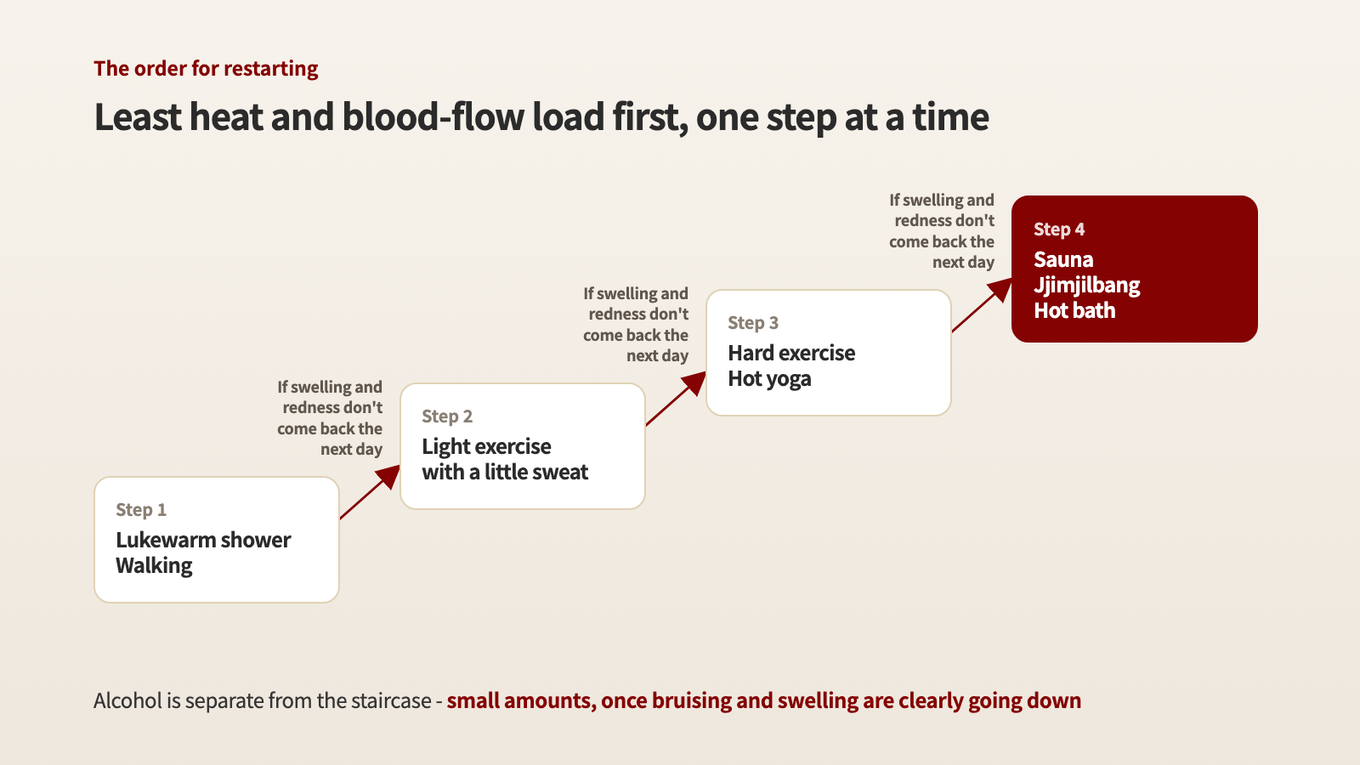
After moving up a step, check the next day that swelling and redness haven't come back before going on to the next one.
Think of restarting as a staircase. Lukewarm showers and walks first, then light exercise that makes you sweat a little, then hard exercise, with saunas and jjimjilbang last. If swelling and redness come back that night or the next morning after moving up, step back down, wait until it settles again, then go up.
Alcohol sits outside this staircase. Once you've seen that bruising and swelling are going down, starting with a small amount is a reasonable approach. If a work dinner is booked right after your treatment, moving the treatment date is sometimes the simpler fix.
⚠️ Stop stepping up and get it checked if - pain and redness get worse day by day / the treated area feels hot, or pus or yellow crusts appear / you have a fever / a lump grows or becomes painful. These are signs to check right away with the clinic where you were treated, whether or not you broke any of the restrictions.
A hot compress can work against what you're trying to do. Heat widens blood vessels and draws in more blood and tissue fluid. For swelling right after treatment, the usual approach is something cold wrapped in a thin cloth, applied briefly. Follow the instructions from the clinic where you were treated.
Walking or light stretching, where your face doesn't flush, puts little load on blood flow and heat. But if the treated area burns or the swelling comes back after exercise, take that as a sign the intensity is still too much for that day.
A lukewarm shower is the first step on the staircase. Half baths or long hot showers mean longer heat exposure, so I treat them more like a sauna. If the temperature and time are enough to flush your face, wait until the needle marks and redness have settled.
One slip doesn't decide your results. The changes a booster aims for vary from person to person and develop in the dermis over several weeks, and that day's swelling or bruising is usually a short-lived reaction sitting on top of that. Check whether swelling and bruising are heading down again the next day. If they're getting worse instead, or pain and warmth develop, get it checked by the clinic where you were treated.
You avoid alcohol, saunas and hard exercise because they widen blood vessels, raise heat and bring water and sweat to needle marks that haven't closed. The 24-48 hours from labels and professional societies is a starting point. When to lift things after that depends on the needle marks, which way swelling and bruising are heading, and warmth.
Once the signs check out, climb the staircase from a lukewarm shower up to the sauna, checking the reaction the next day. If you have work dinners or workouts lined up, the easiest approach is to factor them in when you book your treatment date.
#SkinBooster #SkinBoosterAftercare #AlcoholAfterTreatment #SaunaAfterTreatment #ExerciseAfterTreatment #Downtime #SwellingAfterTreatment #BruisingAfterTreatment #Rejuran #Juvelook #SeoulDermatology #ForeverClinicMyeongdong


