

Blog
Expert tips for healthy skin
Expert tips for healthy skin
"Doctor, back in the day, I'd just go for a strong facelift... But now everyone seems to be talking about 'regeneration.' Is this just a trend?"
This is a question I hear increasingly in our consultation room, and I'm glad to hear it. Because it signifies a quiet but significant shift in the entire beauty market over the past few years.
To put it simply: The focus in beauty is shifting from 'dramatic, immediate change through strong treatments' to 'helping the skin recover and regenerate on its own.' The buzz around stem cells, exosomes, and skin boosters is all part of this larger trend.
Today, I'm not here to promote a specific treatment. Instead, I'll lay out the background and movement behind the question, "Why is regeneration trending now?" Understanding the trend helps you make informed decisions, rather than getting swept up in the hype. (If you're curious about what exactly regenerative treatments entail and how injections, cultures, and exosomes differ, you can dive deeper into that here).
Key Takeaways
- The focus is moving from 'intense change' to 'encouraging recovery.'
- This shift is driven by three factors: filler fatigue, redefining 'natural,' and a move towards sustainable care.
- Regenerative treatments (stem cells/exosomes/skin boosters) are trending because they align with this shift - they encourage the skin to react on its own rather than just filling it up.
- However, not everything labeled 'regenerative' is revolutionary. The trendier it gets, the more critical it is to filter out the exaggerations.
- In the end, it's not about "jumping on the trend" but asking, "Does this align with my skin goals?"
To get straight to the point, this isn't just a fleeting trend; it's indicative of a shift in how we view beauty treatments.
A few years ago, the criteria for choosing a procedure were typically about "how effectively and dramatically it would change you." Strong lifts, voluminous plumpness, noticeable changes - the more pronounced the result, the better the treatment was perceived.
However, this trend has evolved. Now, the question is shifting to:
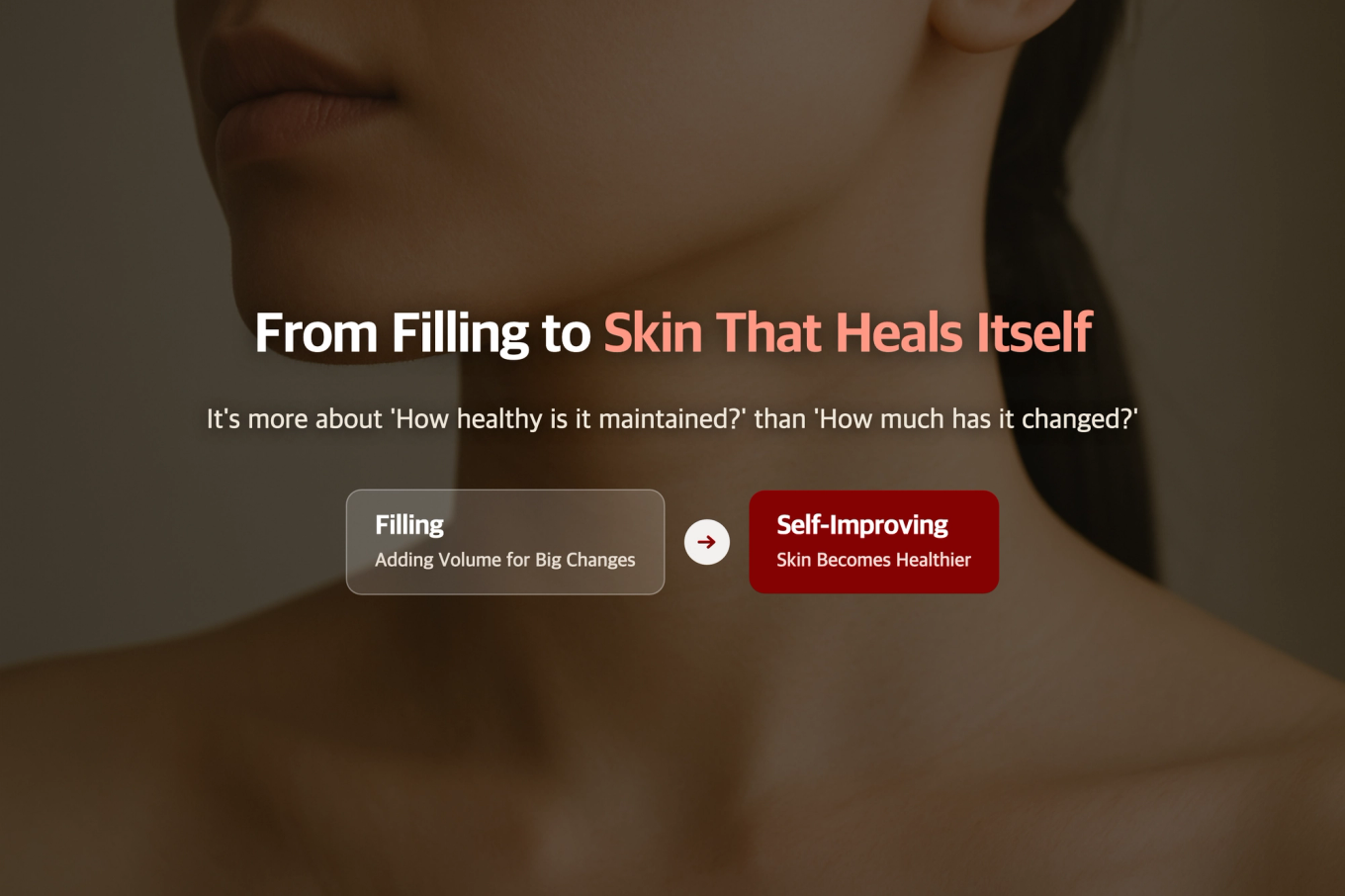
From "How much does it change me?" to "How subtly, long-lastingly, and healthily can it maintain my look?"
Beauty media worldwide are echoing this sentiment, forecasting that by 2026, the focus will have shifted from quick-fix fillers/Botox to improving the skin's intrinsic quality and long-term health. Market reports on regenerative treatments are also showing steady growth in this area over the past few years. While these figures vary across reports, they indicate a clear direction.
Why, then, is this shift happening now? From my experience in practice, there are three main reasons. Let's break them down.
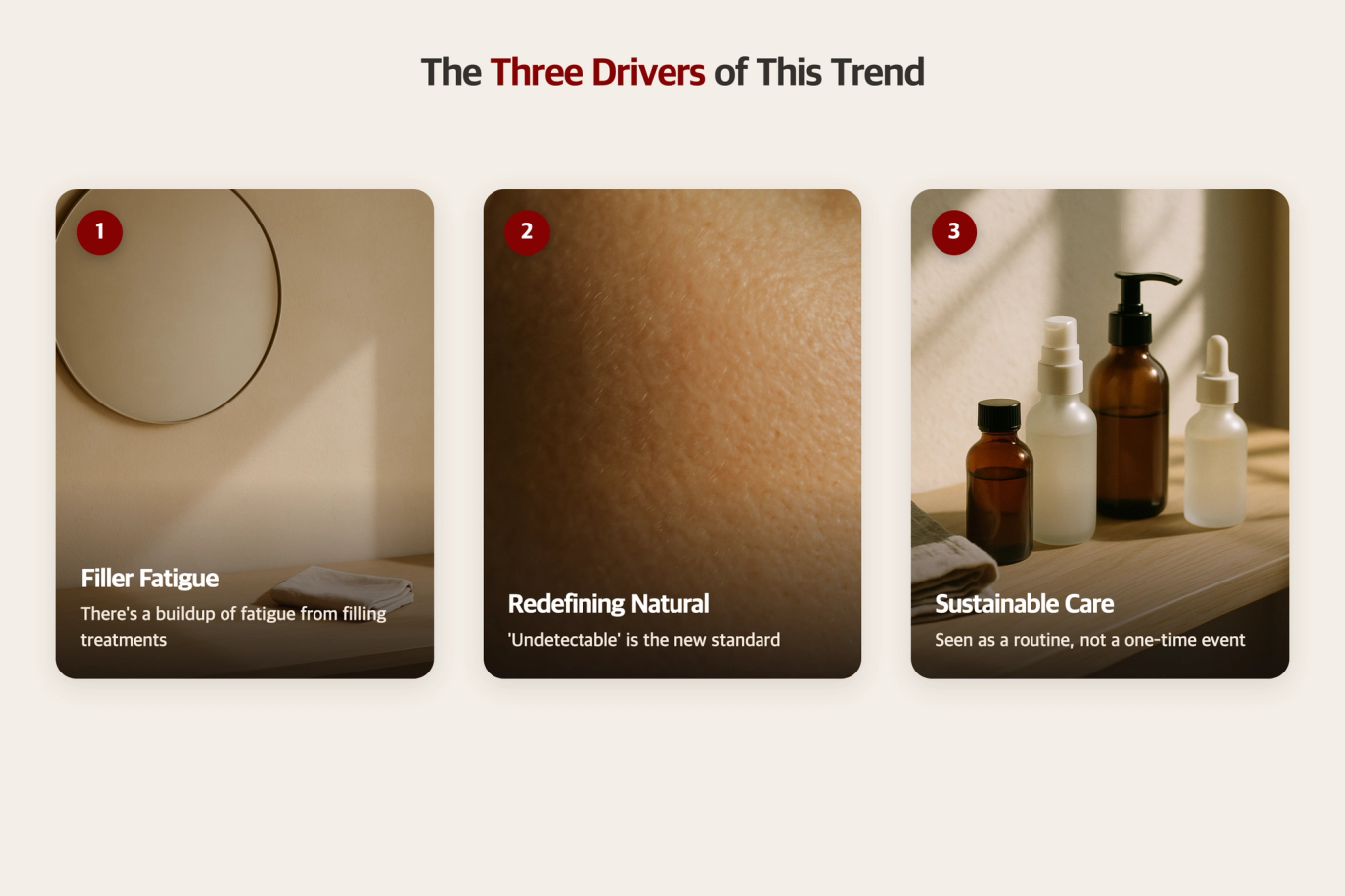
The first is a phenomenon often referred to as 'filler fatigue.' As fillers and Botox have remained popular for a long time, their side effects have also become well-known.
Overfilled, unnatural-looking faces, known as 'overcorrection,' have become common enough that many people now feel, "I don't want to look like that." This is a form of fatigue with filling beauty.
💡 Simply put - In the past, 'more filling and more tightening' seemed like the answer, but now many people are leaning towards 'less is more' and natural looks. This desire is the first reason people are turning towards regeneration.
The second reason is that the meaning of 'natural' has evolved. Previously, 'natural' meant 'improving beauty without it being obvious,' but now the standard has risen to 'not showing signs of treatment at all.'
The goal has shifted from having a 'dramatically different face' to simply looking like someone with 'naturally good skin.' In this context, gradual improvements in skin texture/tone/elasticity become more appealing than dramatic, one-time changes.
"I don't want to look drastically different; I just want my skin to look good."
This is a phrase I hear often in the consultation room these days, and it perfectly captures the trend's direction.
The third factor is a change in attitude towards beauty treatments, from 'one-time major events' to 'consistent care routines.'
In the past, treatments were seen as significant events to undertake for special occasions. Now, more people view them as a routine part of maintaining their skin health, akin to exercise or skincare. As a result, 'gradual and lasting' is more naturally accepted than 'dramatic and immediate.'
💡 Think of it like this - Strong procedures are like 'major surgeries,' while regenerative approaches are more like 'health maintenance routines.' The purpose differs, which is why the trending treatments change.
The answer becomes clear when we consider the three factors: filler fatigue, the new standard for naturalness, and consistent care - regenerative treatments align perfectly with these directions.
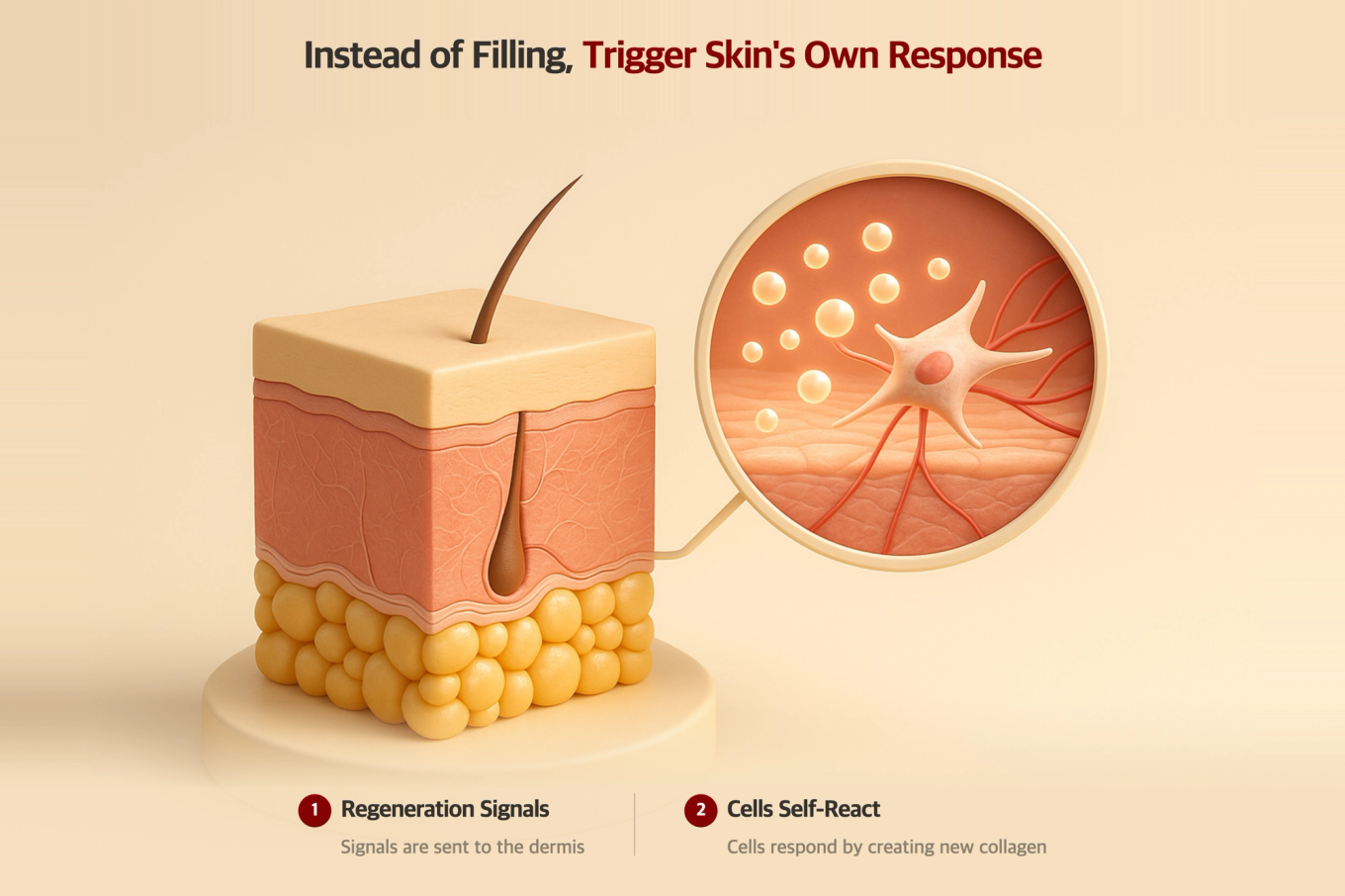
Regenerative treatments (stem cells, exosomes, skin boosters) share a common approach: they send signals for your skin to respond on its own, rather than filling something in. Thus, changes come gradually, look less obvious, and fit well with a routine approach.
However, there's one important caveat: not all regenerative treatments are created equal. Whether it's stem cells, cultures, or exosomes, whether it's autologous (self-derived) or allogenic (donor-derived), there are significant differences in principles and characteristics. While this distinction is beyond this article's scope, you can explore more about these principles in this detailed guide. For example, the Metacell (stem cell) we recommend at our clinic in Myeongdong, Seoul, is closer to the 'autologous-derived' category, utilizing components from your own body.
By now, it might seem like regeneration is all good, but let's take a step back. When a trend rises, it inevitably brings with it exaggerated marketing.
The word 'regeneration' sounds fantastic, so it's getting slapped onto everything these days. In consultations, I often advise patients to take a step back and critically evaluate trendy terms. Here are a few things to watch out for:
"Regeneration in one session" claims - Be wary of these. By principle, regenerative treatments aren't about 'instant dramatic change.' It's about gradual self-response, and individual results vary. The more definitive the claim, the more caution is warranted.
Not all 'regeneration' is the same - As mentioned, regenerative treatments encompass various types with different ingredients/principles/evidence. Don't assume they're the same based on the name alone.
Safety/regulatory positions vary - The use of direct cellular manipulation and culture-based approaches fall under different legal categories. Official guidelines from bodies like the Ministry of Food and Drug Safety (MFDS) should be the benchmark. Instead of relying solely on the term 'regeneration,' verify what materials are used, the principles behind them, and their regulatory status.
⚠️ Be especially cautious when - You're considering a treatment solely because "it's trending." Trends are just flows, not necessarily aligned with your skin goals. The correct sequence is understanding the trend, then assessing whether it suits your situation.

To wrap up, here's how to internalize this trend. Instead of 'following' a trend, learn to 'read' it.
| Misleading Approach | Grounded Approach |
|---|---|
| "Regeneration is trending." | "Does this trend align with my goals?" |
| "It promises dramatic change." | "Changes are gradual and vary by individual." |
| "All regeneration is good." | "There are many types of regeneration." |
| "Everyone's doing it, so should I." | "Let's start with my skin condition." |
💡 Interpret it like this - The key is not to use 'trend' as your standard. Trends are merely signals of what people currently value, but the actual standard is always your skin's condition and goals.

The trend of regeneration is not so much a passing fad but rather a significant shift in how beauty is perceived. The focus has moved from 'dramatic change in a single session' to 'helping the skin recover on its own.'
This shift is driven by three factors: filler fatigue, new standards for naturalness, and a shift towards routine care - regenerative treatments are trending because they align with these directions by encouraging the skin to respond on its own.
However, the trendier something becomes, the more critical it is to approach it skeptically. Rather than being swayed by the term 'regeneration,' ask, "What is this treatment, what principles does it operate on, and what evidence supports it?" Above all, question whether "this trend aligns with my skin goals." Knowing the trend is different from following it.
🩺 Doctor's Note - During consultations, I frequently hear, "Is this the latest trend?" Rather than focusing solely on the trend, I look at why it's trending. Understanding the reasons helps you determine whether it suits your skin's needs. The same goes for the regeneration trend. While the direction is positive, choosing treatments should be based on whether they match your goals, not just because they're trendy.
It's more of a shift in how beauty treatments are viewed than a simple trend. The focus has moved from 'dramatic change' to 'consistent management of skin quality,' and regenerative treatments align well with this direction. However, just because something is trending doesn't mean every 'regenerative' label is trustworthy, so it's important to filter out exaggerated marketing.
No, that's not the case. Strong treatments aren't worse; they just serve different purposes. If your goal is sharp contour changes, lifting treatments are appropriate. If you're looking to gradually improve skin texture/tone/elasticity, a regenerative approach might be better. The trend shift isn't about 'what's better' but about 'what people want more these days.'
No, they're not. While they fall under the same 'regenerative' umbrella, they differ in ingredients and principles. Whether the cells are directly introduced, or culture fluid is used, or only signal molecules (exosomes) are purified and used, their nature varies. This distinction is detailed in this guide.
It's challenging to guarantee results in this area. While the principles are clear, the clinical evidence varies by type/product, and individual responses differ. Regenerative approaches aren't about 'instantaneous dramatic changes,' so if you expect immediate significant results, you might be disappointed. It's more accurate to view them as potential improvements based on principles, with individual variations.
Your decision should be based on whether it aligns with your goals, not just because it's trendy. If your aim is to consistently manage your skin's condition, this trend might suit you. Conversely, if you seek immediate and noticeable changes, it might not align. What suits you depends on your skin's condition and goals, so it's advisable to assess the trend based on your criteria.
#RegenerativeTreatments #StemCellTrends #Exosome #RecoveryFocusedBeauty #SkinQuality #FillerFatigue #Metacell #MyeongdongDermatology #ForeverClinic