

Blog
Expert tips for healthy skin
Expert tips for healthy skin
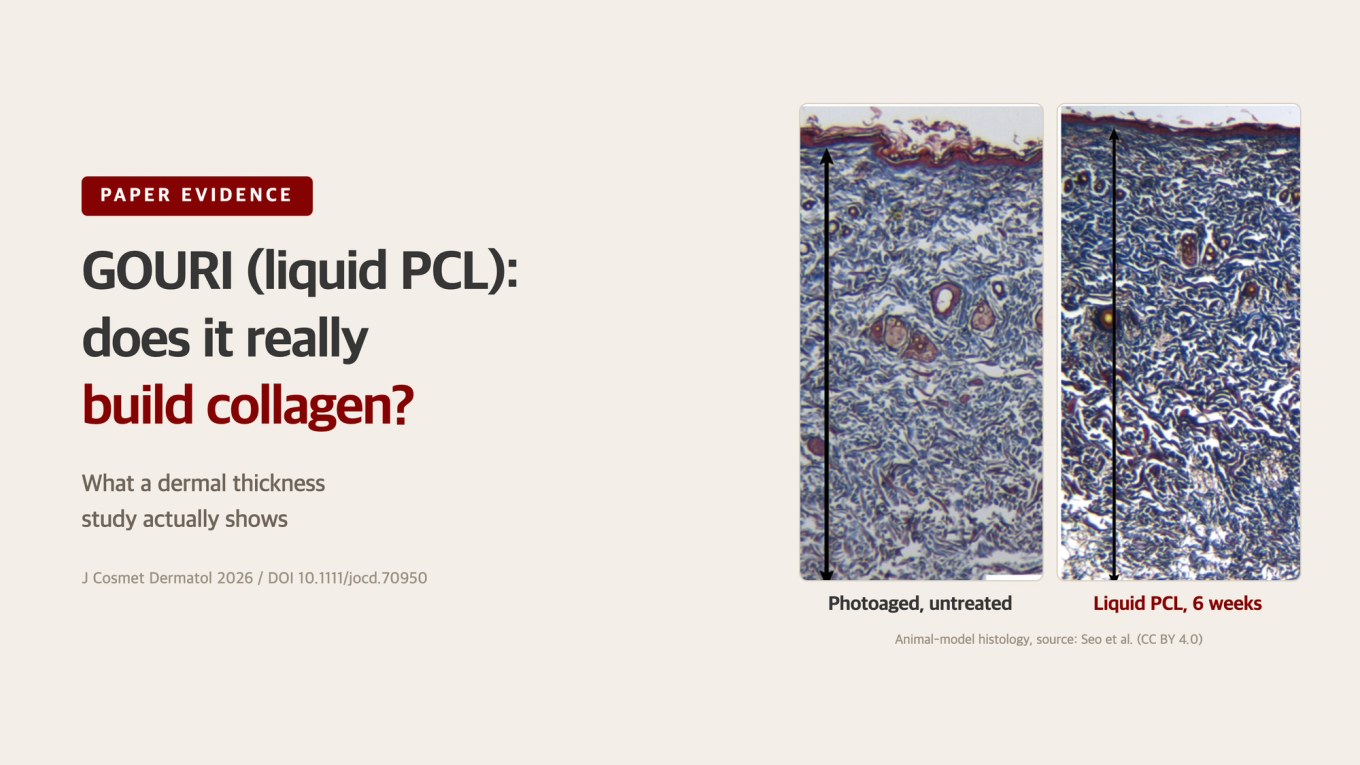
A lot of people who ask about GOURI in my consultation room have the same question: it's supposed to make your skin build collagen again, but what's the actual evidence for that?
Honestly, I'm glad when this comes up. The collagen booster market is full of products where the adjectives arrived before the data, so a skeptical patient is a healthy one. And I happen to be in an unusual position to answer. I'm a co-author on a study (Journal of Cosmetic Dermatology, 2026) that examined how liquid PCL changes dermal thickness and collagen production in photoaged skin.
So today I want to walk through that paper's data as one of its authors. What was measured, under what conditions, and exactly how far the numbers go. And, just as honestly, where they stop.
Key Takeaways
- Injecting liquid PCL (the form of GOURI's main ingredient) into a photoaging skin model significantly increased dermal thickness and collagen density at 6 weeks (p<0.001).
- The result also differed from a group injected with distilled water only (p=0.003), which separates the material's effect from the act of injection itself.
- Type 1 collagen (Col1a1), which photoaging had suppressed, recovered toward a level similar to healthy skin.
- This is a preclinical animal (mouse) study. The degree and duration of improvement in humans vary widely between individuals, and these results should not be read as a guarantee of treatment outcomes.
In a preclinical study of liquid PCL, GOURI's main ingredient, dermal thickness and collagen density both increased. When liquid PCL was injected into skin with induced photoaging, both measures rose significantly by week 6 (p<0.001). It's an animal-model result, not a human trial, so the actual degree of improvement varies from person to person.
These results appeared in a study published in the Journal of Cosmetic Dermatology in 2026. The full title is "Liquid-Form Polycaprolactone Injection Enhances Dermal Thickness and Collagen Production in UVB-Induced Photoaging Skin", which says it plainly: injecting liquid polycaprolactone increased dermal thickness and collagen production in UVB-photoaged skin. One distinction worth keeping in mind: what the study tested wasn't the finished product called GOURI but its main ingredient, the liquid PCL material itself. I'm Dr. Chanjong Lee. I see patients at Forever Clinic in Myeongdong, Seoul, and I took part in this research as a co-author. I've watched plenty of consultations where a paper citation gets used as decoration, so let me say it up front: the DOI link takes you to the author list and the data, and you can check both for yourself.
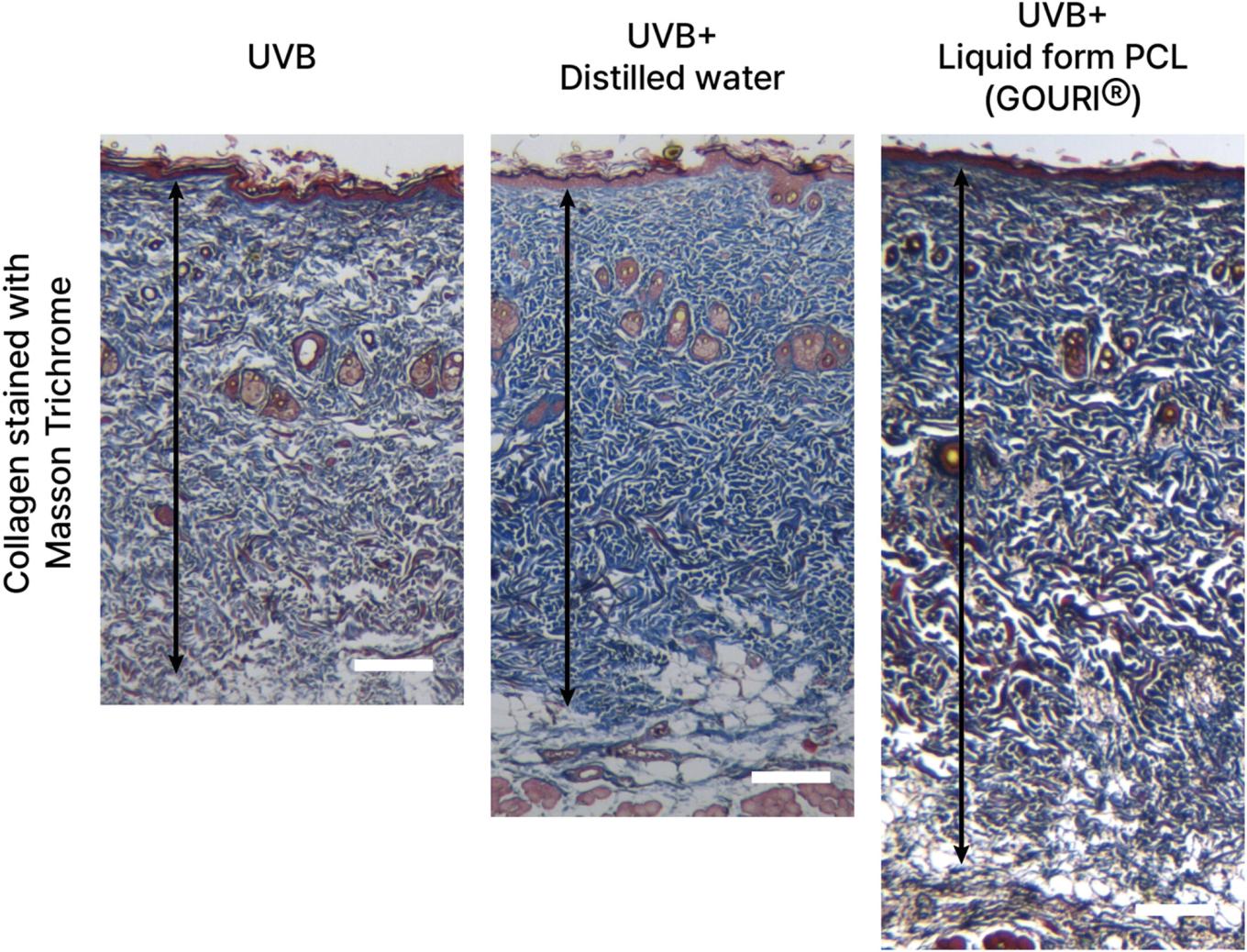
Figure 3 from the paper. Masson's trichrome histology (x100). The black arrows mark dermal thickness: compared with untreated photoaging (left) and distilled-water injection (middle), the liquid PCL group (right) shows a visibly thicker dermis with a denser collagen network. Source: Seo et al., J Cosmet Dermatol 2026, DOI 10.1111/jocd.70950 (CC BY 4.0)
Why run the experiment on photoaged skin in the first place? That choice is the point of the study. It's precisely the condition of the skin most people looking into collagen boosters have: long UV exposure, a thinning dermis, collagen gone sparse. Increasing something in healthy skin and restoring it in skin that's already damaged and depleted are entirely different questions. This study asked the second one.
Liquid PCL is a biodegradable polymer that spreads through the dermis and stimulates fibroblasts, the cells that build collagen. The injected material itself breaks down gradually, and the collagen your own fibroblasts built in the meantime is what stays behind.
PCL (polycaprolactone) is a medical polymer with a long track record in dissolvable sutures. GOURI, a collagen biostimulator used in Korea, takes that PCL and dissolves it completely into a liquid, with no particles. Particle-based boosters tend to stay near the injection point, while a liquid spreads evenly through the tissue. That spreading is also why it can be used in thin-skinned areas like under the eyes, a topic I covered separately in how GOURI works under the eyes.
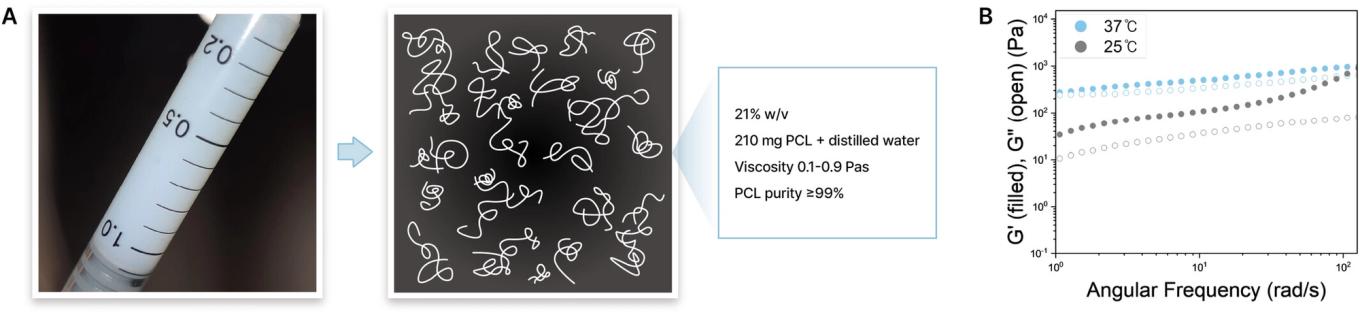
Figure 9 from the paper. The liquid PCL used in the experiment and its makeup - entangled polymer chains fully dissolved in solution, so the formulation stays a flowing liquid at both 25 degrees and body temperature (37 degrees). Source: Seo et al., J Cosmet Dermatol 2026, DOI 10.1111/jocd.70950 (CC BY 4.0)
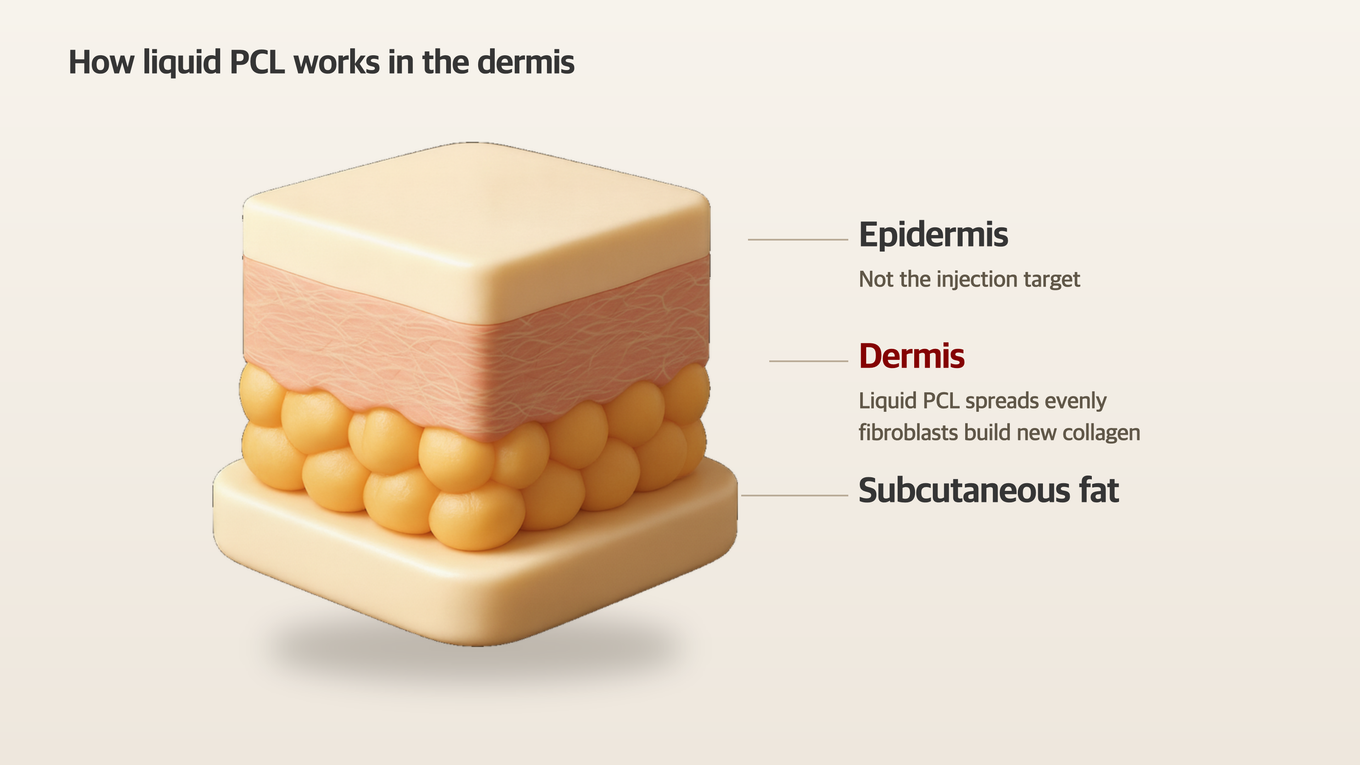
The dermal layer where liquid PCL is injected. This is where fibroblasts are stimulated to build new collagen, while the material itself gradually breaks down.
Here's the sequence of what happens in the body.
"Wakes up fibroblasts" can sound vague, so the paper checked that step separately in human dermal fibroblasts. When the cells were grown as 3D clusters (spheroids) and treated with liquid PCL, both markers rose: the share of Ki67-positive cells (a proliferation marker) and the share of cells with the activation signal YAP switched on. The increase was statistically significant under the study's cell-culture conditions (p<0.05). In other words, the backbone of the change seen in mouse skin moves in the same direction in human cells.
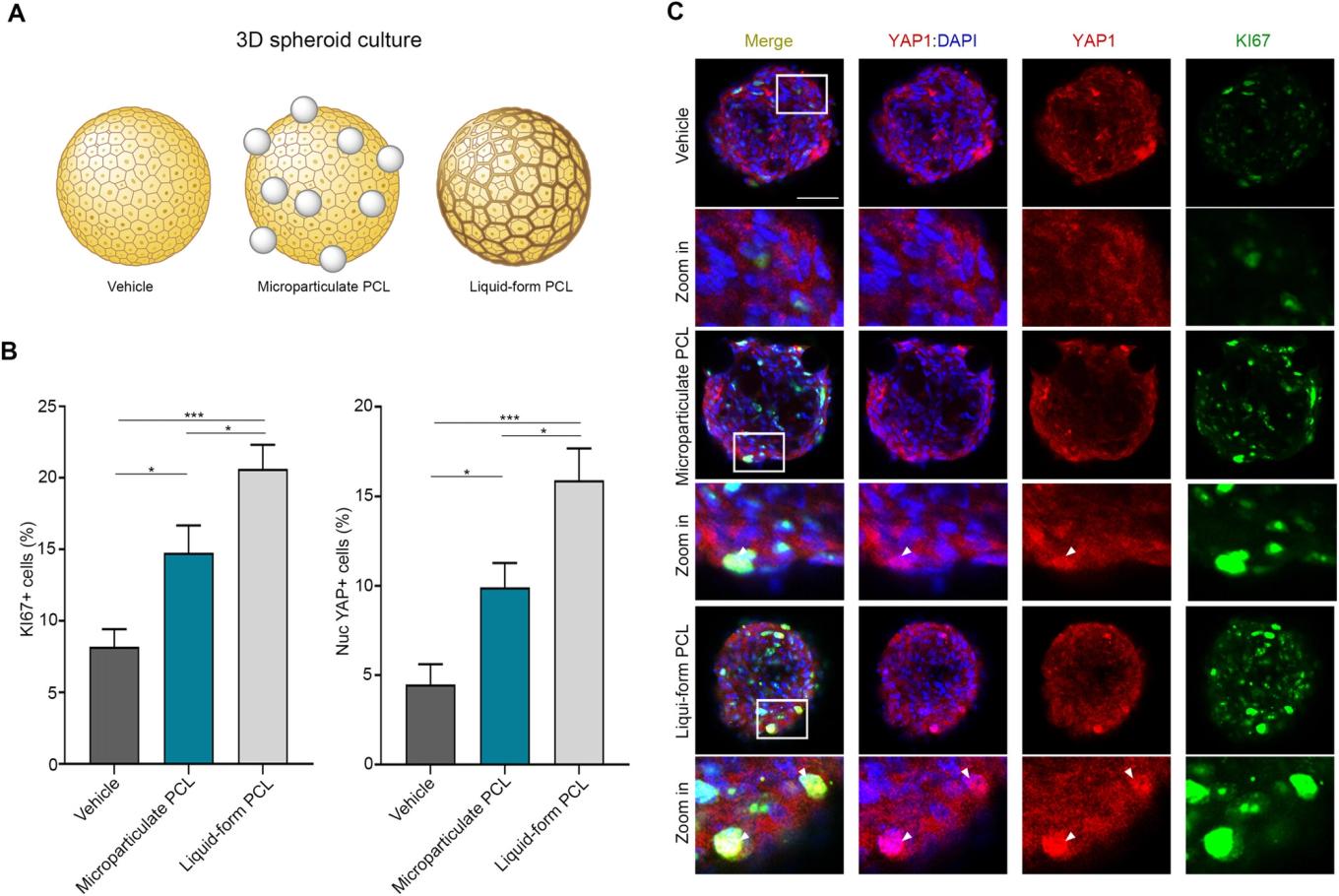
Figure 6 from the paper. Human dermal fibroblast spheroid experiment. In the liquid PCL group (bottom row), the share of YAP-active and Ki67-positive cells was higher than in the control group. Source: Seo et al., J Cosmet Dermatol 2026, DOI 10.1111/jocd.70950 (CC BY 4.0)
This is also why collagen boosters run on a different timetable from fillers. A filler gives volume the moment it goes in; with a booster, you wait out the weeks to months your body needs to build collagen.
Forty mice were divided into four groups, photoaging was induced, and the dermis was measured directly with tissue staining 6 weeks after the liquid PCL injection.
The design, briefly: first, 30 mice were exposed to UVB for 4 weeks (750mJ/cm²) to induce photoaging. That photoaged group was then split three ways: left untreated, injected with distilled water only, or injected with liquid PCL. Add 10 normal controls that never received UVB, and you have four groups in total. Outcomes were measured 6 weeks after injection by observing the dermis directly with Masson's trichrome staining.
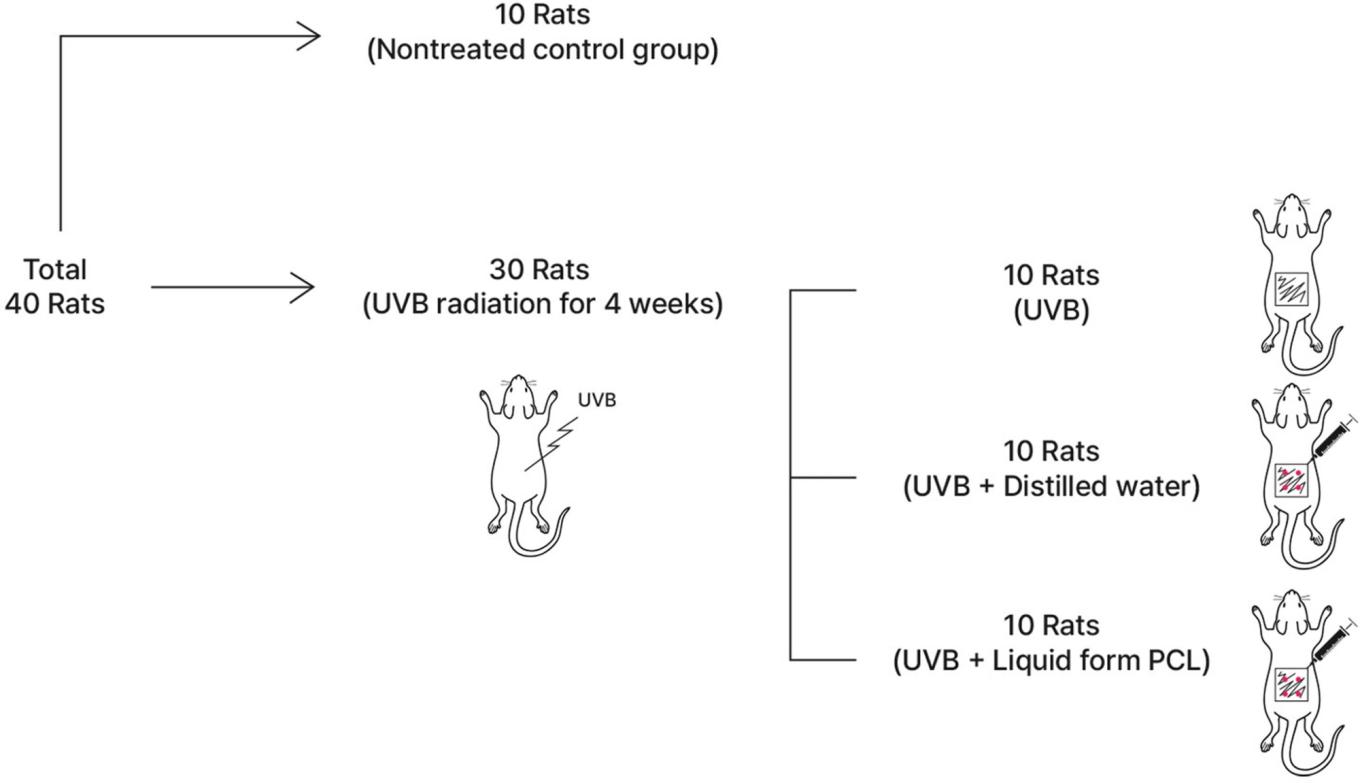
Figure 1 from the paper. Study design - 40 mice in total, split into 10 normal controls and 30 UVB-photoaged mice, with the photoaged group further divided into untreated / distilled-water injection / liquid PCL injection. Source: Seo et al., J Cosmet Dermatol 2026, DOI 10.1111/jocd.70950 (CC BY 4.0)
You might wonder why the distilled-water group is there, and that detail actually carries the core of the study. A needle piercing the skin can, on its own, create micro-stimulation and a repair response. The fact that the liquid PCL group ended up significantly thicker than even the distilled-water group (p=0.003) means the change came from the material's own action, not from the act of injection.
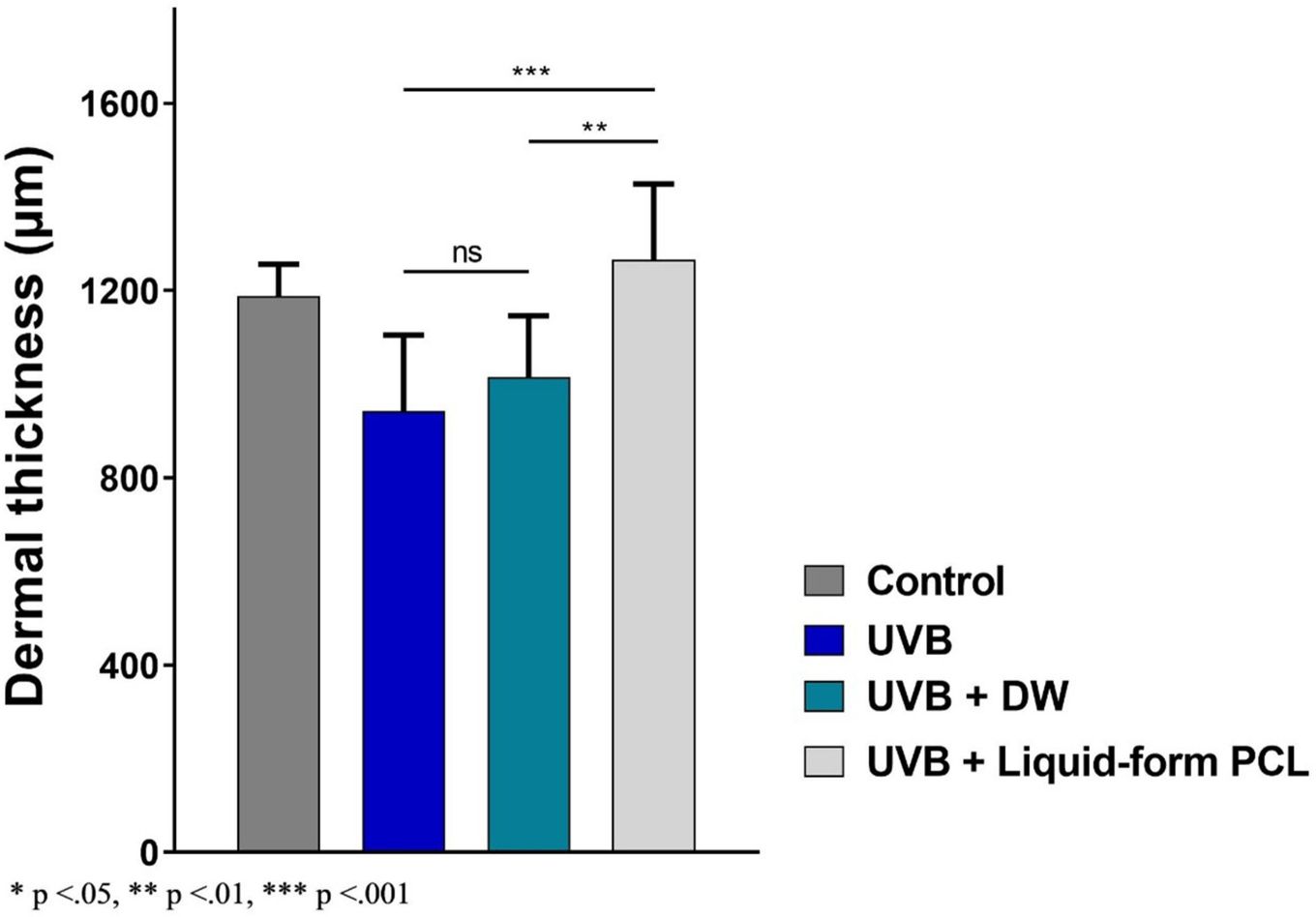
Figure 2 from the paper. Dermal thickness at 6 weeks. Compared with the untreated photoaged group (dark blue) and the distilled-water group (teal), the liquid PCL group (light gray) is significantly thicker, reaching the level of the normal controls (gray). Source: Seo et al., J Cosmet Dermatol 2026, DOI 10.1111/jocd.70950 (CC BY 4.0)
Here's a summary of what was measured.
| What was measured | Result (group means) | Statistics (at 6 weeks) |
|---|---|---|
| Dermal thickness | Untreated 941.9μm vs liquid PCL 1266.1μm (normal controls 1188.0μm) | p<0.001 vs untreated / p=0.003 vs distilled water |
| Collagen density | Untreated 22.1% vs liquid PCL 40.0% (normal controls 50.7%) | p<0.001 vs untreated / p=0.017 vs distilled water |
| Type 1 collagen (Col1a1) | Expression recovered to about 4.6x the untreated group (normal controls about 5.2x) | p<0.001 vs untreated and vs distilled water |
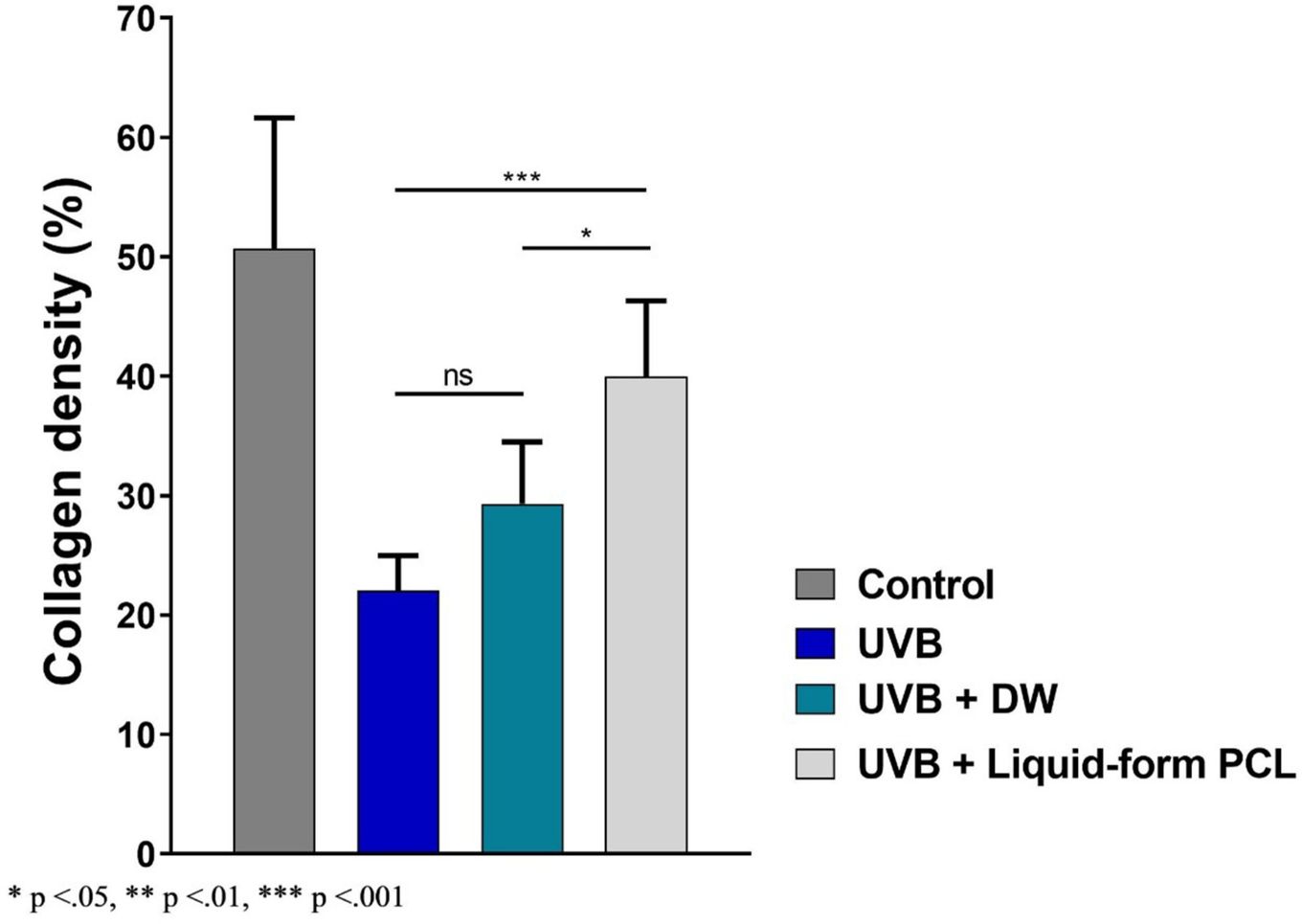
Figure 7 from the paper. The share of tissue area occupied by collagen (collagen density). A density that had dropped to 22.1% with photoaging rose to 40.0% six weeks after liquid PCL injection. Source: Seo et al., J Cosmet Dermatol 2026, DOI 10.1111/jocd.70950 (CC BY 4.0)
The last row is the one that stayed with me. Type 1 collagen production, which photoaging had shut down, climbed back toward the level of healthy skin. And not only at the gene level: an actual protein assay (immunoblot) confirmed the same direction. At least within the animal model, the mechanism behind the name "collagen booster" held up to the test.
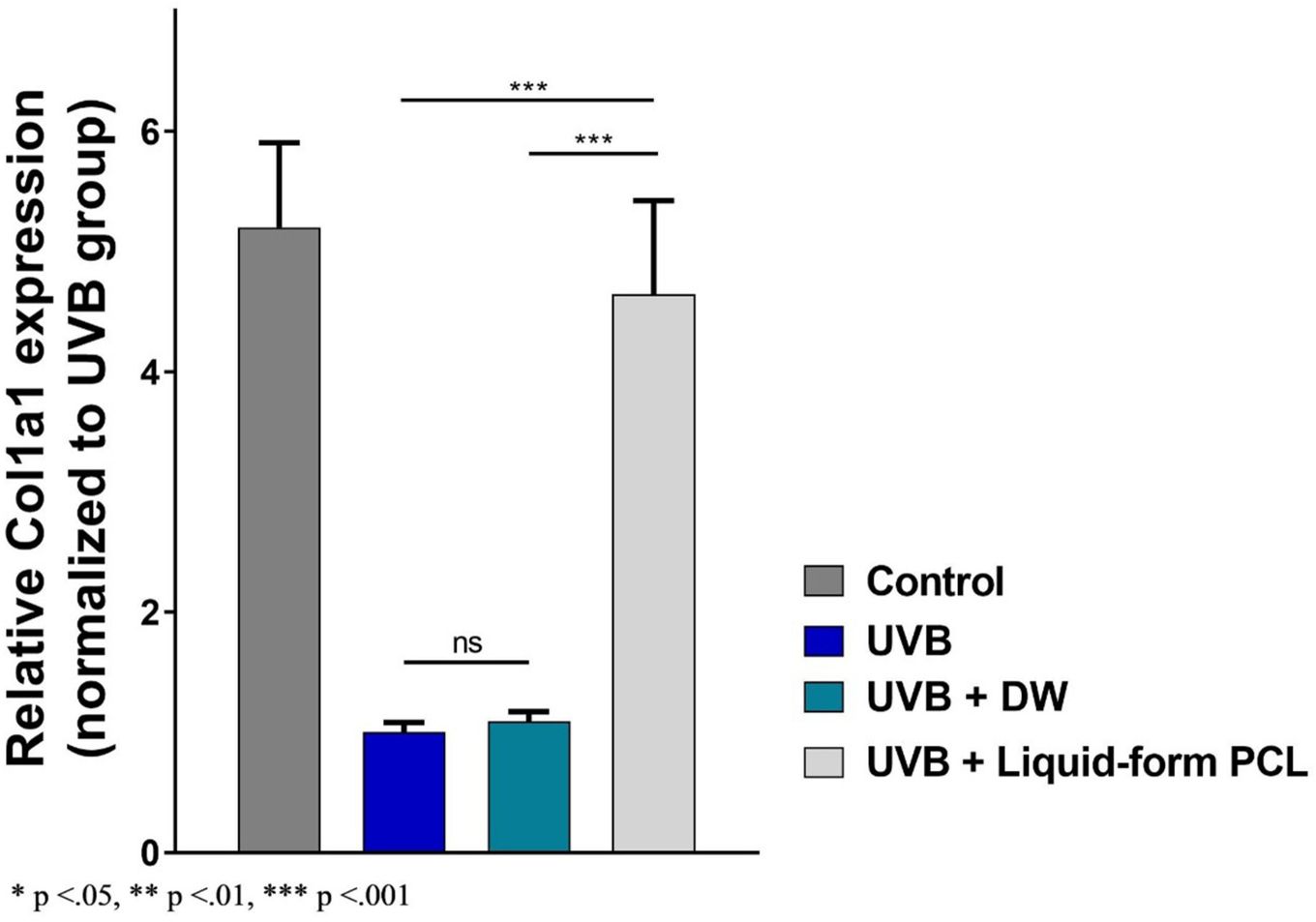
Figure 4 from the paper. Type 1 collagen gene (Col1a1) expression. Expression that photoaging had suppressed returned to near the normal-control level in the liquid PCL group. Source: Seo et al., J Cosmet Dermatol 2026, DOI 10.1111/jocd.70950 (CC BY 4.0)
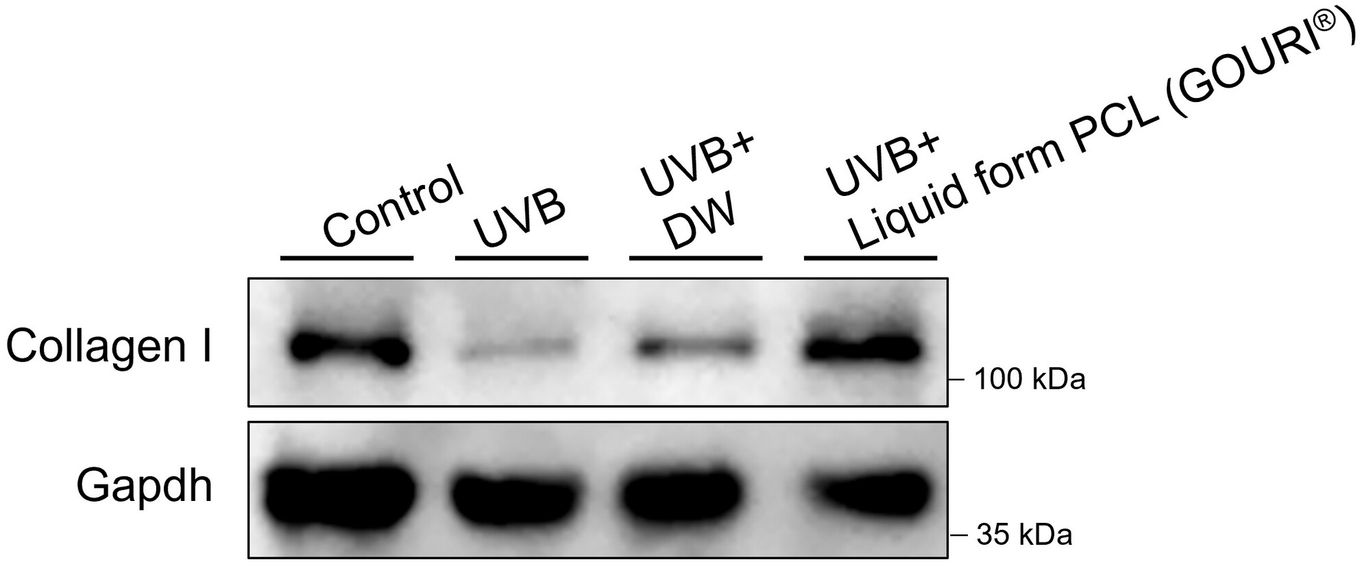
Figure 5 from the paper. Type 1 collagen protein immunoblot. The top row is type 1 collagen: bands faded by UVB visibly darken again in the liquid PCL group. Source: Seo et al., J Cosmet Dermatol 2026, DOI 10.1111/jocd.70950 (CC BY 4.0)
Not at face value, no. This is a preclinical animal study, not a human trial, so it's evidence for the direction the material works in, not a promise of how much your own skin will improve.
Scientific evidence comes in grades. Cell studies, animal models, human trials: each carries a different weight. This study sits at the animal-model stage, where it pinned down the mechanism in detail, and as an author I'd rather draw that line clearly myself. Read more into a study than it says, and it usually comes back as disappointment.
| What this study answered | What still needs confirming in humans |
|---|---|
| Liquid PCL works in the direction of increasing dermal thickness and collagen density in photoaged skin | How much improvement shows in human skin |
| The change comes from the material's action, not the act of injection | How long the effect lasts |
| Suppressed type 1 collagen production moves back toward recovery | Which skin conditions respond most |
⚠️ Good to know - The timetable has individual variation too. Liquid PCL is cumulative: changes build over the weeks to months it takes new collagen to form, so this isn't a treatment to judge in the mirror the next morning. And because it's an injectable, bruising or swelling can last a few days, and if the injection depth or amount is off, in rare cases problems like nodules can develop. That's why the injector's grasp of anatomy and level of skill play into the result.
Since nodules came up, the paper looked at this at the tissue level as well. The injection site was observed with tissue staining at 4, 8, and 12 weeks, and no notable inflammatory response or granuloma (a firm foreign-body reaction mass) was seen. But this too was an observation in a small number of animals, so safety in humans ultimately remains an area shaped by the practitioner's judgment and technique together.
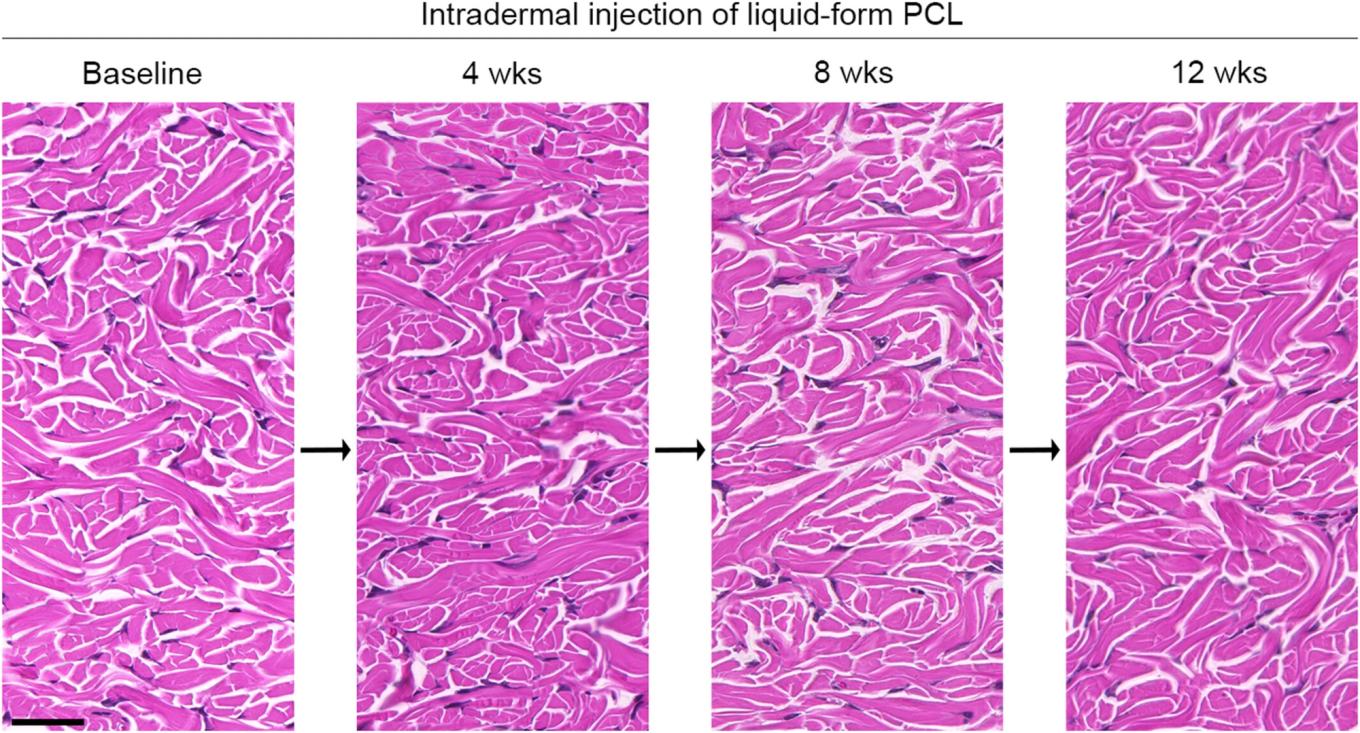
Figure 8 from the paper. Tissue observation from before injection (left) to 12 weeks after (right). It held steady with no significant inflammatory response or granuloma findings. Based on observation of 3 animals in the model. Source: Seo et al., J Cosmet Dermatol 2026, DOI 10.1111/jocd.70950 (CC BY 4.0)
This treatment points the right way for people whose skin is thinning, with fine lines and declining elasticity as the main concern. If you want hollowed volume filled right away, a different approach fits better.
Here are the axes I use when setting direction in consultations.
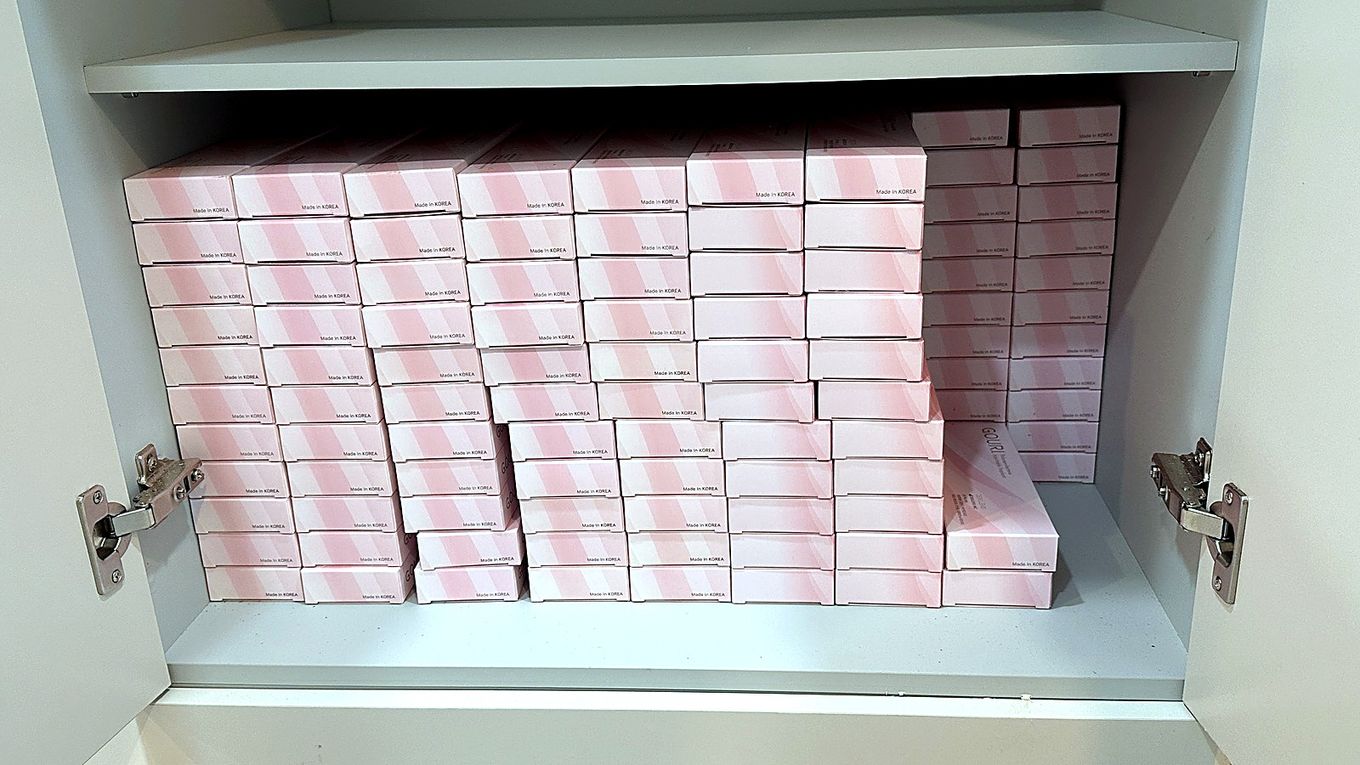
Genuine GOURI in our Myeongdong clinic's storage cabinet. Being able to show exactly which product we use is part of what gives an evidence conversation its weight.
One more thing worth adding: however good the paper, a treatment is completed by the product and the hands. Opening the whole cabinet of genuine GOURI stock to patients at our Myeongdong clinic, and choosing the injection layer and amount based on the mechanism I confirmed in this research, both come from the same place. If you're going to talk about evidence, you have to hold yourself to its standard first.
PCL (polycaprolactone) is a biodegradable medical polymer with a long history in dissolvable sutures. GOURI dissolves this PCL completely, with no particles, into a liquid form, so it spreads evenly through the dermis and breaks down in the body over time.
By collagen density (the share of tissue area occupied by collagen), the untreated photoaged group averaged 22.1% versus 40.0% six weeks after liquid PCL injection (normal controls 50.7%, p<0.001). Dermal thickness was 941.9μm versus 1266.1μm as group means. These are between-group comparisons in an animal model, though: they can't predict the degree of improvement in humans, and individual variation is wide.
It isn't a treatment where volume appears on the spot; changes accumulate over the weeks to months it takes new collagen to form. The pace at which your body builds collagen depends on age and skin condition, so when you notice it varies from person to person.
It's an injectable, so bruising, swelling, and redness can last a few days. If the injection depth or amount is off, in rare cases nodules can develop. Most settle with time, but there's individual variation, so it's best to share your skin condition and medical history thoroughly before treatment.
It appeared in the Journal of Cosmetic Dermatology, 2026, volume 25, issue 6, and searching the DOI (10.1111/jocd.70950) brings up the author list and the full details. It's a peer-reviewed journal publication, so anyone can verify the source.
When someone asks "does GOURI build collagen?", the most honest answer I can give right now is this. In a photoaged skin model, liquid PCL significantly increased dermal thickness and collagen density within 6 weeks; the distilled-water control let us attribute that change to the material's own action; and suppressed type 1 collagen production moved back toward recovery. That's the part the data can speak to.
At the same time, this is an animal-model result, and it doesn't promise the degree or duration of improvement in humans. Change comes gradually over weeks to months, and the extent differs by person. So if you're considering GOURI, don't stop at "I heard it builds collagen." Start by sorting out whether your concern is really skin thickness and texture, or volume. Settle that first, and whether this treatment points your way becomes much clearer.
If you want to dig further into the evidence, check the paper itself. As an author, I'd rather be fact-checked than taken on faith.
#GOURI #LiquidPCL #LiquidPCLCollagen #CollagenBooster #Biostimulator #DermalThickness #CollagenProduction #Photoaging #CollagenBoosterStudy #MyeongdongDermatology #ForeverClinic