

Blog
Expert tips for healthy skin
Expert tips for healthy skin
"My skin feels duller since summer ended. Makeup's not sitting right."
Come September, we hear this a lot at our clinic in Myeongdong, Seoul. Throughout summer, people are busy and put off skincare until the cooler weather arrives, and they finally take a good look in the mirror and think, "Something's changed." Skin tone seems darker, texture rougher, and spots that used to fade quickly now seem entrenched. It's not just in their heads.
Over one summer, skin takes a real beating from UV, heat, sweat, and air-conditioned dryness, and those marks tend to surface all at once in early autumn. So at this time of year, the conversation in the clinic leans less toward "let's do something strong and new" and more toward undoing the summer strain and getting skin back to where it was. Today I'll walk through what summer actually leaves behind, why early autumn happens to suit recovery, and how I think about a recovery-first sequence, the same way I'd explain it across the desk.
This isn't about promoting specific treatments. By breaking down 'summer damage' into specific issues, you'll have a clearer idea of what your skin needs right now.
Key Points at a Glance
- Summer UV exposure leaves three main traces on the skin: pigmentation, collagen damage (photoaging), and barrier weakening.
- This damage accumulates over the summer and becomes noticeable as the weather cools. It's not sudden deterioration, but accumulated damage becoming visible.
- Early autumn is when UV exposure decreases, lowering the risk of post-inflammatory hyperpigmentation (PIH) after treatments, making it a good time to start recovery procedures.
- Recovery approaches are generally divided into hydration/texture (water-glow treatments), regeneration/firmness (skin boosters/regeneration treatments), and pigmentation correction.
- Instead of attempting a 'one-time reset', first assess which aspect of your skin is most fatigued.
Let's address a common misconception first. "Isn't skin more hydrated in summer because of the humidity?" It might seem that way on the surface, but that's just the moisture content of the outer layer. Below the surface, it's a different story.
Here's a rundown of what skin endures throughout the summer:
The problem is these changes accumulate quietly rather than appearing overnight. Take UV exposure, for instance: you don't tan instantly on exposure, but rather melanin develops over days and darkens over 2-3 weeks. This gradual process means you might not notice the damage during peak summer, only to realize as autumn arrives, "When did all these spots appear?"
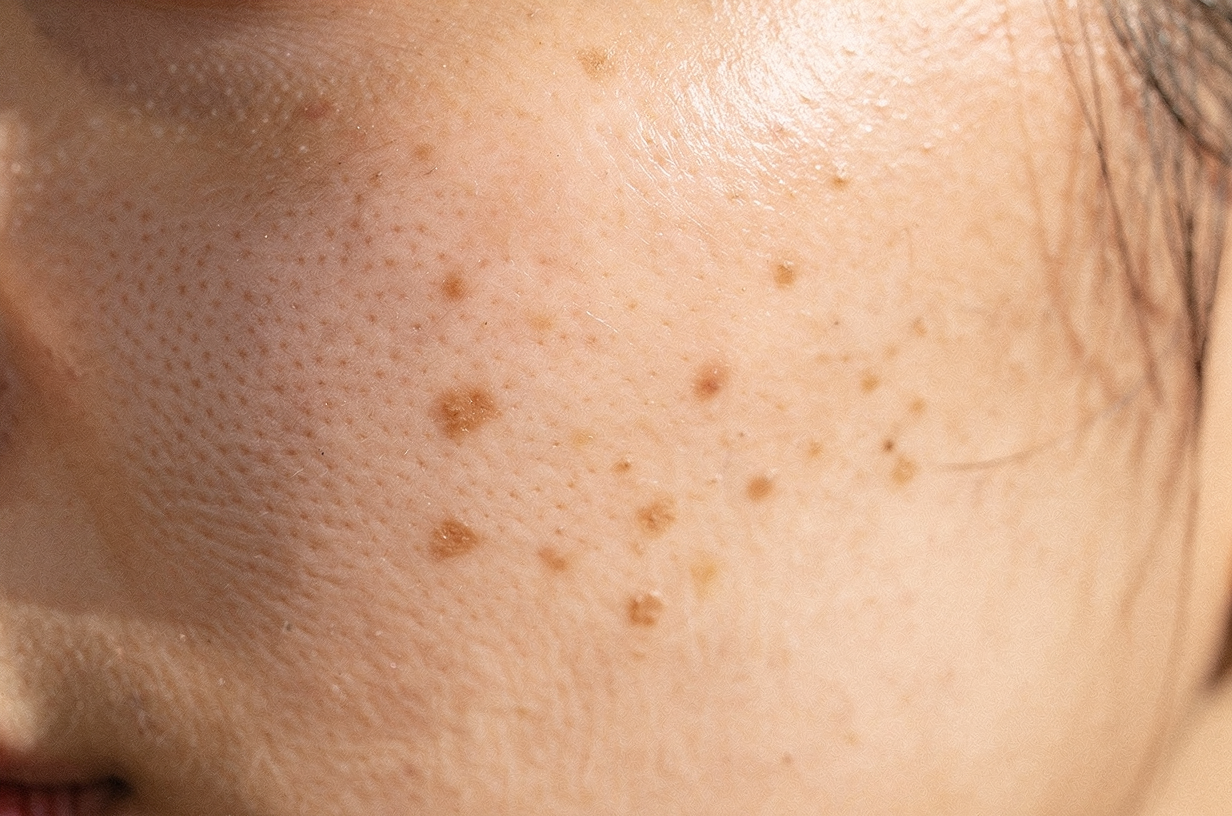
Summer damage doesn't show immediately but becomes evident as temperatures cool. It's not sudden worsening, but accumulated exposure.
Treat 'summer damage' as one big lump and it's hard to know where to start. So I always split it three ways. Each one breaks in a different place, and each one recovers differently.
First, pigmentation. UV exposure prompts the skin to produce more melanin as a defense mechanism. If the excess melanin fades evenly, great, but if not, and particularly if there's a predisposition to pigmentation, it can result in uneven patches. There are superficial, freckle-like spots on the epidermis and deeper, dermal pigmentation, which require different approaches even if they look similar.
Second, collagen damage, or photoaging. UV rays generate free radicals within the skin, activating enzymes (MMPs) that break down collagen and elastin in the dermis. One summer alone won't drastically reduce elasticity, but cumulative summers can accelerate the onset of fine lines and sagging, making photoaging a significant contributor to aging.
Third, the skin barrier. Combined UV and dryness can weaken the skin's surface barrier, leading to easy moisture loss, increased sensitivity to external irritants, and a stinging sensation with anything applied. If your skin feels thinner after summer, it's often a sign of a fatigued barrier.
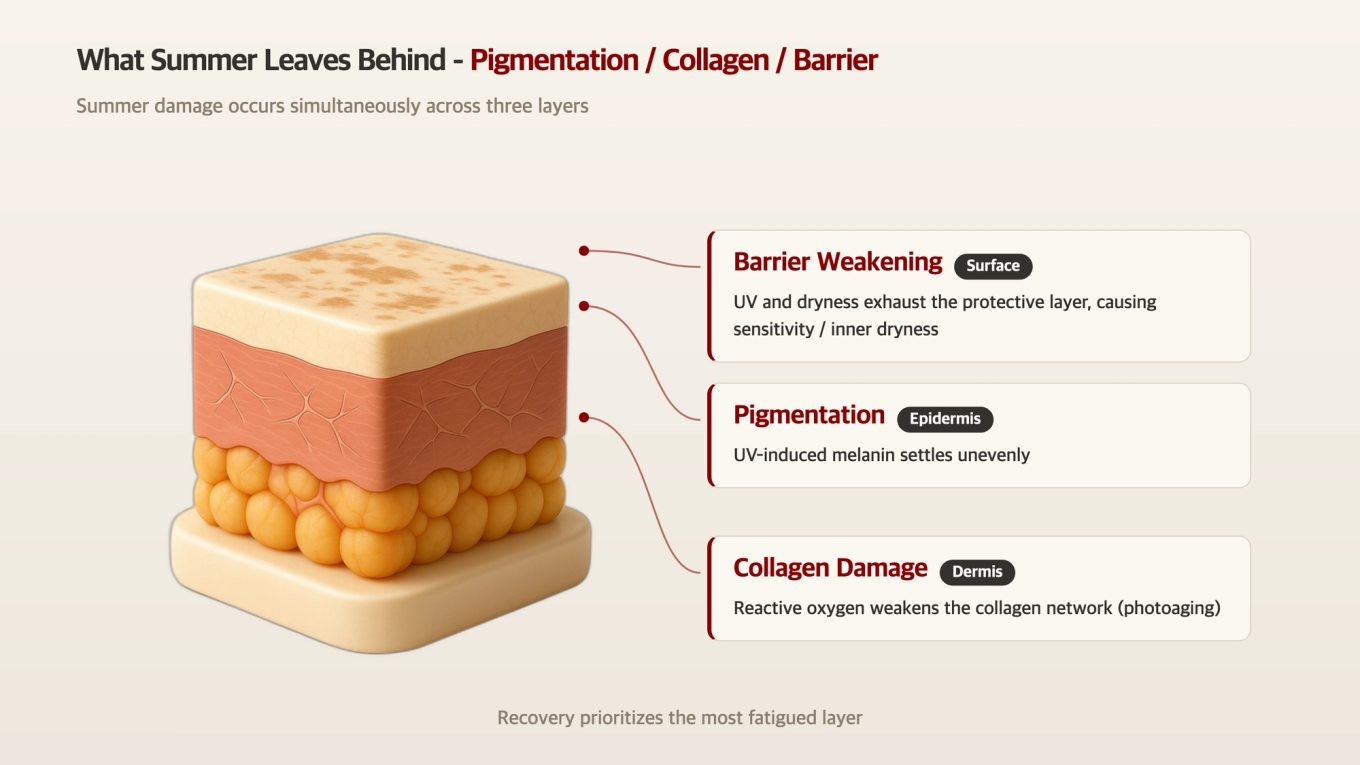
Summer damage manifests in pigmentation (epidermis), collagen thinning (dermis), and barrier breakdown (surface). Recovery should be layer-specific.
Here's what matters: the three rarely come alone - they usually come together. Chase the pigmentation with whitening while the barrier is still down, and the skin gets more reactive, which can actually make the pigmentation worse. So post-summer recovery is less "fix one thing" and more "figure out which layer is most worn out right now" and start there.
"Should I start right after summer ends, or wait until winter?" is a common question. In short, early autumn is a favorable time to start recovery treatments. This isn't about seasonal sentimentality but rather UV exposure.
In Korea, the UV index typically peaks in mid-summer (July-August) and begins to decline as September approaches with the lowering sun angle. This matters for recovery treatments because -
Post-treatment, your skin becomes temporarily sensitive. After pigmentation or regeneration treatments, your skin is more reactive to UV light. If exposed to strong UV rays during this period, there's a risk of post-inflammatory hyperpigmentation (PIH), meaning the treatment area could darken instead of fading. This is why pigmentation treatments are approached cautiously in mid-summer.
In early autumn, UV levels are decreasing, reducing the risk of PIH after treatments, and the cooler temperatures mean less sweat and heat irritation, creating a more comfortable recovery environment.
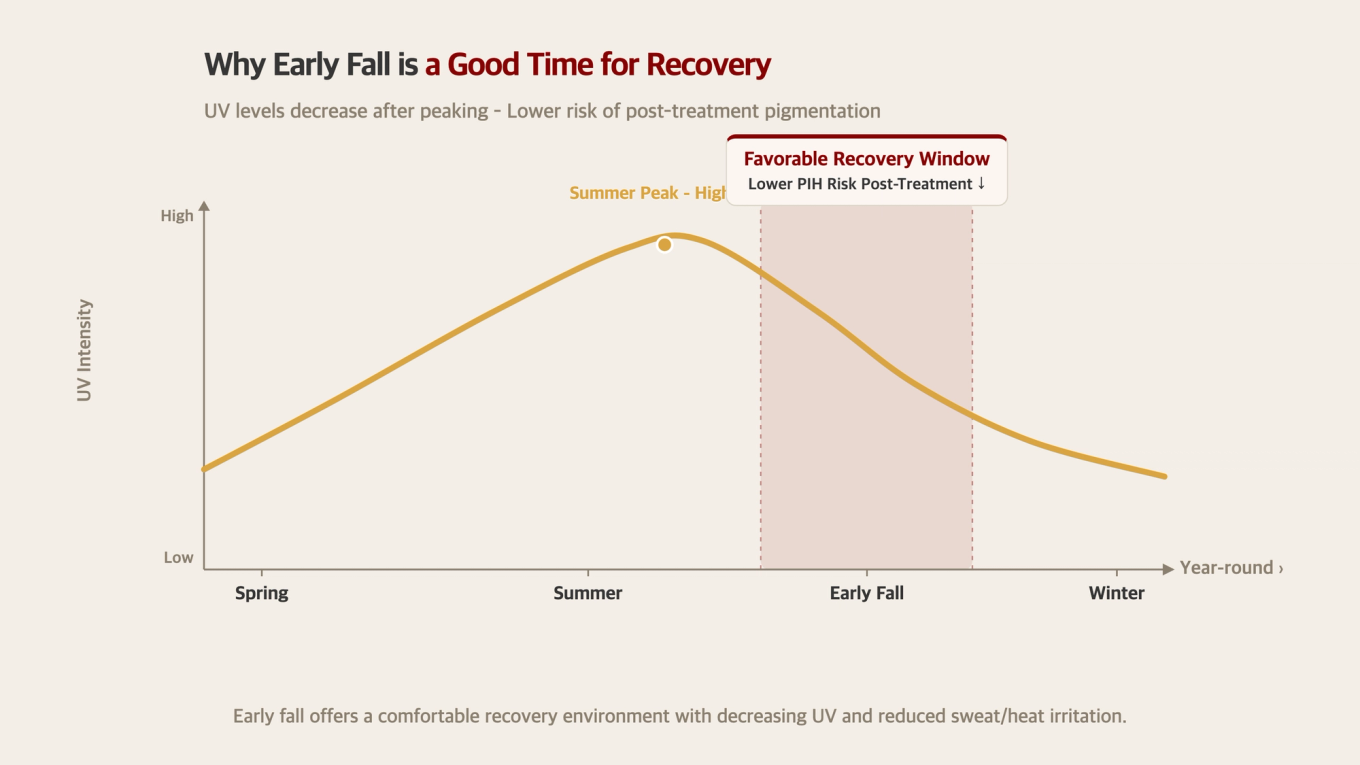
As UV intensity declines in early autumn, the risk of post-treatment pigmentation decreases, making this a good time for recovery and pigmentation treatments (risk and response vary from person to person, so it's worth checking beforehand).
A point of balance: saying 'early autumn is favorable' doesn't mean 'only in early autumn.' With diligent sun protection, treatments can be managed year-round. But since summer damage accumulates and UV levels are decreasing, this timing aligns well with recovery goals.
So, what's the current trend? In the past, post-summer "one-shot whitening lasers" were almost standard. Nowadays, the focus has shifted more towards revitalizing the skin's underlying resilience rather than just erasing pigmentation. The recent emphasis on skin boosters is not just about simple hydration but about restructuring the dermis itself.
Here's an overview of the main approaches:
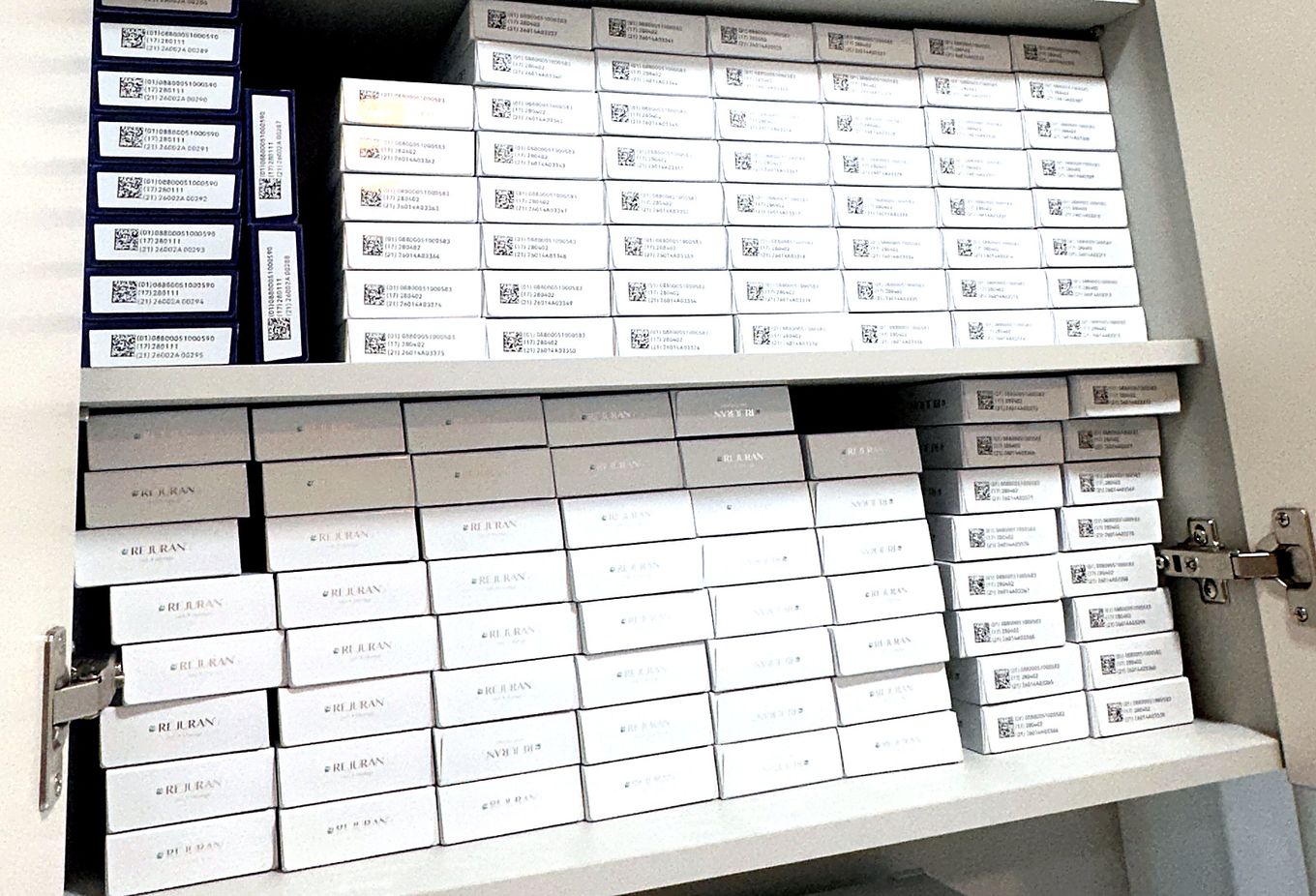
Genuine skin boosters/regeneration products are stored and managed in bulk. The quality and management of these products form the foundation of treatments.
At Forever Clinic, for hydration/texture, we use aqua peels or hydrofacials and injectable glow treatments. For regeneration/elasticity, options include Rejuran, Juvelook, and Sculptra skin boosters, and stem cell-based Metacell treatments. Though this is just a list, the right choice depends on where damage is concentrated and your skin's condition, as reactions vary. One clarification: while 'exosomes' are often mentioned online, they're a component that supports regeneration, not a standalone treatment we offer. Our focus is on Metacell (stem cells) and skin boosters for regeneration.
The key isn't which of these is 'better,' but where your summer damage is most concentrated. We'll break down this framework further in the next section.
The pressing question is likely, "What should I do first?" Here's how we guide our approach in clinical settings. This isn't about providing a definitive answer but offering a framework for consideration.
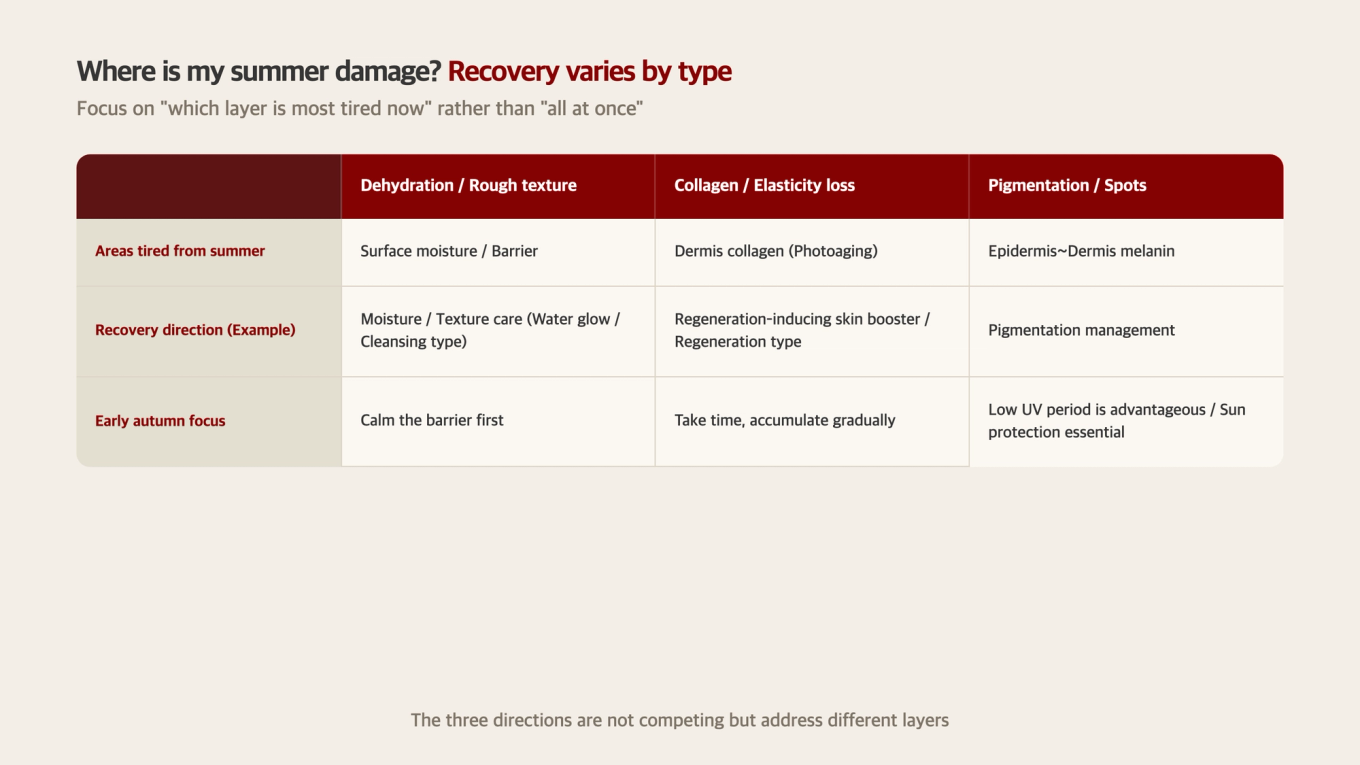
Summer damage varies by type; recovery focuses on the affected layer. Choose based on what's most lacking in your skin right now.
Here's a quick breakdown:
By breaking it down like this, 'summer damage reset' becomes less about a trendy term and more about choosing which layer of your skin to address first. That's the first step to recovery.
With high expectations come common misunderstandings. Let's address a few candidly.
Since summer damage accumulated, should I go all-in at once? - Be cautious here. Tired skin also has reduced recovery capacity, so piling on multiple aggressive treatments can increase sensitivity rather than calm it. Recovery is about sequence, not strength. Stabilizing the barrier first and then moving to regeneration or pigmentation is usually more stable.
Isn't sun protection less critical in early autumn? - No. While UV exposure is lower than in summer, it's still present. Especially for skin that's more sensitive post-treatment, even the UV in this period can be a burden. Consistent sun protection is key to preventing the resurgence of pigmentation.
Will one treatment reset all summer damage? - Recovery isn't an on-off switch. Especially with regeneration treatments, triggering collagen to gradually rebuild means results develop over weeks, not days. 'Reset' is less a single outcome and more a process of turning your skin's condition back around. Swelling or marks vary from person to person, so it's worth going over these with your provider beforehand.
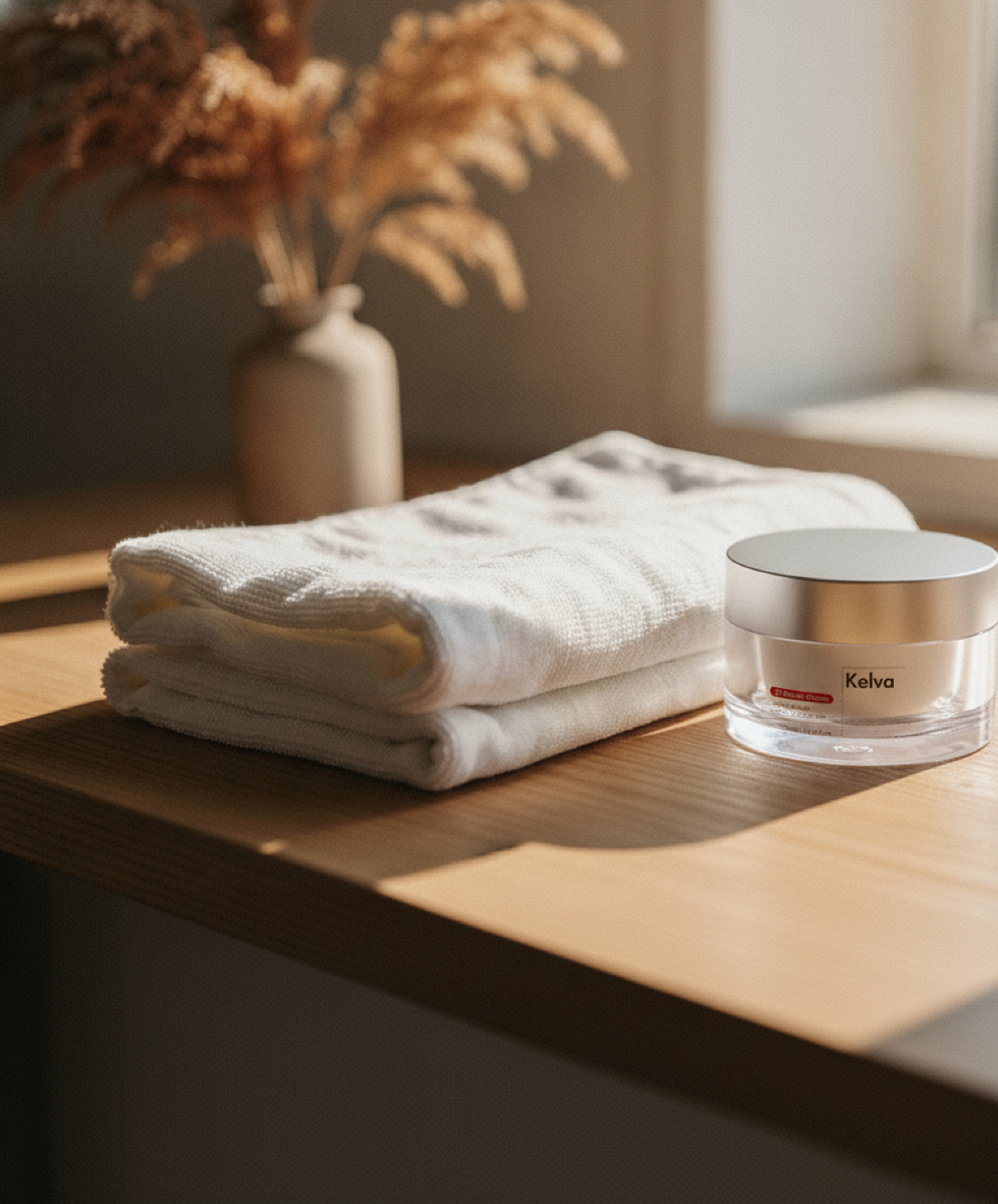
Post-treatment, soothing and sun protection are essential even in early autumn. Resetting involves both treatments and daily care.
🩺 Doctor's Note - At the end of summer, many patients come in eager to "do everything." In these cases, I consider the three areas we've discussed. Summer-stressed skin isn't something to push hard but to revive in sequence. Starting with the most fatigued area allows for more comfortable subsequent treatments.
Summer UV exposure doesn't result in immediate color change. Instead, melanin develops over several days, darkening over 2-3 weeks. Combined with rough texture from heat and sweat, and a weakened barrier from air conditioning dryness, these changes accumulate over summer, becoming noticeable in early autumn as UV exposure decreases. It's not sudden deterioration but visible accumulated damage.
The UV index peaks in mid-summer and decreases as early autumn approaches. Post-pigmentation or regeneration treatments, skin is temporarily more sensitive to UV. Strong UV exposure during this period can lead to post-inflammatory hyperpigmentation. Early autumn reduces this risk, with cooler temperatures also providing a more comfortable recovery environment. However, sun protection is still necessary.
Tired skin has reduced recovery capacity, so piling on multiple aggressive treatments is not advisable. Recovery prioritizes sequence over intensity. If products sting or tighten, start with barrier calming first, then move to regeneration or pigmentation correction. Addressing the most fatigued area of your skin is the key.
'Exosomes' are widely mentioned as a regenerative component, but we don't offer them as a standalone treatment. Our regeneration approach focuses on Metacell (stem cell) or skin boosters like Rejuran/Juvelook/Sculptra. The right approach depends on where your summer damage is concentrated, be it pigmentation, elasticity, or the barrier.
If your skin feels dull and rough after summer, it's usually not a case of sudden deterioration. It's the accumulated effects of UV, heat, and dryness revealing pigmentation, collagen damage, and barrier weakening as temperatures cool. The essence of early autumn recovery isn't about starting something new aggressively but about sequentially addressing summer fatigue.
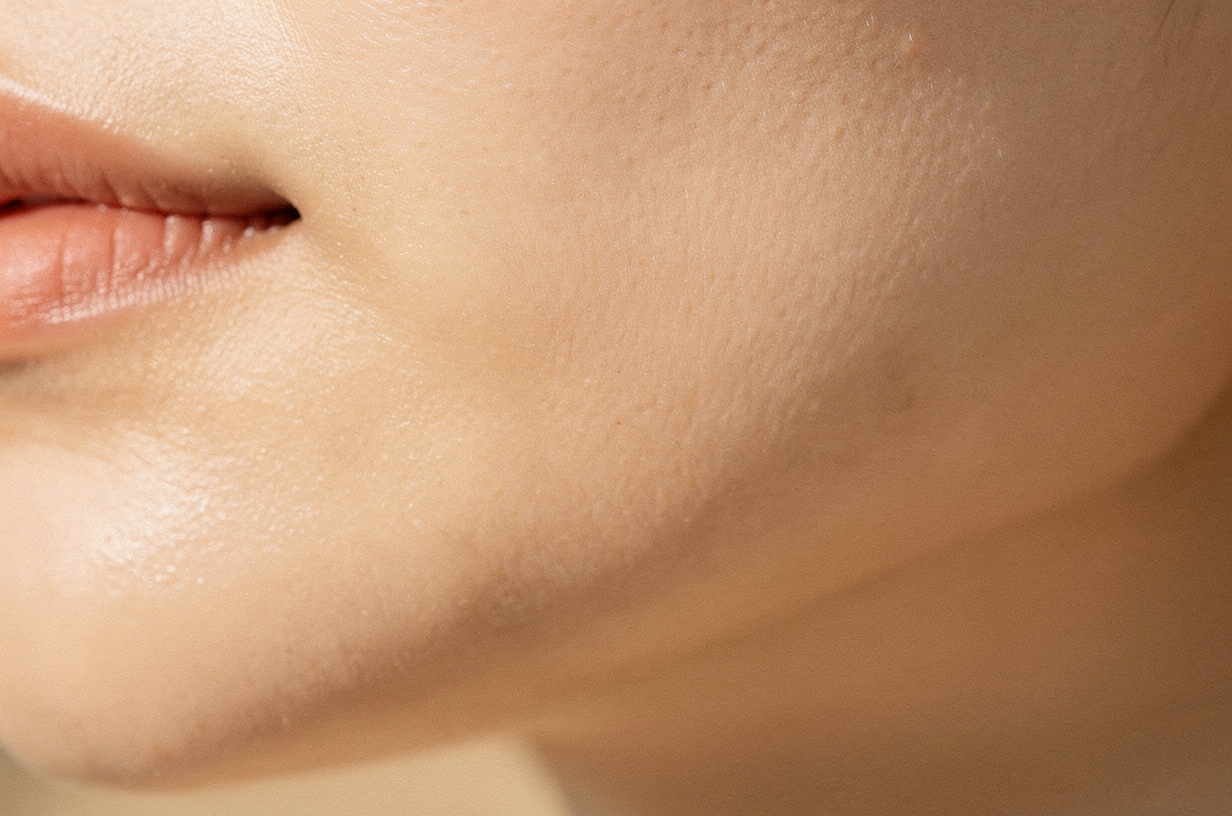
Resetting isn't about a single treatment but sequential recovery based on where your skin is most fatigued.
Early autumn is a favorable time. With UV levels decreasing, post-treatment pigmentation risk is lower, and the recovery environment is more comfortable. However, not everyone needs to rush into treatments now. If your barrier is compromised, focus on calming and hydration first; if elasticity is a concern, take your time with regeneration; if spots bother you, use this window for pigmentation correction while keeping up your sun protection.
Instead of getting swept up by the term 'summer damage reset,' consider which layer of your skin is most fatigued. Identifying this key area can illuminate the direction for your early autumn recovery. If you're curious about how dermal hydration is revitalized, see Water Glow Skin Boosters Work on the Dermis, Not the Surface, or to understand how collagen boosters build new collagen, see How Collagen Boosters Remodel the Dermis.
#EarlyAutumnTreatments #SummerDamageRecovery #SkinReset #SkinBooster #DewyGlow #Pigmentation #SkinBarrier #RegenerationTreatments #MyeongdongDermatology #ForeverClinic