

Blog
Informasi khusus untuk kesehatan kulit
Informasi khusus untuk kesehatan kulit
Somewhere in your late 40s, you start reading about collagen boosters and get stuck on one question: "Will my skin still respond at this age?" The short answer is that collagen responses have been measured in older skin too, but how much and how fast can differ from when you were younger.
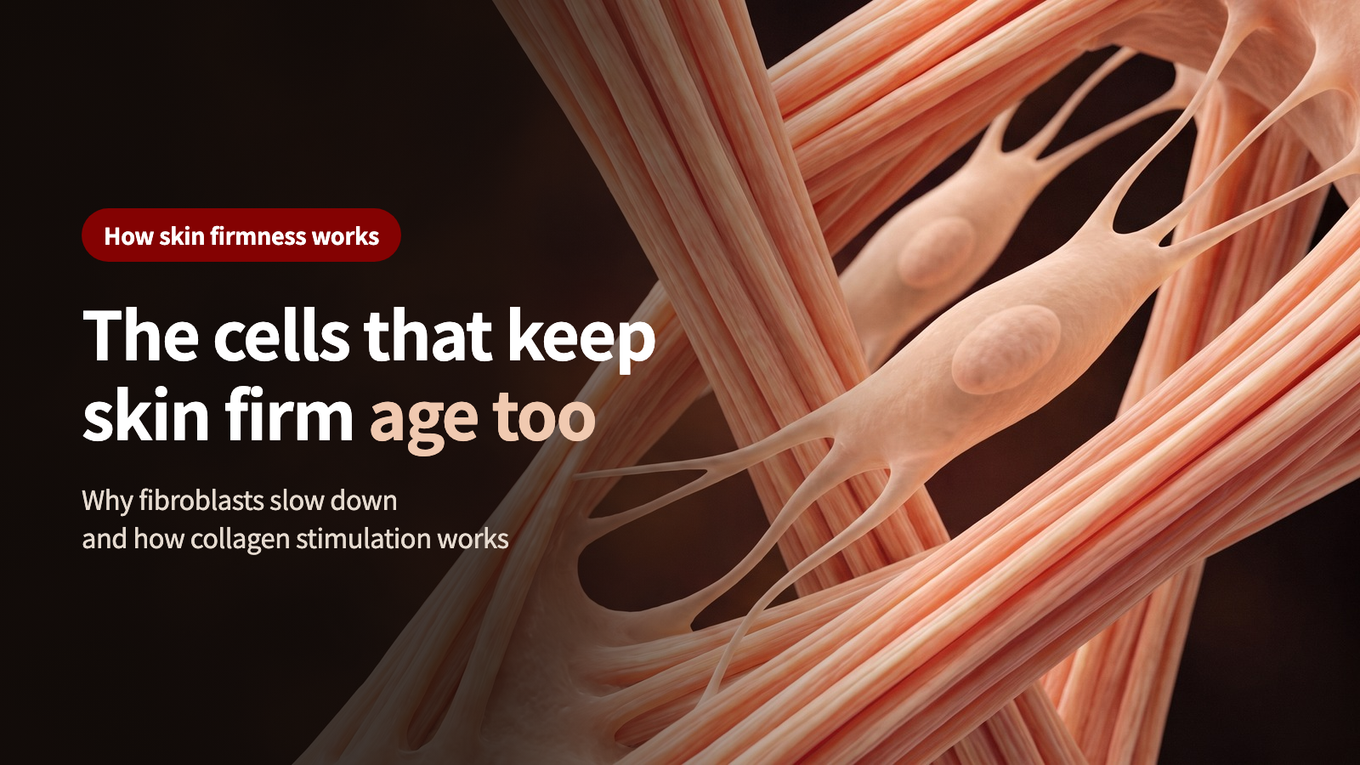
To answer it properly, you have to start with who makes collagen. Collagen is made by cells in the dermis called fibroblasts. And these cells age too. They make less collagen, they shrink, and they lose their grip on the collagen around them.
I think loss of firmness makes more sense when you look at it from the cells' point of view. Collagen boosters and energy-based treatments are both, in the end, trying to get these cells back to work. That's also where the answer to "Will it work at my age?" comes from.
Key Takeaways
- Fibroblasts are the cells in the dermis that make collagen. They also release the enzymes (MMPs) that break down old collagen.
- Fibroblasts taken from the skin of people aged 80 and over made less type I procollagen (the raw material for collagen) than cells from people aged 18-29 (82 vs 56 ng/ml, Varani 2006). The cells themselves age.
- In the same study, cells in older skin were attached to less collagen (78% vs 58%). With nothing to grip and pull against, the cells shrink and make less collagen.
- The more collagen breaks down, the more the cells shrink, and shrunken cells release more of the enzymes that break it down. This creates a self-perpetuating cycle (Fisher 2009).
- When cross-linked hyaluronic acid filler was injected into forearm skin of people averaging 74 years old, type I procollagen rose at weeks 4 and 13. The authors attributed this to the dermis being stretched, which pulled the cells taut (Wang 2007). A response can be measured in older skin too.
Fibroblasts are the cells in the dermis that make collagen and elastin, and they also release the enzymes (MMPs) that cut up old collagen. At our clinic in Myeongdong, Seoul, this is where I start when I explain loss of firmness.
Skin has three layers: the epidermis, the dermis and the subcutaneous fat. Firmness comes from the middle one, the dermis. Collagen is generally said to make up about 70-80% of the skin's dry weight, and dermal collagen is constantly being broken down and rebuilt. Both jobs, building it and releasing the enzymes that clear out the old, belong to fibroblasts.
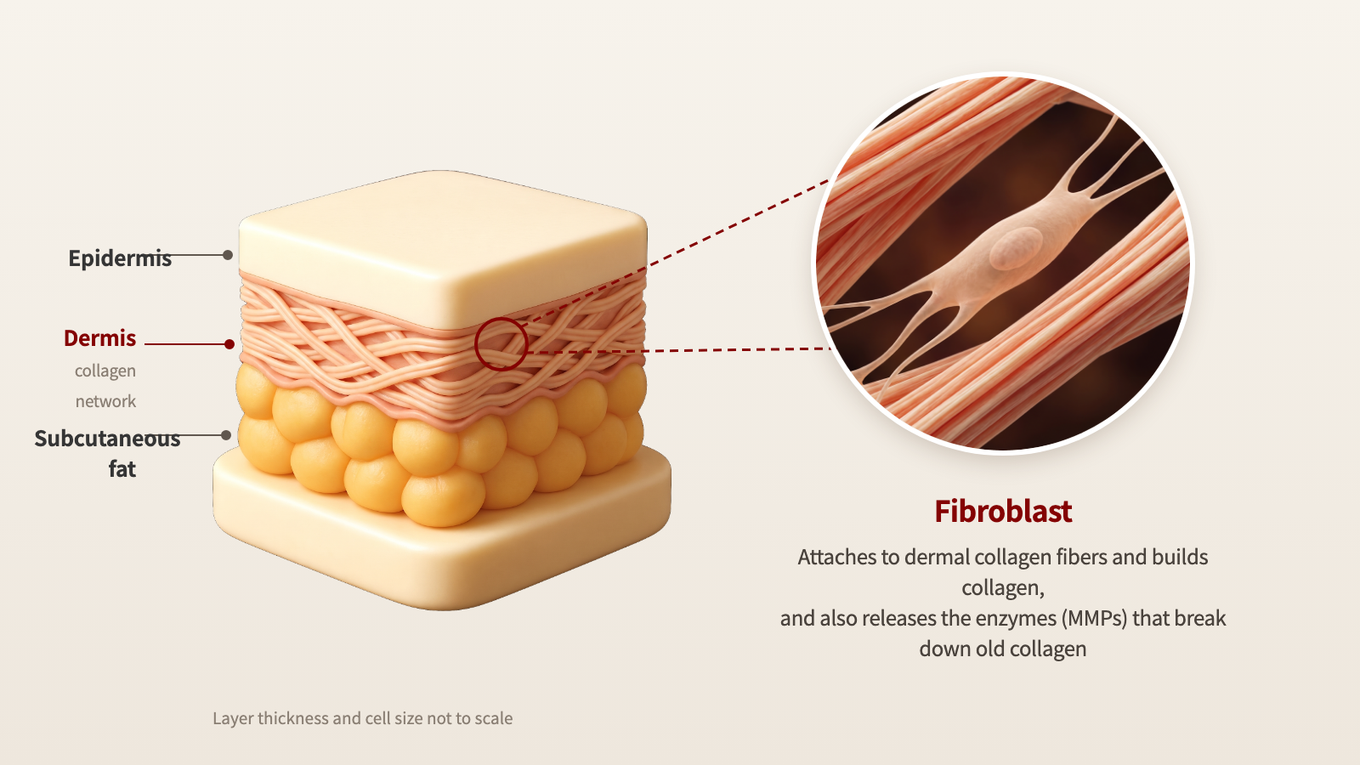
Collagen, the material behind firmness, sits in the dermis, and the cells that build it are the fibroblasts attached between the fibers.
Lost firmness is the end result. Trace it back one step and you find these cells aren't working as hard as they used to. I've covered what collagen and elastin each do in Why skin elasticity declines, so here I'll stick to the cells that make them.
They slow down in two ways. The cells themselves age and make less collagen, and the collagen around them breaks down so they lose something to grip and pull against. A 2006 study by Varani's team (Am J Pathol) showed both.
One: the cells themselves age - The team took fibroblasts from the skin of people aged 18-29 and people aged 80 and over and grew them under the same conditions. Type I procollagen production was 82±16 vs 56±8 ng/ml, lower in the older cells. That was in a culture dish, where you can't blame the surrounding environment. Measured in the skin tissue itself, type I procollagen was 68% lower in the 80-plus group.
In another study, the number of cells carrying a marker of senescent cells that have stopped dividing (p16INK4a) rose with age in both the epidermis and the dermis (Ressler et al., Aging Cell 2006).
Two: they lose their grip - Fibroblasts make collagen actively when they're attached to the collagen fibers around them and held under slight tension. In the same study, looking at cross-sections of the dermis, the share of the cell surface attached to collagen fibers was 78% in young skin and 58% in skin aged 80 and over, and cell spreading was roughly halved (1.0 vs 0.5).
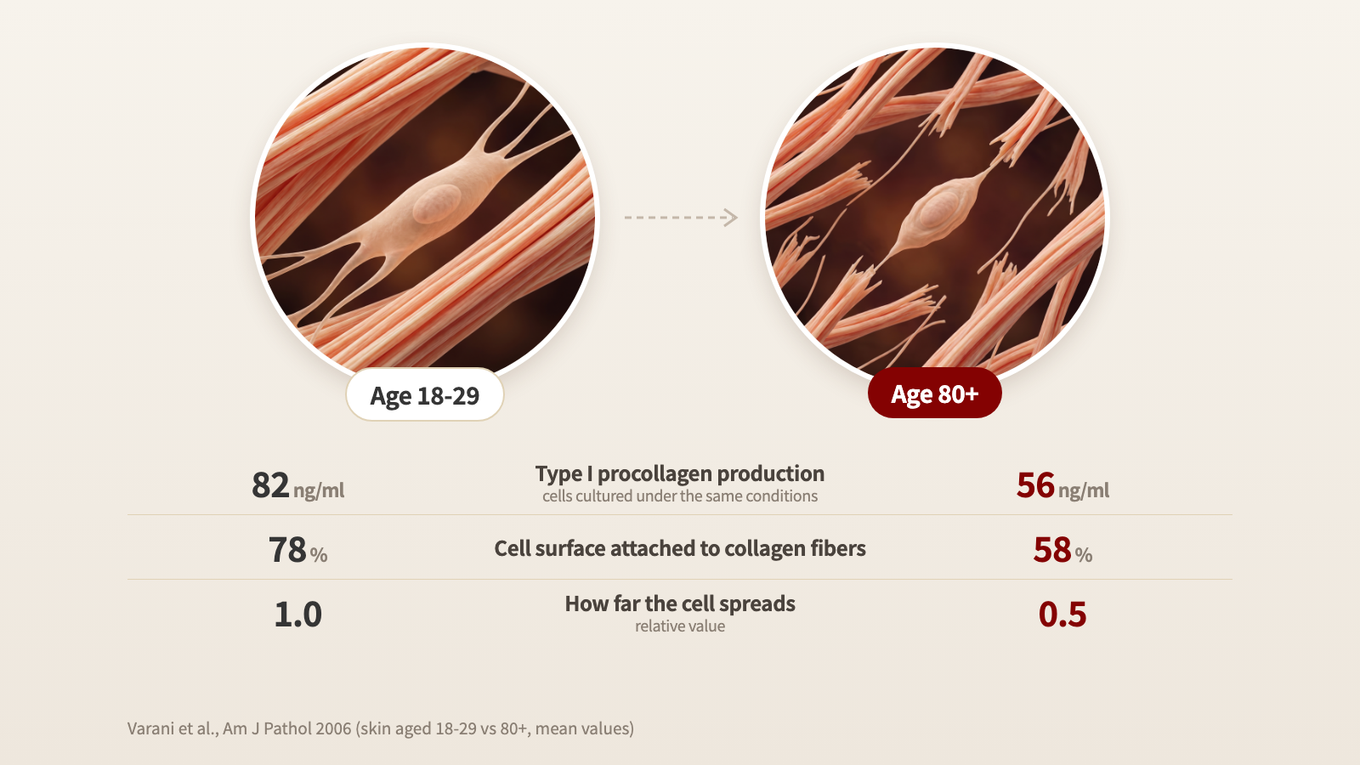
The same kind of cell, with age, makes less, attaches less and spreads less. Figures are from the Varani 2006 study conditions (18-29 vs 80 and over).
What I found interesting in this study is the second part. Medicine today can't really turn back the aging of the cell itself, but the environment the cell is attached to is something we can work on. That's what collagen-stimulating treatments target.
Because when collagen breaks, fibroblasts shrink, and shrunken cells release more of the enzyme that breaks collagen. The loop feeds itself. Fisher's team (Am J Pathol 2009) called it a "self-perpetuating cycle."
This study compared skin from people over 80 with skin from people aged 21-30. In the older dermis, the area where fibroblasts touched collagen fibers was 80% smaller, and the cells' cross-sectional area was 75% smaller. The measuring method differs from Varani's, so the numbers differ in size, but they point the same way. The older cells also released more MMP-1, a collagen-degrading enzyme.
Laid out in order, it goes like this.
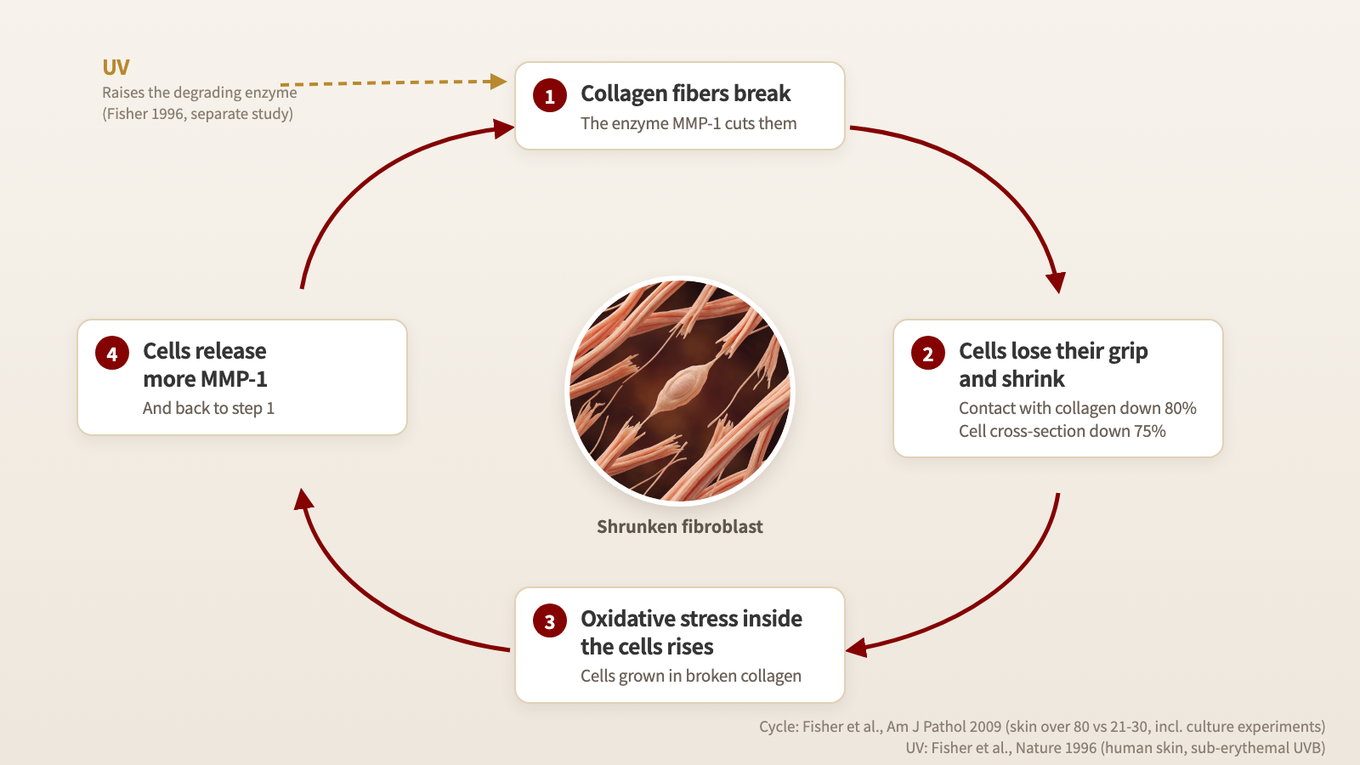
In aged dermis, broken collagen and shrunken cells keep pushing each other along. A separate study found that UV raises the same degrading enzyme.
In the same study, when cells in broken collagen were given an antioxidant, MMP-1 went down. It's a lab result, so it can't be carried straight over to skin, but it suggests that breaking the loop somewhere along the way can slow it down.
UV feeds this loop from the outside. One study found that even low-dose UVB, too weak to cause redness on human skin, increased collagen-degrading enzymes within hours (Fisher et al., Nature 1996). That's why I see sun protection as slowing down step 1 of the loop.
At our clinic in Myeongdong, Seoul, the way I see it, collagen-stimulating treatments try to hand aging fibroblasts back two things: a signal to get to work and something to grip and pull against. I sort them into three groups by what they give back to the cells.
Triggering a repair response - Biodegradable collagen boosters (also called collagen stimulators) such as GOURI (liquid PCL), Sculptra (PLLA) and Juvelook belong here. As the body recognizes the material placed in the dermis, a tissue response begins, and that signal is meant to prompt fibroblasts to build new collagen. Energy-based treatments such as Ultherapy Prime, Thermage FLX and Potenza fall into the same group, since they use heat to set off a repair response in the dermis. I've walked through the step-by-step process in How collagen boosters work.
Delivering signaling molecules directly - Metacell delivers repair signals such as growth factors taken from your own blood into the dermis. That said, the clinical evidence for this category is still building.
Supporting the dermis and stretching the cells - This one is a mechanism seen in research. Eleven people averaging 74 years old had cross-linked hyaluronic acid filler injected into sun-damaged forearm skin. The fibroblasts around the filler took on a stretched shape, and type I procollagen rose at weeks 4 and 13 (Wang et al., Arch Dermatol 2007). In the test tube, fibroblasts didn't attach to the filler itself, so the authors suggested that the dermis being propped up and stretching the cells was the likely reason.
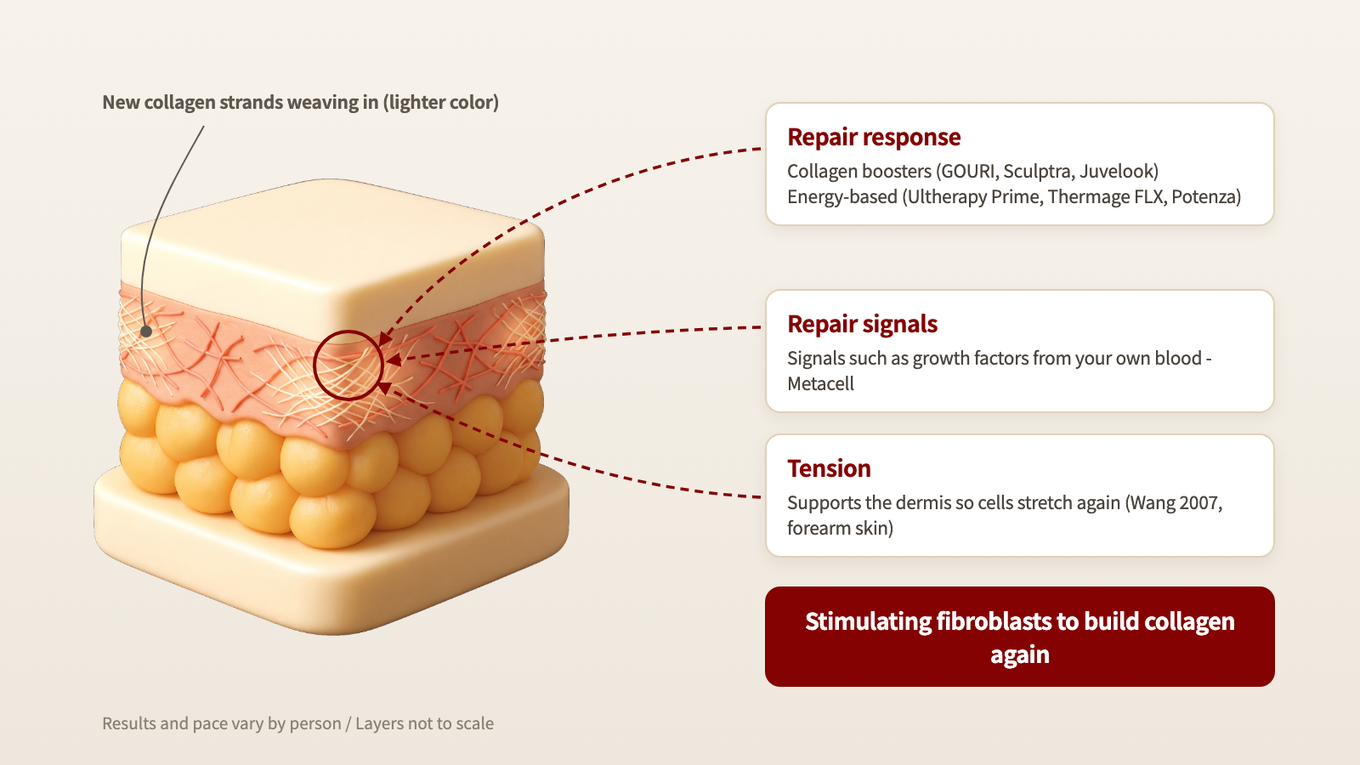
Collagen stimulation tries to give back the signals and tension fibroblasts have lost, to prompt them to build new collagen.
| Approach | What it gives back to fibroblasts | Examples at Forever | Good to know |
|---|---|---|---|
| Repair response (material) | Rebuilding signals from a tissue response | GOURI (liquid PCL), Sculptra (PLLA), Juvelook | Builds over weeks to months, a few days of bruising/swelling |
| Repair response (heat) | Collagen remodeling during recovery after heat | Ultherapy Prime, Thermage FLX, Potenza | Warmth/redness right after, varies with settings |
| Repair signals | Signaling molecules such as growth factors from your own blood | Metacell | Evidence still building, redness/swelling/bruising possible |
| Tension | Supports the dermis so the cells stretch again | (research mechanism) | Forearm skin study, filler's main purpose is volume |
The three groups don't split cleanly. Collagen boosters also give some support as they settle into the dermis. I divide them this way so I can weigh options by whether your skin is short on signals or on support right now.
One more piece of evidence. A liquid PCL study I co-authored, published in the Journal of Cosmetic Dermatology in 2026, looked at these cells directly. Human dermal fibroblasts were grown as 3D clusters (spheroids) and treated with liquid PCL, and the proportion of Ki67-positive (proliferating) cells and of cells with nuclear YAP was higher than in the control group (p<0.05, DOI 10.1111/jocd.70950). YAP is known as a signal that switches on when cells sense physical forces around them, which fits with the "tension" idea above. That said, this was an experiment on cultured cells, so it doesn't promise the same size of change in human skin.
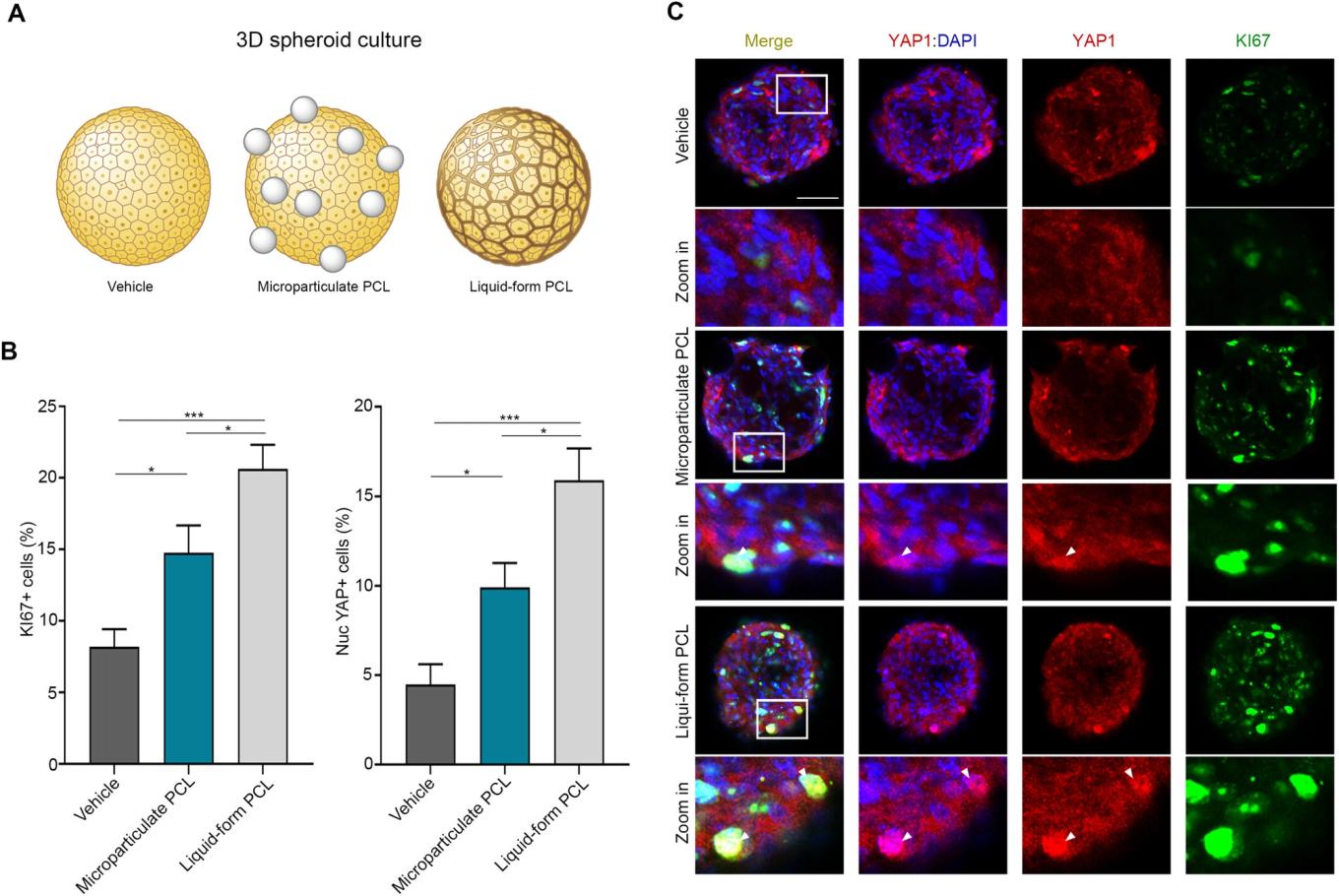
Figure 6 from the paper. Human dermal fibroblast spheroid experiment. In the liquid PCL group (bottom row), the share of YAP-active and Ki67-positive cells was higher than in the control group. Source: Seo et al., J Cosmet Dermatol 2026, DOI 10.1111/jocd.70950 (CC BY 4.0)
A study measured new collagen production in skin averaging 74 years old, so the response itself is still there. But that study used filler, and on the forearm, so how much and how quickly it happens has to be judged individually.
In a study of 14 adults given PLLA (the ingredient in Sculptra), type I collagen rose significantly at 3 and 6 months (Goldberg et al., Dermatol Surg 2013). That study didn't specifically recruit older adults, though, and I haven't found any study, as far as I can tell, that looked at collagen boosters in older adults alone.
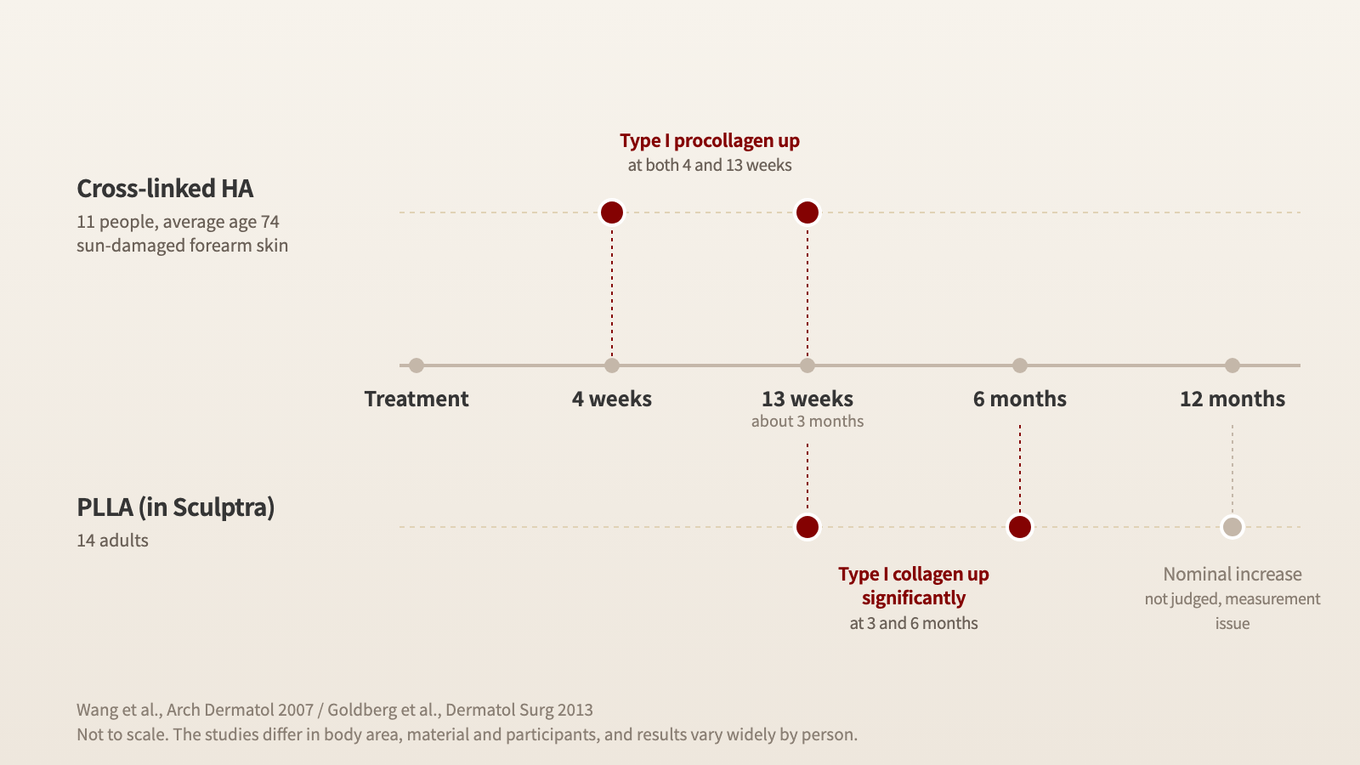
Collagen responses are measured over weeks to months. Each study differs in body area, material and participants.
As we saw above, cells from people 80 and over made less of collagen's raw material under the same conditions. So I don't expect the response to be as large or as quick as when you're younger. These figures come from people over 80, so they can't be applied directly to someone in their 50s, but the direction is the same. For patients in their 50s, I tend to allow a longer window before judging the results.
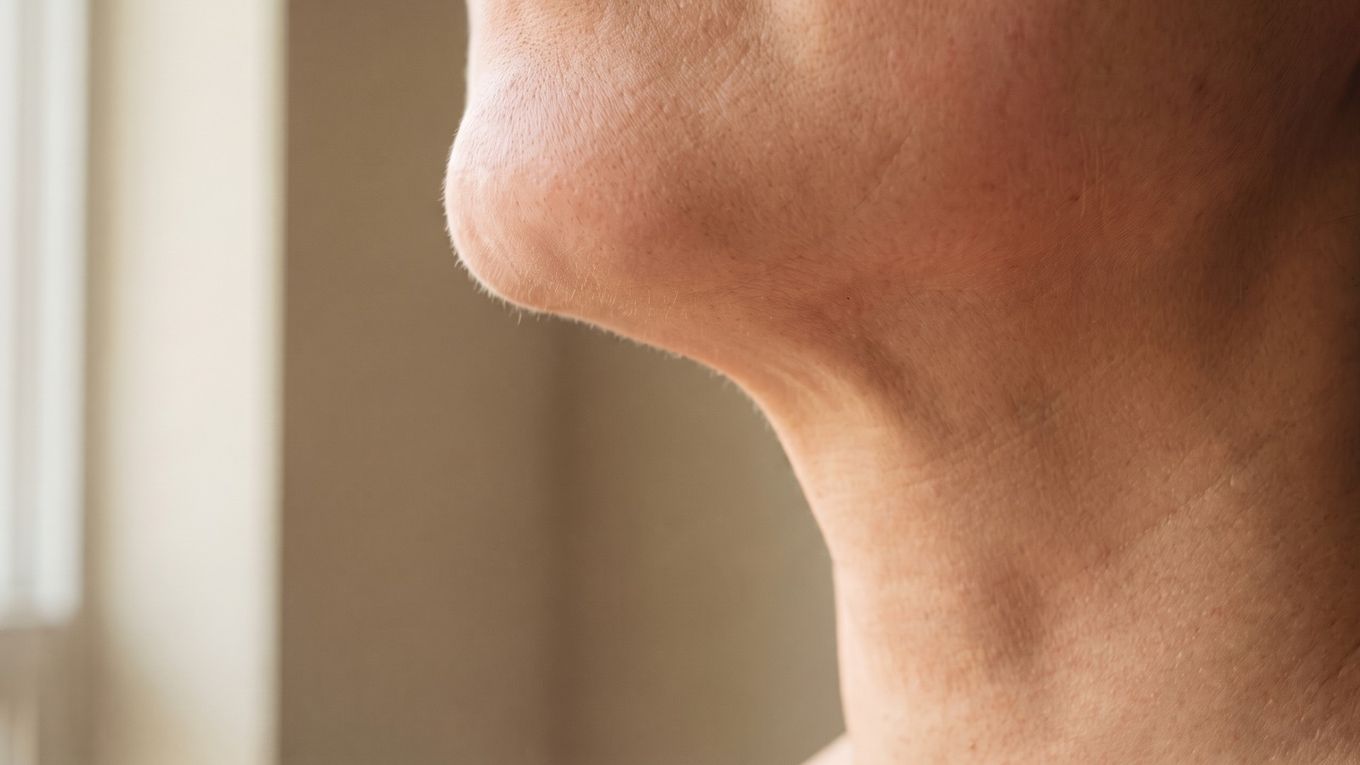
Fibroblasts are still there in older skin. The response may just be smaller than when you were younger.
On the downside, injectable collagen boosters can leave bruising and swelling for a few days, and occasionally a small lump you can feel. I've laid out what's within the normal range in Swelling, bruising and bumps after booster injections. Energy-based treatments can also cause warmth or redness right afterward, and this varies a lot with the intensity setting. Metacell involves a blood draw and injections, so reactions like redness, swelling and bruising can happen too. Other side effects are rare but possible, and I go over them at the consultation before any treatment.
So here's how I sort who it may suit and who it may not.
There are studies that measured a response in older skin. In one, cross-linked hyaluronic acid filler injected into forearm skin of people averaging 74 years old raised type I procollagen at weeks 4 and 13 (Wang 2007), and in a study of 14 adults given PLLA, type I collagen rose at 3 and 6 months (Goldberg 2013). But as far as I've checked, there's no study that looked at collagen boosters in older adults alone, so I think it's right to allow a longer window before judging the results.
In the lab, giving an antioxidant (MitoQ) to fibroblasts in broken collagen reduced MMP-1 (Fisher 2009). This was a culture-dish experiment, so it can't tell us on its own whether a skincare product does the same thing inside your skin.
UV raises MMPs, the enzymes that break down collagen. Even low-dose UVB too weak to cause redness increased MMPs in human skin within hours (Fisher 1996). When collagen breaks, fibroblasts lose their grip, so sun protection slows down the start of the loop.
They take different routes. With a booster, the material stays in the dermis and keeps the tissue response going. Energy-based treatments use heat to set off a repair response. The choice depends on your skin thickness, how much sagging there is and how much recovery time you have.
Firmness comes from collagen in the dermis, and that collagen is made by fibroblasts. With age, these cells age on their own and make less, and then they shrink on broken collagen, which cuts production again.
You can't reverse the aging of the cells themselves, but you can work on the environment they hold on to. When choosing a treatment, start by asking whether that environment is short on signals or on support right now, and whether you can wait a few months.
#Fibroblasts #CollagenProduction #CollagenStimulation #CollagenBooster #SkinElasticity #SkinFirmness #SkinAging #Dermis #GOURI #Sculptra #SkinClinicSeoul #ForeverClinicMyeongdong


