

Blog
Informasi khusus untuk kesehatan kulit
Informasi khusus untuk kesehatan kulit
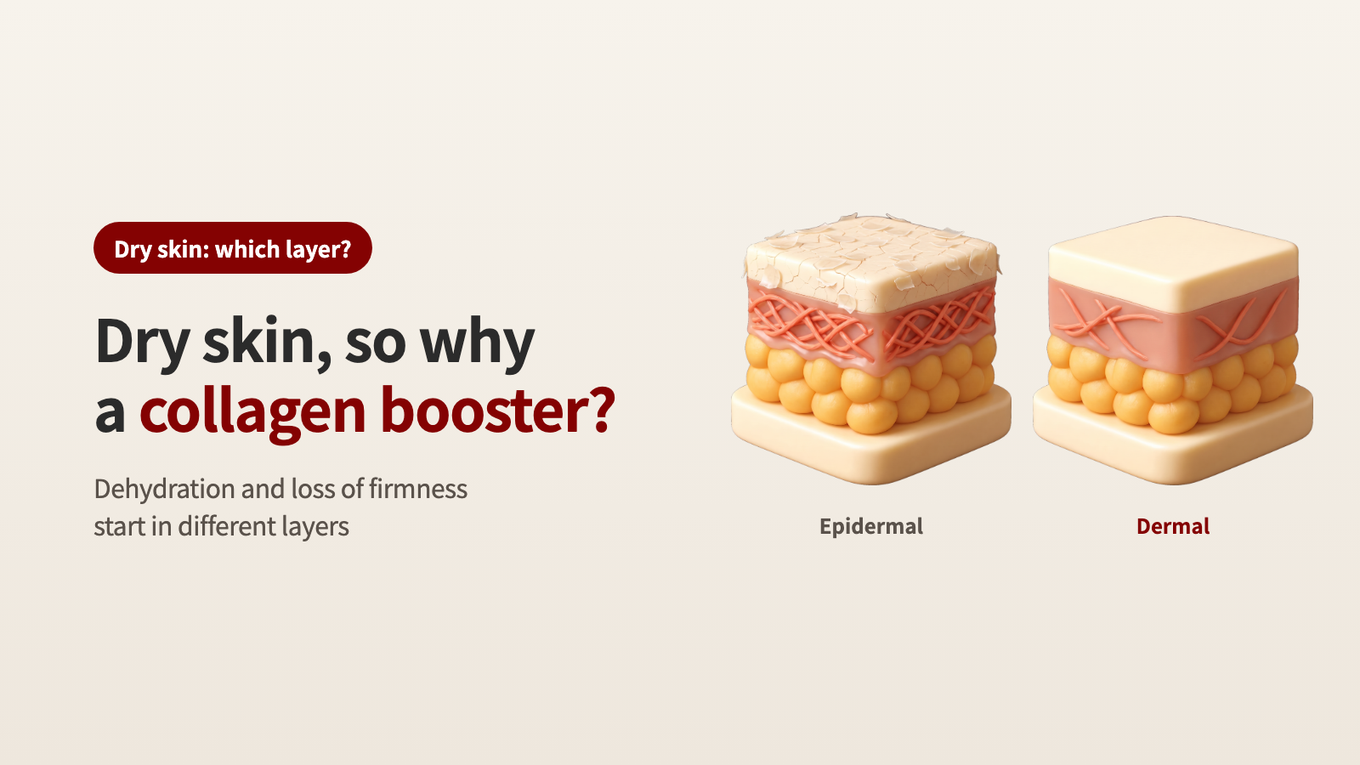
Skin dries out easily when the seasons change. It feels tight after you wash your face, and by afternoon your makeup starts to flake. So when a collagen booster comes up in a conversation about dryness, it's natural to raise an eyebrow.
It can feel odd when a conversation about dry skin turns to a firming treatment.
Wondering whether you're being upsold is a fair reaction. Dry skin gets moisturizer, sagging skin gets collagen. That's how most people split it.
The way I see it, "my skin is dry" usually covers two different things. One is dryness in the outermost layer, the stratum corneum, when it can't hold on to water. The other is a deeper, hollow dryness that shows up as the dermis underneath gets thinner. Same word, different layer, and so a different fix.
The short version
- I split dry skin into a problem in the epidermis (the stratum corneum barrier) and a change in the dermis (the collagen and water-holding matrix).
- A healthy stratum corneum holds roughly 10-30% water. Below 10%, it starts to feel stiff. This side is the job of moisturizers and barrier care.
- The dermis is mostly collagen fiber (about 75% of the skin's dry weight), and about half of all the hyaluronic acid in the body sits in the skin. Studies report that skin collagen drops by about 1% a year in adulthood.
- If tightness deep in the skin remains after more than a month of steady moisturizer use, and the skin also feels thinner or shows fine lines, it's time to look at the dermis.
- A collagen booster targets dermal thickness and firmness. For purely barrier-type dryness, I don't recommend one.
It can be either, and that's the real difference between dry skin and dehydrated skin, so the first step is telling them apart. At our clinic in Myeongdong, Seoul, I sort dryness into two types: epidermal dryness, where the stratum corneum barrier breaks down and water escapes, and dermal change, where collagen and the water-holding matrix in the dermis thin out and the skin feels hollow.
Start with the epidermis. On the face it's less than 0.1mm thick (about 80-95µm in a meta-analysis). Its top layer, the stratum corneum, is built like a brick wall: flattened cells stacked up, with lipids filling the gaps so water can't escape. Close to half of those lipids (40-50% by weight) are ceramides. A healthy stratum corneum holds about 10-30% water, and when that falls below 10%, the skin turns stiff.
The dermis works on completely different terms. At 1-2mm it's more than ten times thicker than the epidermis, and it's mostly collagen fiber (about 75% of the skin's dry weight). The space between those fibers is filled with a water-holding matrix that includes hyaluronic acid, and about 50% of the body's hyaluronic acid is concentrated in the skin.
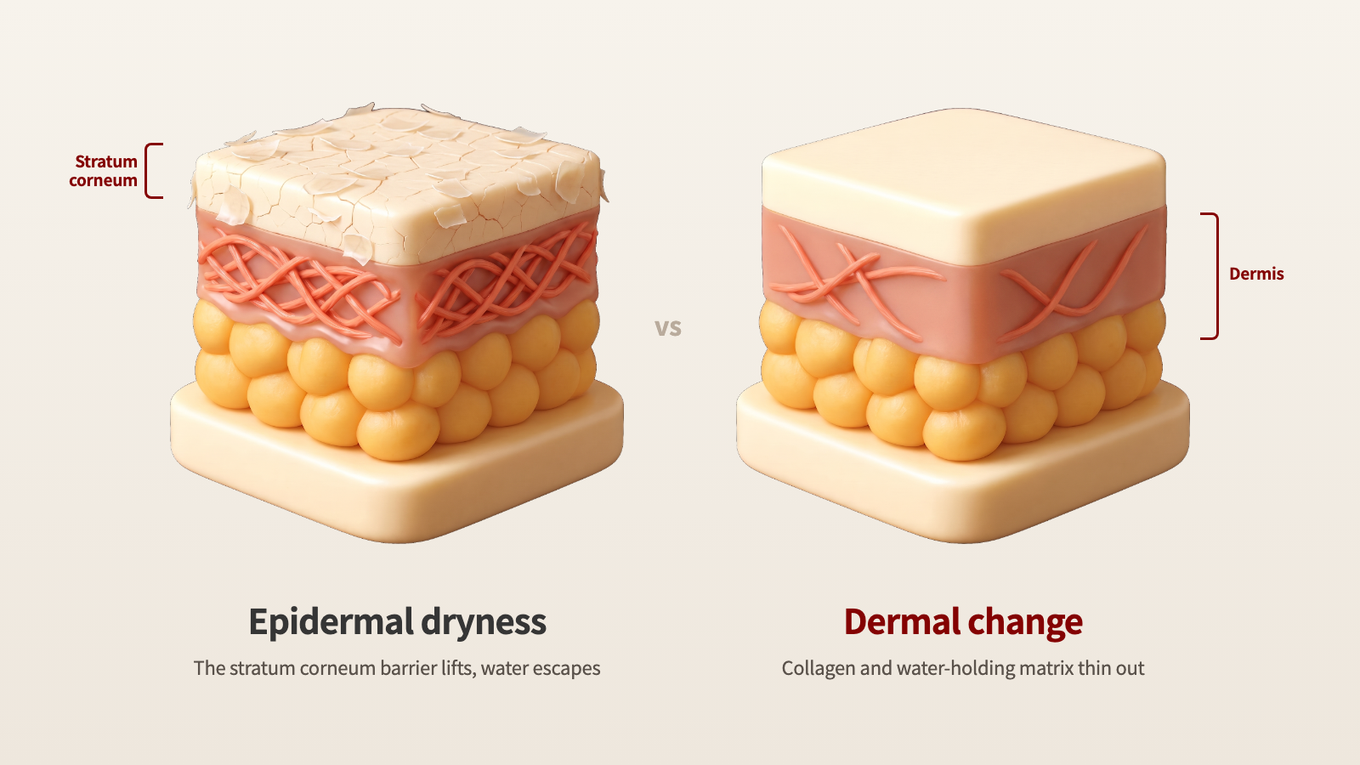
Both are "dry," but on the left the problem is the stratum corneum barrier, and on the right it's a loss of collagen and matrix in the dermis.
Use a moisturizer consistently for at least a month and watch how your skin responds. If the tightness and flaking settle down, it's epidermal. If the surface improves but the underlying tightness and thin feeling stay, I suspect a change in the dermis.
There's a reason for the one-month mark. New epidermal cells take about 28 to 40-some days, depending on the study, to travel from the base of the epidermis up to the stratum corneum. Trying a cream for a few days and concluding "it doesn't work" is too early to judge.
These are the three questions I use to tell them apart.
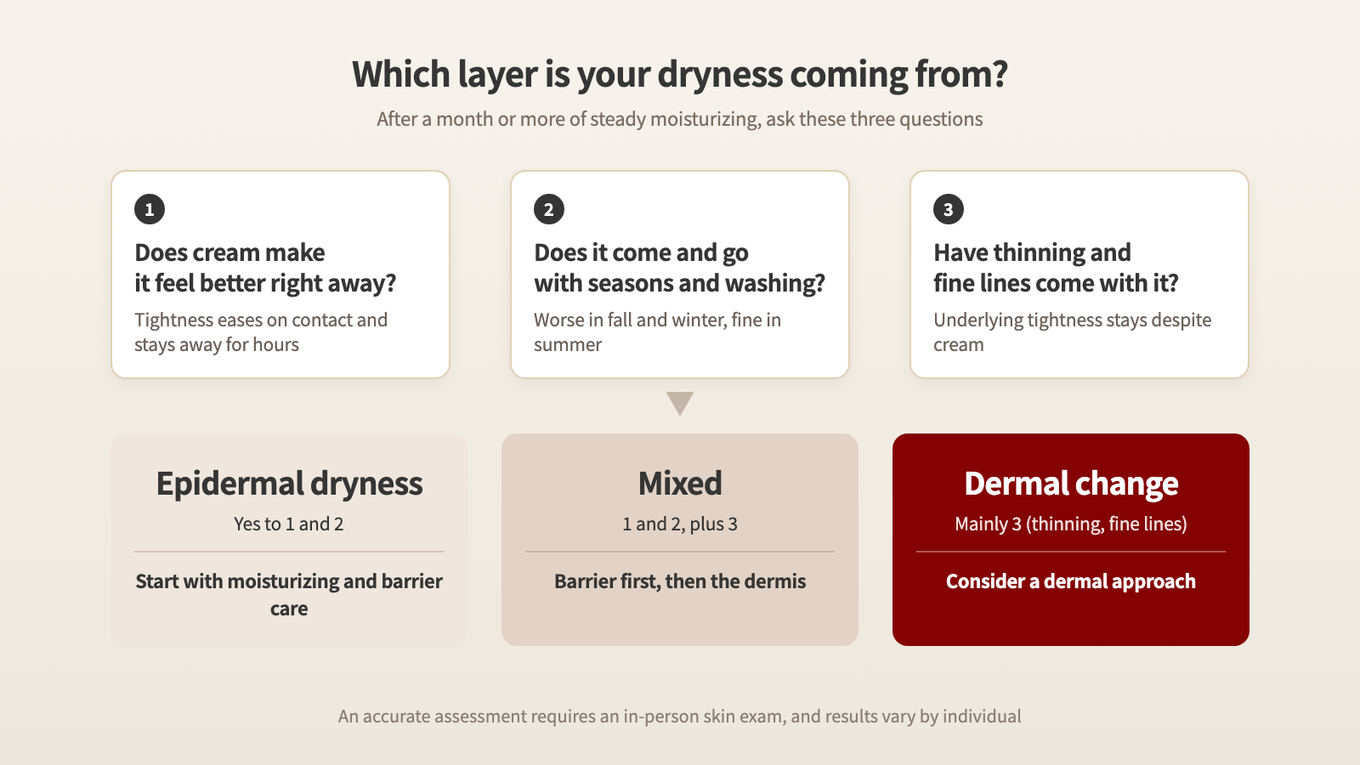
Three questions give you a first read on which layer your dryness comes from. An accurate assessment requires an in-person skin exam.
⚠️ Good to know - The two can show up together. For example, the dermis may be slowly thinning with age just as a seasonal barrier flare hits. In that case I calm the barrier first, then look at whatever is left on the dermal side.
| If your dryness looks like this | Layer to check first | What to do first |
|---|---|---|
| White flakes, tightness right after cleansing | Epidermis (stratum corneum) | Ceramide moisturizer, adjust how often you wash and the water temperature |
| Dryness that comes and goes with the seasons | Epidermis (stratum corneum) | Strengthen your moisturizing routine, manage indoor humidity |
| Underlying tightness that stays despite cream | Dermis (water-holding matrix) | Consider a skin booster |
| Skin that feels thinner, fine lines that stand out more when dry | Dermis (collagen structure) | Consider a collagen booster |
Because the water in the dermis is held inside a collagen network. When I look at this at our Myeongdong clinic, this is the picture I work from: collagen fibers form the framework of the dermis, and a water-holding matrix such as hyaluronic acid fills the space between them. With age, both the framework and the matrix shrink, leaving less room to hold water beneath the surface.
There is some evidence behind this. A classic measurement found that skin collagen declines by about 1% a year in adulthood (Shuster 1975, forearm skin). Another study found that in aging skin, dermal glycosaminoglycans (the water-holding matrix that includes hyaluronic acid) also decrease, and that their levels track with skin hydration (Oh et al., J Dermatol Sci 2011).
So if your skin still feels parched underneath despite steady moisturizing, the dermis needs a look too. Moisturizers replenish the stratum corneum, but they don't reach the framework below it.
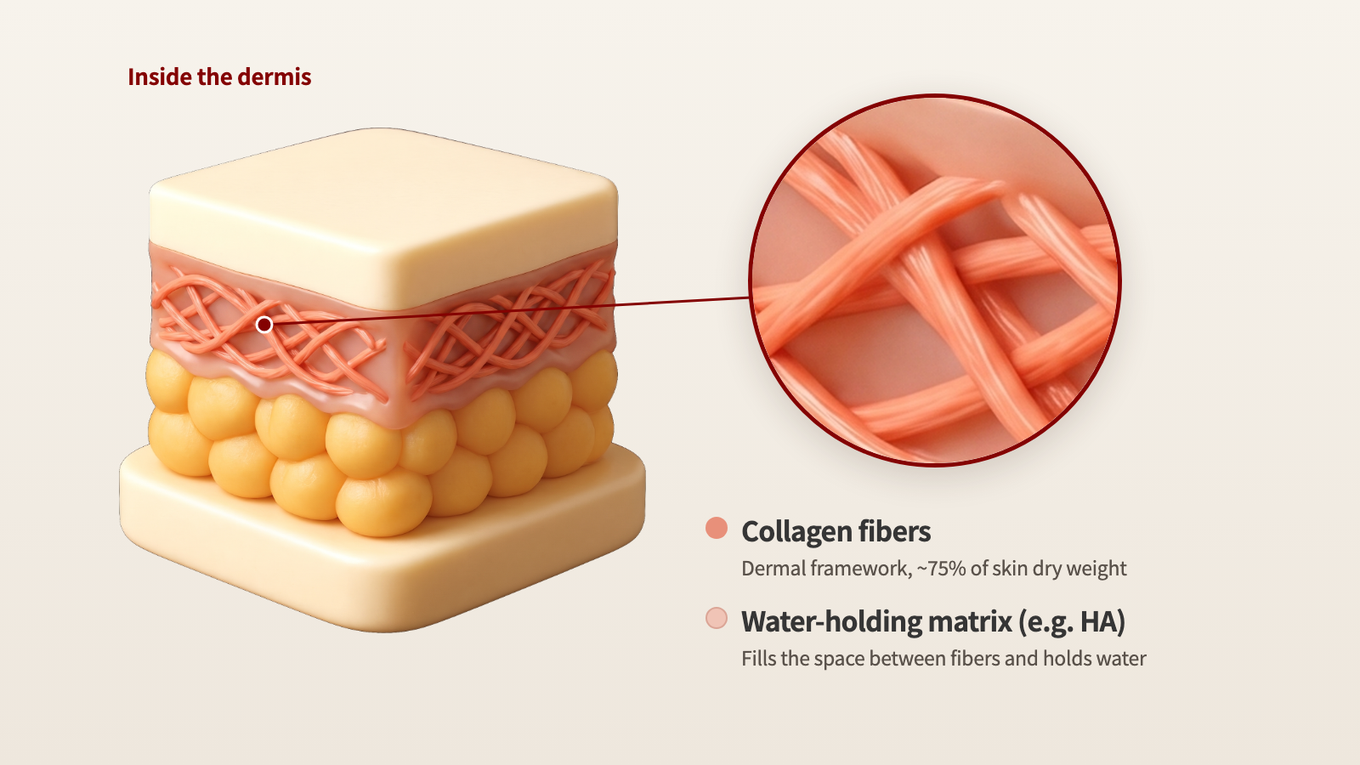
Water in the dermis is held between the strands of the collagen network. When the network thins, there's less room to hold that water.
That framework is exactly what a collagen booster works on. Biodegradable ingredients stimulate fibroblasts in the dermis to build new collagen. In a study I co-authored, published this year in the Journal of Cosmetic Dermatology, liquid PCL (GOURI) was injected into the skin of mice photoaged with UV light. Dermal thickness recovered from 941.9µm to 1266.1µm, and collagen density from 22.1% to 40.0% (p<0.001, DOI 10.1111/jocd.70950).
One caveat: this was a preclinical study in mice. These numbers don't promise the same degree of change in people, and the study didn't measure dryness directly. What the data shows is that, in mice, liquid PCL acted toward thickening a thinned dermis again. How much that translates into less dryness varies a lot from person to person, so I can't promise it.
Moisturizers and barrier care handle the stratum corneum barrier, skin boosters handle hydration and texture in the dermis, and collagen boosters handle the collagen structure of the dermis. Which layer your dryness starts in decides which of the three you begin with.
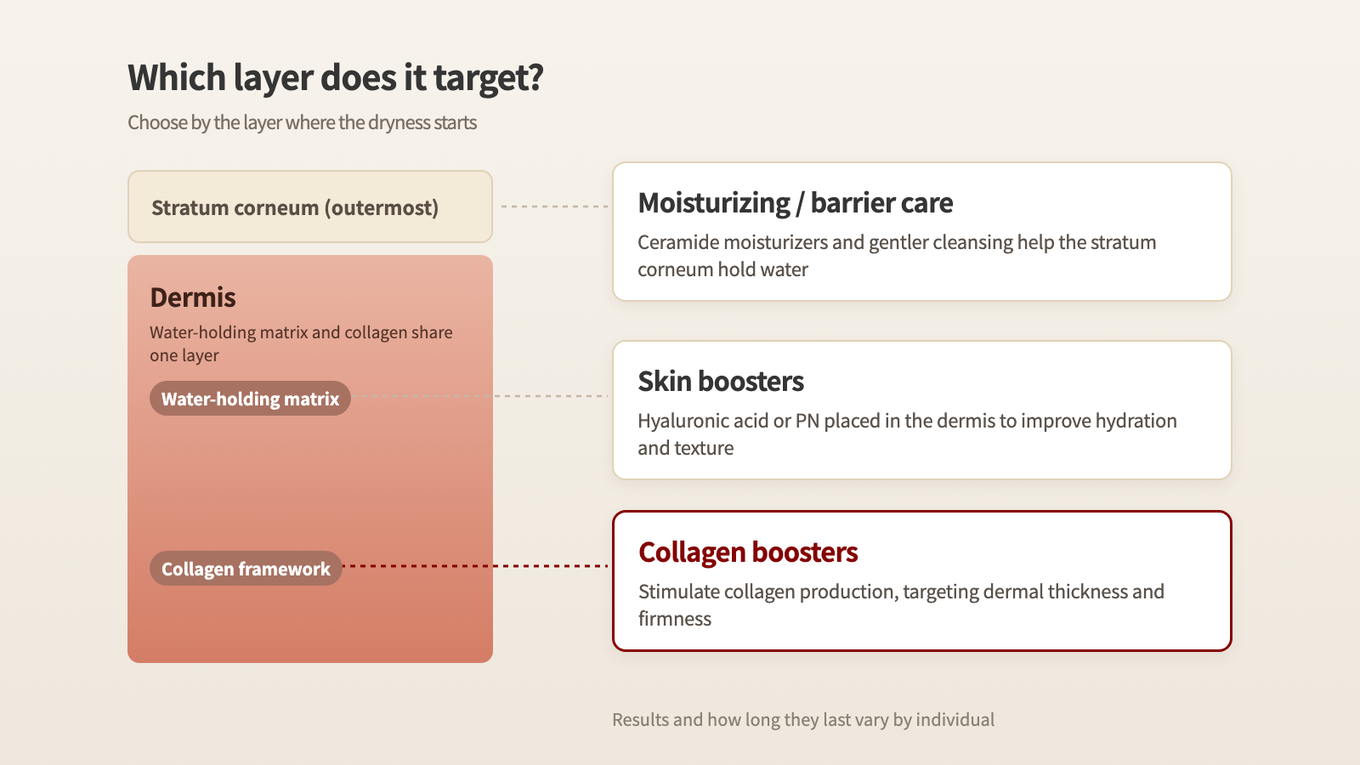
"Dry skin treatment" can mean very different depths. Choose based on the layer where the problem started.
I've compared how the two categories differ, from ingredients to timeline, in skin boosters vs collagen boosters. For now, just remember the order: which layer your dryness comes from matters more than the product name.
If the dryness comes purely from a broken-down stratum corneum barrier, I don't recommend one. Building up the dermis leaves the water problem in the stratum corneum untouched, so it's easy to spend the time and money and still end up saying "my skin is still dry."
In these cases, something else comes first.
Let me be upfront about the downsides too. Bruising and swelling can last a few days. With collagen-stimulating products, if the injection depth or amount is off, a palpable nodule can occasionally form, and unlike hyaluronic acid filler there's no enzyme to dissolve it and reverse the result. That's why I first confirm the change is dermal, and I think it's better to spread the amount over sessions while watching how the skin responds than to put it all in at once.
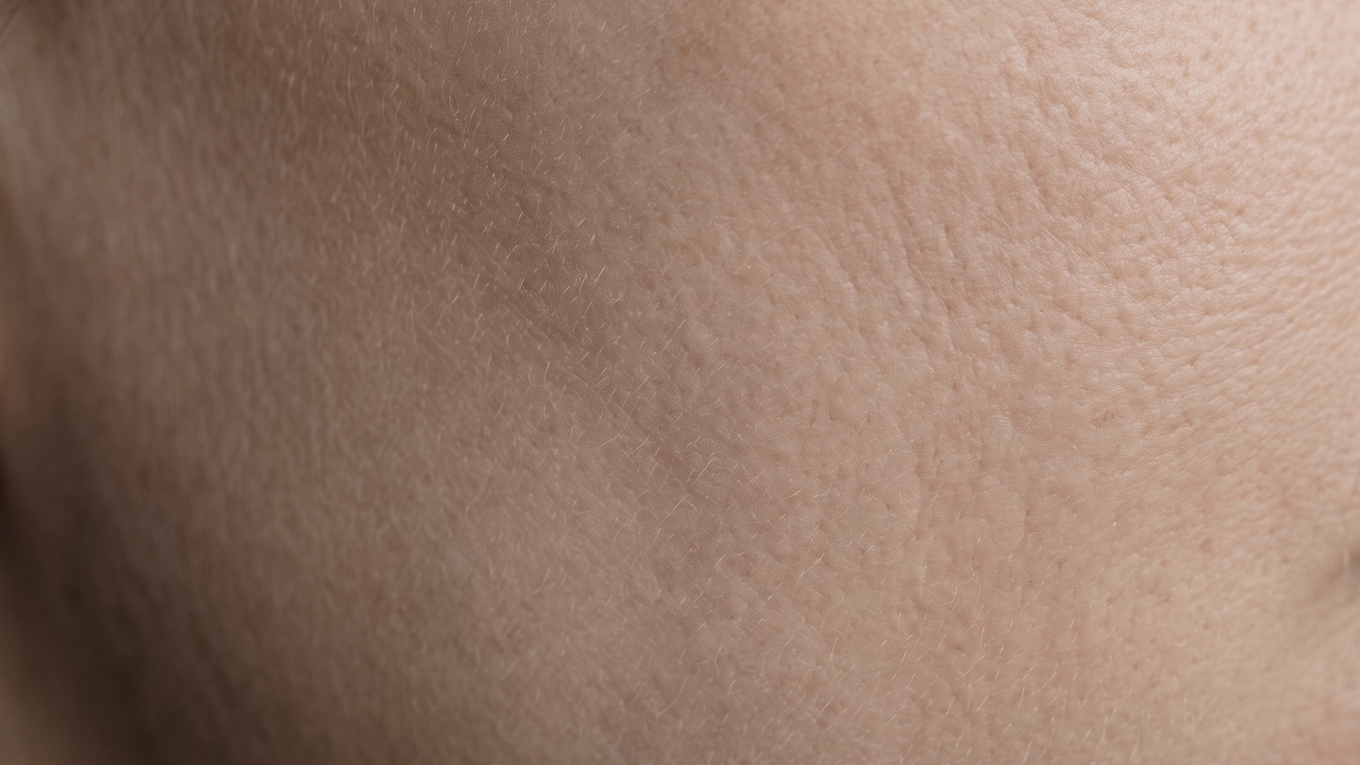
Whichever layer you work on, the starting point is a calm, stable barrier.
No. If it's a stratum corneum barrier problem, it's managed with moisturizing and changes to how you wash. A treatment only becomes worth discussing when the skin doesn't respond to cream and signs of thinning show up as well.
Skin boosters work on hydration and texture in the dermis, so some help with deep dehydration can be expected. But if the dryness comes from a broken-down stratum corneum barrier, the surface can dry out again even after a skin booster. Barrier care needs to go alongside it, and how much you notice and how long it lasts varies from person to person.
A collagen booster targets dermal thickness and firmness, and changes build over weeks to months. How it relates to underlying tightness caused by a thinned dermis varies a lot between individuals, so I can't present hydration as an expected result.
They work on different layers, so when needed they're sometimes combined over separate sessions. Putting everything in at once doesn't make the result bigger, and if your barrier is sensitive, spacing them out in the right order is the safer approach. Which combination suits you is decided after examining your skin.
"My skin is dry" can mean two things at once: a stratum corneum that's losing water, and a dermal framework that's getting thinner. The first is the job of moisturizers and barrier care. The second is where skin boosters or collagen boosters come in.
Whether I'm recommending a collagen booster to someone with dry skin or advising against one, I first look at which layer the dryness comes from. Does it respond to cream? Does it change with the seasons? Has thinning come along with it? Check those three first, and it becomes much clearer whether what you need right now is moisturizer or a treatment.
#DrySkin #DehydratedSkin #DrySkinTreatment #LossOfFirmness #SkinBoosterVsCollagenBooster #SkinBooster #CollagenBooster #GOURI #SkinBarrier #Dermis #ForeverClinicMyeongdong